


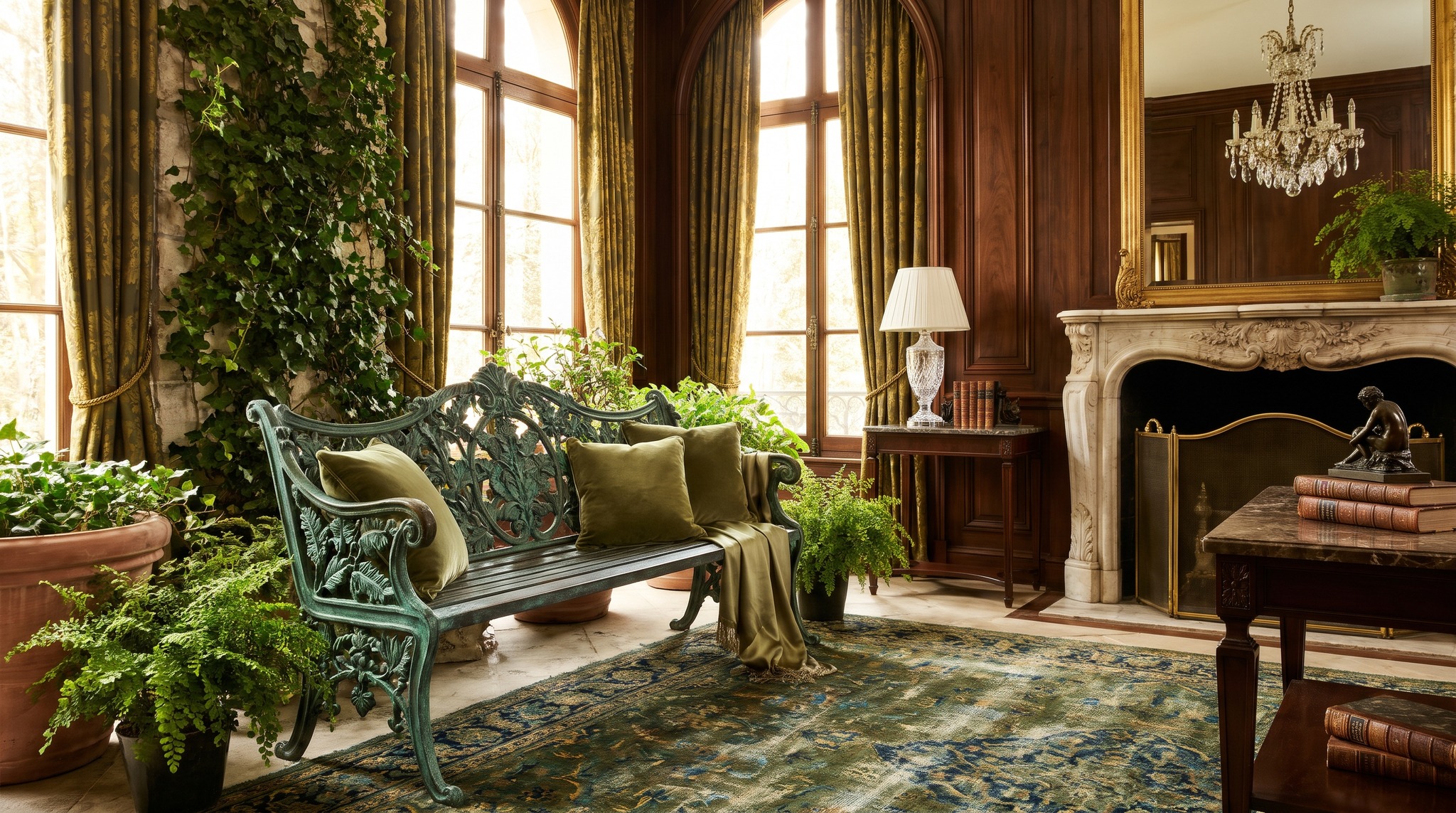
Bronze Garden Bench: Which Patina Develops in Rain
A bronze garden bench develops a natural patina outdoors that many consider elegant, while others view it as a flaw. Those wishing to place such a bench often wonder how quickly the surface changes, what colour it takes on and whether the process can be controlled. This article explains what happens upon contact with rain and what you should pay attention to.
How Patina Forms on Bronze
Bronze consists mainly of copper and tin. When rainwater strikes the surface, the copper reacts with oxygen and moisture. Initially, a thin, brownish oxide layer forms. Over time, further compounds accumulate, primarily copper sulphate and copper carbonate. This layer grows slowly and protects the underlying metal from further corrosion. The patina is therefore not damage, but a natural protective layer.
What Colour the Patina Takes On
The classic green colouration develops through copper carbonate and copper chloride. In rainy regions with little air pollution, a light blue-green usually forms. In urban areas with sulphurous air, the patina may turn out darker and more brownish. The colour development takes varying lengths of time depending on location and climate. In humid coastal regions, a distinct green colouration appears after approximately two to three years. In dry areas, it may take five years or longer until the patina is fully developed.
Differences Between Polished and Matte Surfaces
A polished bronze bench retains its golden-brown colour longer because the smooth surface offers less area for attack. Rainwater beads off more easily, and oxidation proceeds more slowly. A matte or textured surface, however, offers more adhesion for moisture and develops an even patina more quickly. Those wishing to preserve the original lustre must treat the bench regularly with a soft cloth and special bronze care product. Without care, both surfaces become similar in colour after several years.
Care and Protection When Required
You can slow patina formation by sealing the bench with a transparent protective lacquer. This must be suitable for outdoor metal and should be renewed every two to three years. Alternatively, you can treat the bronze with wax, which also forms a barrier against moisture. Both methods require regular maintenance. Many owners of Baroque and Art Nouveau Garden Furniture deliberately allow the patina because it emphasises the antique character.
Avoiding Uneven Patina
If the bench stands partially covered or individual areas are touched more frequently, a blotchy patina develops. To prevent this, you should position the bench either completely protected or completely exposed. Regular wiping with clear water helps remove dirt and bird droppings, which locally accelerate oxidation. With bronze Garden Furniture, uniform weathering is the best way to achieve a harmonious surface.
Removing or Rebuilding Patina
If you dislike the colour, the patina can be removed mechanically or chemically. With fine steel wool and vinegar, you can carefully dissolve the layer and polish the bronze bright again. Afterwards, the process begins anew. Some manufacturers also offer artificial patination that guarantees a specific colour. These are applied and fixed chemically, so that the surface ages in a controlled manner.
Related items: Columns and Pedestals, Armchairs, Sideboards. baroque mirrors. The complete range: Baroque Furniture.
Related categories: Columns and Pedestals, Armchairs, Sideboards. The full range: Baroque Furniture.
Read more: XXL Figure in the Conservatory: What Floor Load for Glass Extensions, Baroque Chest of Drawers Next to the Door: Which Width for Light Switch, Exclusive Solid Wood Sideboards in Art Nouveau | Casa Padrino, XXL Pop Art Sculptures, Colorful Statement Art for Companies, Events & Exclusive Interiors, Authentic baroque antique style mirror and museum replica by Casa Padrino