

Full-Length Mirrors: Where They Must Stand in the Dressing Room
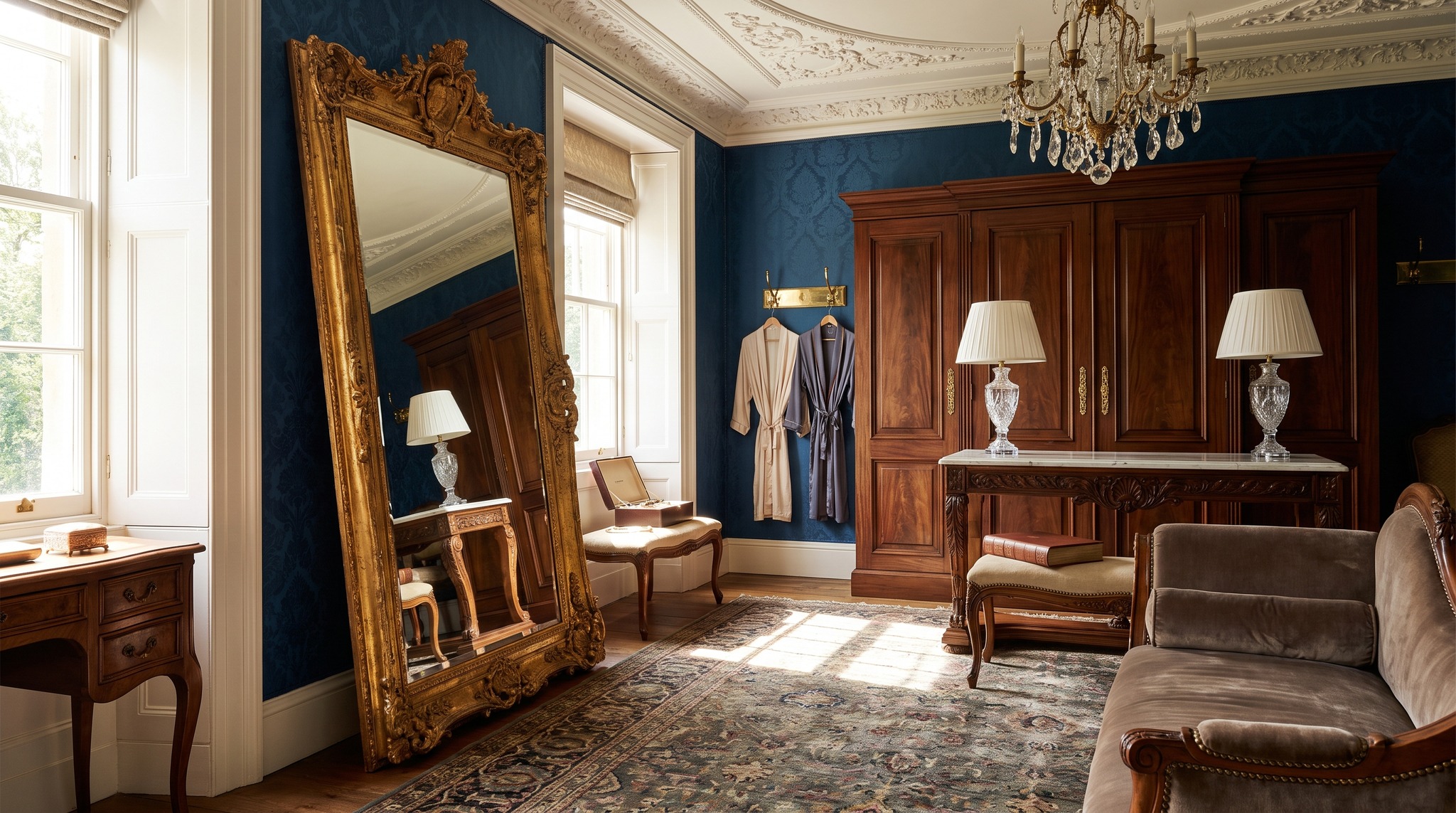
Anyone who not only stores clothing in the dressing room but also tries on and combines outfits needs a large mirror. But where exactly should it stand so that you can see yourself from head to toe without constantly changing position? The positioning determines whether the mirror is truly useful or simply wastes space. This article shows which locations have proven effective and what you should consider during installation.
Minimum Distance to the Wall and to the Viewer
A full-length mirror should stand at least 1.50 metres away from the point where you usually view yourself. Only then will you capture your entire silhouette without having to raise your head or bend down. If the mirror stands too close, you will only ever see sections. In very narrow dressing rooms, a slightly tilted standing mirror can help, leaning back slightly at the top to expand the viewing angle.
Opposite the Door or Next to the Window
The wall opposite the door is ideal, provided there are no built-in wardrobes there. This way, daylight falls directly on you, and you see yourself in full upon entering the room. Alternatively, the wall next to a window works well, as long as no backlighting occurs. Avoid the wall behind the door: there the mirror stands in a blind spot and is rarely used. Directly next to radiators is also unfavourable, because rising warm air causes the mirror surface to fog up.
Distance to the Floor and Ceiling
The lower edge should begin no more than 2 centimetres above the floor, so that shoes and trouser hems remain visible. A distance of 5 to 10 centimetres to the ceiling is sufficient to accommodate mounting rails or hooks. Some Mirrors are clamped directly between floor and ceiling with clamp holders, making drilling unnecessary. This solution is particularly suitable for rented flats or when you do not wish to damage the wall surface.
Width and Number of Mirror Surfaces
A single mirror should be at least 50 centimetres wide, preferably 60 to 80 centimetres. Anyone who also wants to view themselves from the side can position two narrow mirrors at right angles to each other or choose a three-part folding mirror. In large dressing rooms from 12 square metres onwards, a continuous mirror wall of 2 to 3 metres width is worthwhile, which visually doubles the space and covers every perspective.
Lighting Above or to the Side
Without good light, the best mirror is of little use. Mount LED strips or spotlights about 30 centimetres above the upper edge of the mirror, so that the light comes diagonally from above and does not cast harsh shadows. Side wall lights at face height, about 160 centimetres above the floor, supplement the illumination and prevent cast shadows under the chin. Daylight lamps with 5,000 Kelvin show colours true to life and make combining clothing easier.
Mounting with Heavy Frame Profiles
Full-length mirrors weigh between 15 and 40 kilograms depending on the frame material. Use heavy-duty dowels or anchors that are set into load-bearing walls. With plasterboard walls, cavity dowels or a continuous mounting rail are necessary to distribute the weight across multiple points. Before mounting, check with a detector where cables run, and mark the drill holes with a spirit level so that the mirror stands exactly vertical.
Related items: Garden Decoration, Garden Furniture, Baroque and Art Nouveau Garden Furniture. baroque mirrors. The complete range: Baroque Furniture.
Related categories: Garden Decoration, Garden Furniture, Baroque and Art Nouveau Garden Furniture. The full range: Baroque Furniture.
Read more: Oval Dining Table: Which Length Is Suitable for How Many People, Marble Coffee Table: What Weight the Floor Must Support, Round Luxury Rugs by Casa Padrino, Exclusive Designer Rugs for Luxury Hotels, Private Homes & Boutique Interiors, The Grandeur of Festive Artistry, Casa Padrino’s Majestic XXL Nutcracker Sculptures, Aluminum Aviation-Style Furniture, Exclusive Luxury Furniture by Casa Padrino