

The magnificent Casa Padrino garden fountain
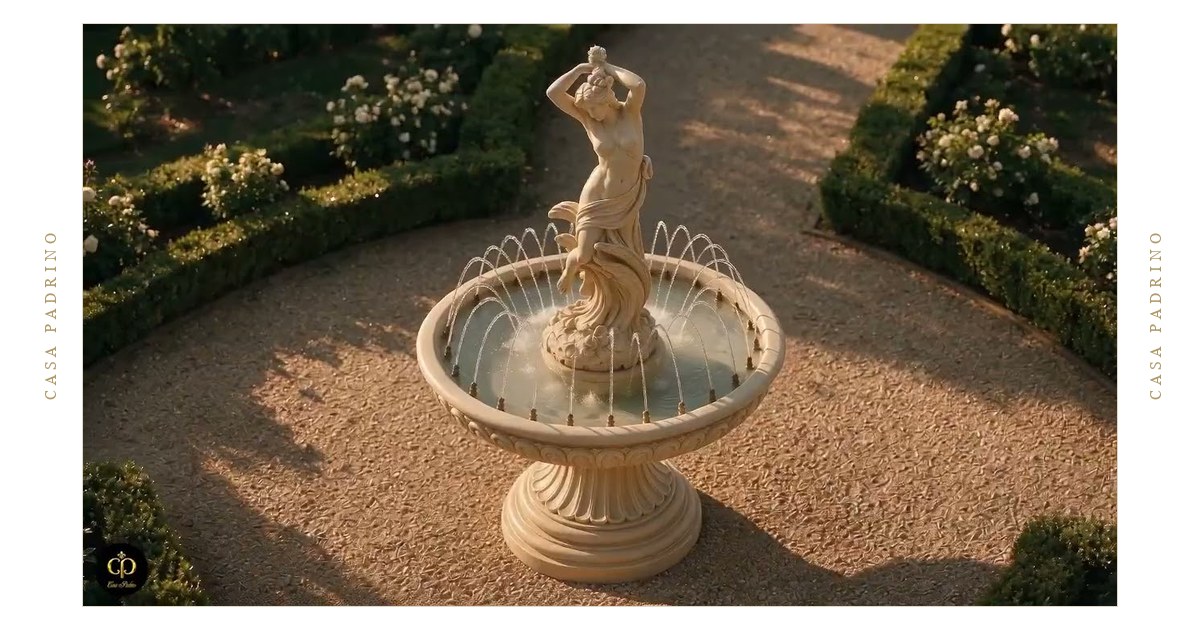
A fountain turns a stretch of lawn into a place. The magnificent Casa Padrino garden fountain stands at the centre of the grounds with its wide bowl, moulded pedestal and a sculpted figure on top, while a ring of water falls evenly into the basin. The short film shows it in evening light between clipped hedges and rose beds.
Where a fountain of this size comes into its own
A free-standing fountain needs space around it. It works best where paths lead towards it, or where an open area needs a centre – at the crossing point of an axis, in the middle of a courtyard, or as a focal point in front of the house.
- villa gardens and parks with a clear layout of paths
- courtyards that need a calm centre
- garden and outdoor areas of hotels, restaurants and event venues
- large terraces and driveways as a gesture of welcome
- grounds of estates in the baroque style
What defines this fountain
The shape follows the classical build of a tiered fountain: a moulded foot carries the wide bowl, and from its rim a ring of fine jets falls inwards. A figure on an ornamented plinth at the centre of the basin completes it.
The pale stone tone stays restrained and never competes with the planting. In raking light the mouldings on bowl and foot cast their own shadows, and the moving water brings additional light into the grounds. Like every Casa Padrino piece, the fountain is a work in the baroque style, not a historic original.
Before you install it: ground, pump, winter
A fountain of this size needs a load-bearing, level base. A compacted gravel bed or a concrete foundation keeps bowl and pedestal from settling later and the water from spilling unevenly over the rim.
A pump in the basin keeps the water circulating; head and flow rate depend on the size of the basin and the number of jets.
Drain the water before the first frost and move the pump somewhere dry and frost-free. A cover keeps leaves and damp out of the bowl and protects the surface through the winter.