

Luxury Washbasin: Marble, Travertine and Vessel Sinks
A luxury washbasin is the one object in the bathroom that you touch every single morning. That is why the material matters more here than anywhere else in the room. A bowl cut from marble or travertine carries a grain that came out of the quarry block, not out of a mould, so no two pieces are alike. Casa Padrino, an international house for luxury furniture and bathroom design, presents these basins in its category washbasins and washstands, from the classic 42 cm marble bowl to Italian ceramic, crystal glass and solid brass.
This guide is about the basin itself: material, shape, diameter and the way bowl, furniture and tap have to work together. The piece underneath, the vanity unit with its heights, widths and storage, has its own page on the luxury vanity unit. If you are planning a complete period bathroom, our guide to the Victorian bathroom brings all the elements together.
In British homes the basin has often been the forgotten part of a refurbishment: the bath gets the attention, the basin comes with the suite. In a luxury bathroom it works the other way round. A vessel sink in stone or brass is the quickest way to lift an existing room, because it can be changed without lifting a single tile. For hotel suites, boutique hotels and private villas across Europe, Casa Padrino supplies exactly this kind of piece.
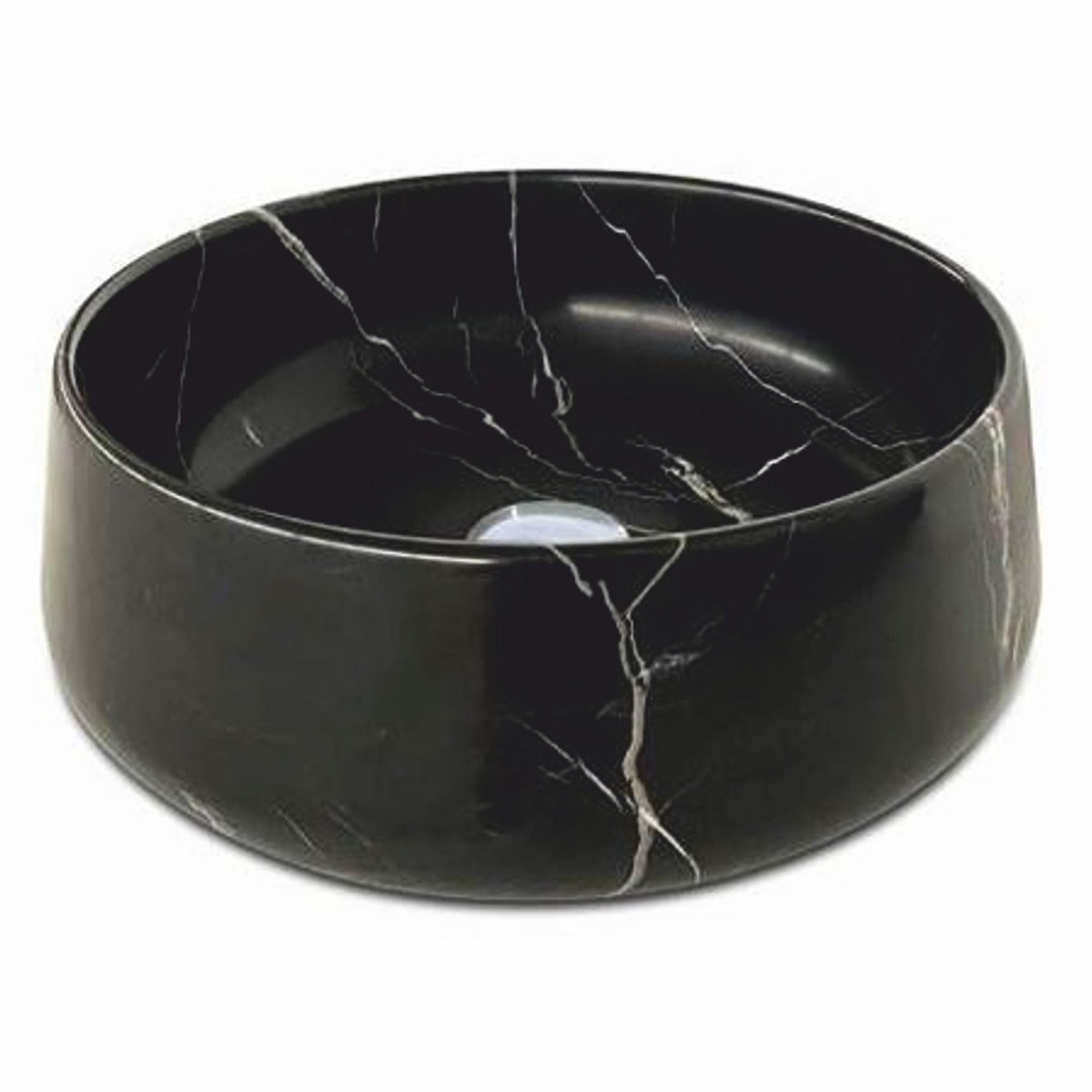
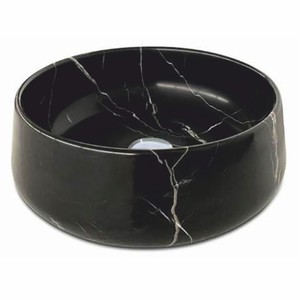
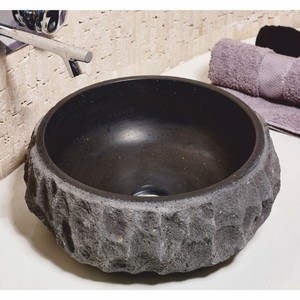
A round bowl of black marble with fine white veining, 42 cm across and 14 cm tall. Pictured: Casa Padrino Luxury Marble Washbasin Bowl Black Ø 42 cm
The materials and what they mean day to day
Our range is organised by material, and the material decides appearance, care and character in equal measure. These are the families you will find:
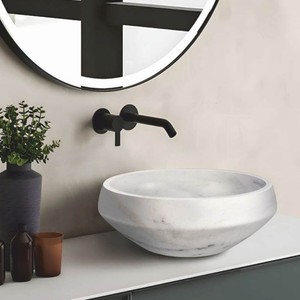
- Marble: round bowls of 39 and 42 cm in white, black, anthracite, blue and a multicoloured stone, an oval bowl of 58 cm in brown, and larger basins of around 75 and 80 cm, including a Carrara marble basin in white and lilac. Lively veining, a cool touch and a unique piece every time.
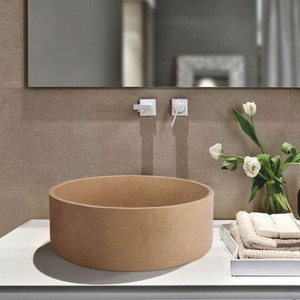
- Travertine: warm, calmer stone in beige (40 cm) and taupe (42 cm), with the open, porous texture typical of travertine.
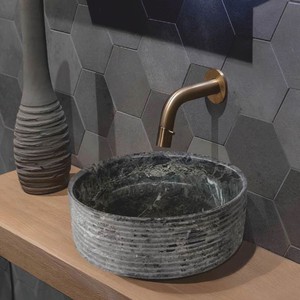
- Grey natural stone: the most restrained of the stone bowls, ideal where wall tiles or furniture already provide pattern.
- Ceramic: round and oval bowls in high gloss white, grey and white with gold, and a black and gold bowl of 44 cm made in Italy. Easier to look after than stone.
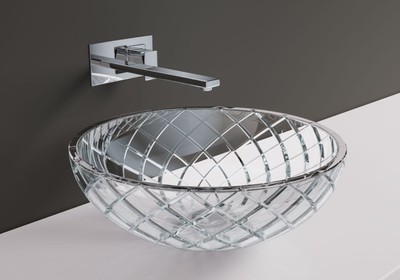
- Crystal glass and glass: a round crystal glass bowl of 44 cm in clear or gold and a rectangular glass basin of 65 cm in clear or bronze, all made in Italy.
- Brass and concrete: hand-finished Art Nouveau brass bowls in antique yellow gold and rose gold, and handmade concrete basins in a range of colours.
The stone bowls stand 14 cm tall, the Italian ceramic bowl 17 cm, the crystal glass bowl 15 cm and the brass bowls 15.5 cm. Those heights matter later, when the tap is chosen. Many models can be supplied in other colours on request; our customer service will tell you what is possible for a given basin.
Round, oval, rectangular or shell-shaped
The round bowl is the most common form and the least demanding. It sits in the middle of the top, needs the same clearance on every side and forgives small inaccuracies when it is positioned. With a diameter of 42 cm, a vanity unit of 90 cm leaves generous space for soap and towels on both sides.
Oval and rectangular basins follow the line of the furniture and look calmer, but they need precise alignment, because any deviation is visible at once. The 58 cm oval marble bowl and the 65 cm glass basin belong on wider tops and suit straight-lined furniture. The large marble basins of 75 and 80 cm are statement pieces for a generous double-width top or a single basin in a spacious master bathroom.
Sculptural shapes are the boldest choice. A shell-shaped bowl in high gloss white, 61.8 cm wide and cast in cultured marble, draws every eye in the room. Such a piece works best where the rest of the bathroom is quiet. In a richly decorated room it competes with everything else.
Vintage basins and the Victorian bathroom
Britain has a long love affair with the period bathroom: roll top baths, high level cisterns, cross-head taps and white porcelain on polished legs. A vintage basin is the natural partner for that look, and Casa Padrino offers several interpretations of it.
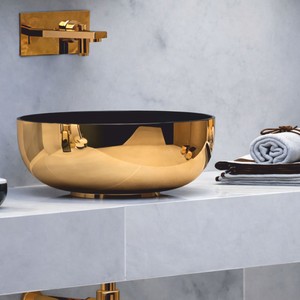
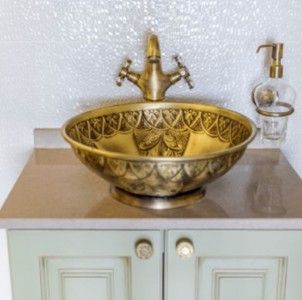
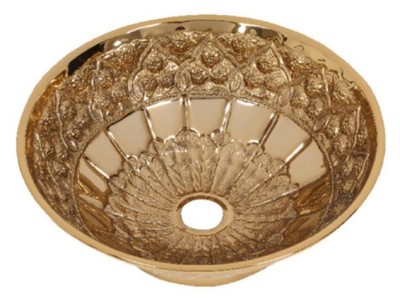
The Art Nouveau brass bowls, round, 41.5 cm across and 15.5 cm tall, are embossed with an ornament that catches the light. In antique yellow gold they suit a warm, slightly oriental mood. In rose gold they look softer and more contemporary. Paired with a tap in a warm metal finish, they bring a touch of the grand hotel to a cloakroom.
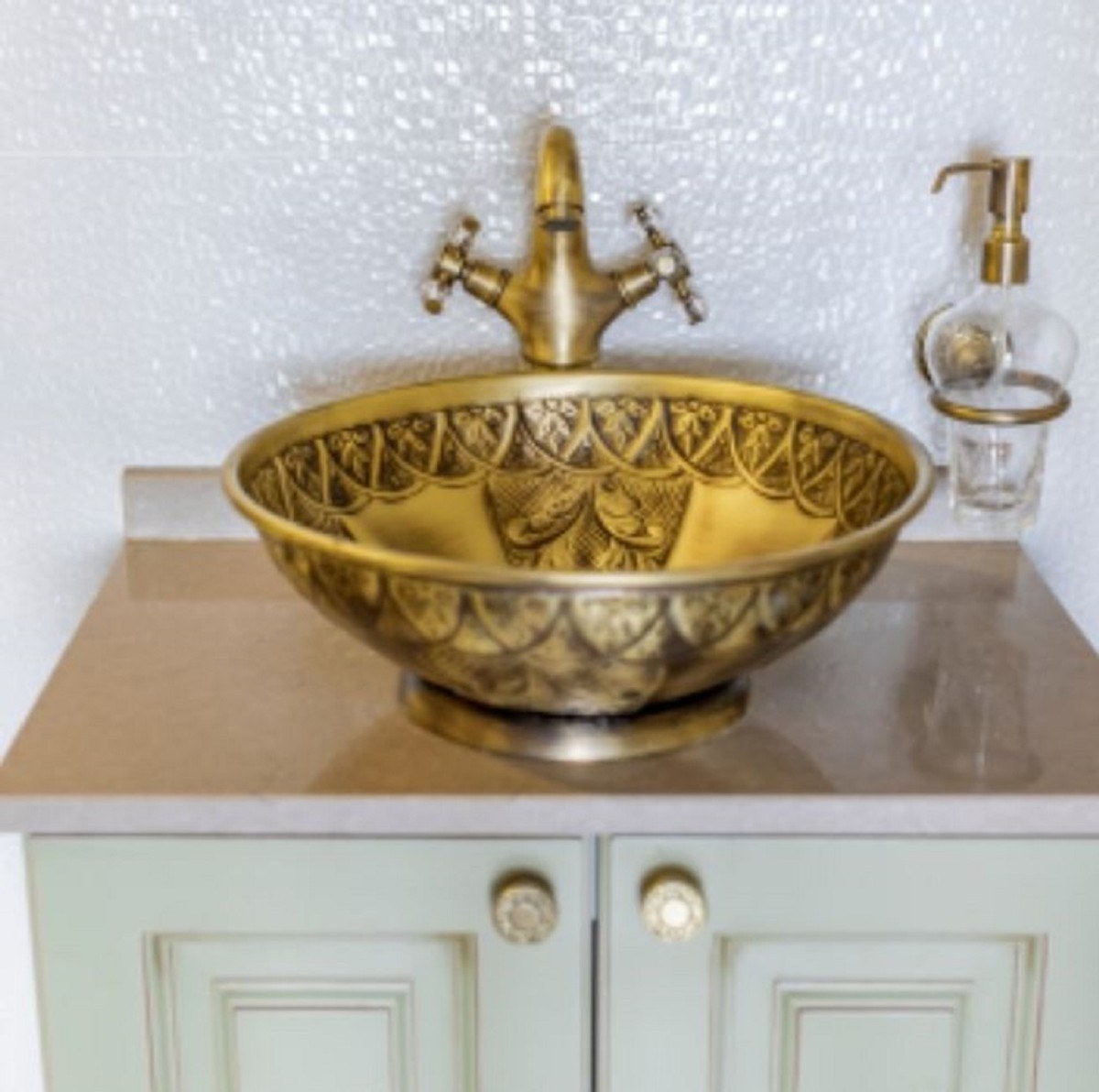
The Art Nouveau bowl in embossed brass, antique yellow gold, 41.5 cm across, on a painted vanity. Pictured: Casa Padrino luxury Art Nouveau washbasin bowl antique yellow gold Ø 41.5 x H. 15.5 cm
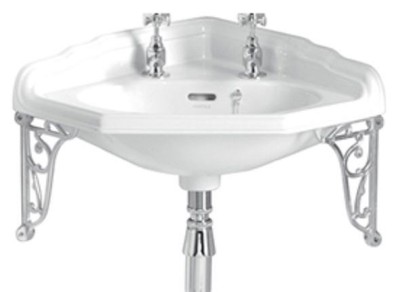
For a classic Edwardian feel there is a porcelain corner basin in white and silver with a wall bracket and two tap holes, 63.5 by 49.5 cm, a sensible solution for small cloakrooms where every centimetre counts. An Art Deco inset basin in white or black, 50 by 41.5 cm, is set into a top and keeps the period character even in a modern vanity. And for the large family bathroom there is a rectangular Art Nouveau porcelain basin on a pedestal, 121 cm wide and 89.5 cm high, which stands on the floor like a piece of furniture.
A retro basin only convinces when the surroundings follow. Our high level cistern toilet, the freestanding bath taps and a luxury towel warmer complete the picture, all with matching metal finishes.
The tap is part of the decision
Most disappointments in the bathroom happen where basin and tap meet. A vessel sink sits on top of the counter, so its rim lies 12 to 17 cm higher than that of an inset basin. A standard basin mixer then cannot reach over the edge, and water runs down the outside of the bowl.
A vessel basin therefore needs a tall mixer or a wall-mounted tap whose spout ends above the rim. Compare two dimensions before ordering: the height of the spout and the height of the bowl. As a rule of thumb, the spout should sit a good five centimetres above the rim and reach far enough into the bowl that the water does not hit the edge.
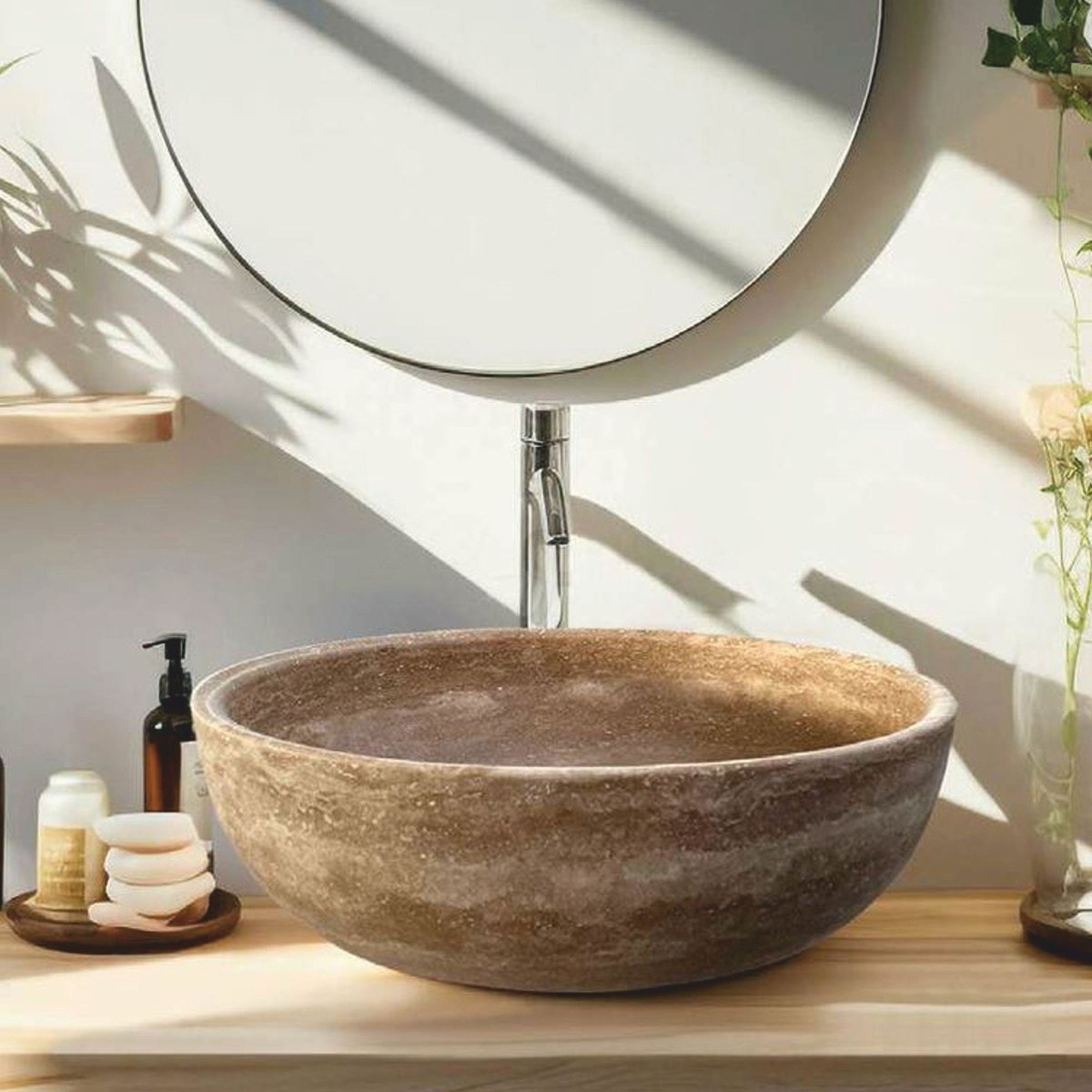
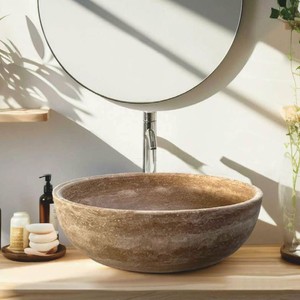
Travertine in beige brings warmth and a calm texture to the counter, 40 cm in diameter. Pictured: Casa Padrino Luxury Travertine Washbasin Bowl Beige Ø 40 cm
Suitable wash basin taps in gold, silver, chrome, matt black and antique brass are part of our bathroom collection, among them Art Nouveau mixers with crystal glass handles and tall models of around 30 cm that suit a vessel sink. The metal finish of the tap should match the other fittings in the room, from the bath taps to the towel rail. It is the simplest way to make a bathroom look composed rather than assembled.
Caring for natural stone, glass and brass
Marble and travertine are calcareous stones, and from this follows the one rule that really matters: no acidic cleaners. Vinegar, citric acid, limescale removers and many bathroom sprays etch the surface and leave dull marks that cannot be wiped away, because the stone itself has been attacked. The damage takes seconds and is permanent. In hard water areas, which cover much of southern and eastern England, this is worth explaining to everyone who uses the bathroom.
The right approach is a pH-neutral cleaner and a soft cloth. Wiping the bowl dry after use prevents limescale rings before they form. A stone sealer applied once or twice a year keeps water and soap on the surface and makes daily cleaning far easier. Travertine, with its open pores, asks for a little more attention than dense marble, but its texture hides fine scratches well.
Glass and crystal glass are non-porous and simply need a soft cloth and a mild cleaner; scouring pads would leave scratches. Brass develops a gentle patina over time, which many owners of a period bathroom welcome. Mild soap and water, then drying, is all it needs. Ceramic is the most forgiving of all materials, which is why it is often the wiser choice for a busy family bathroom or a holiday let.
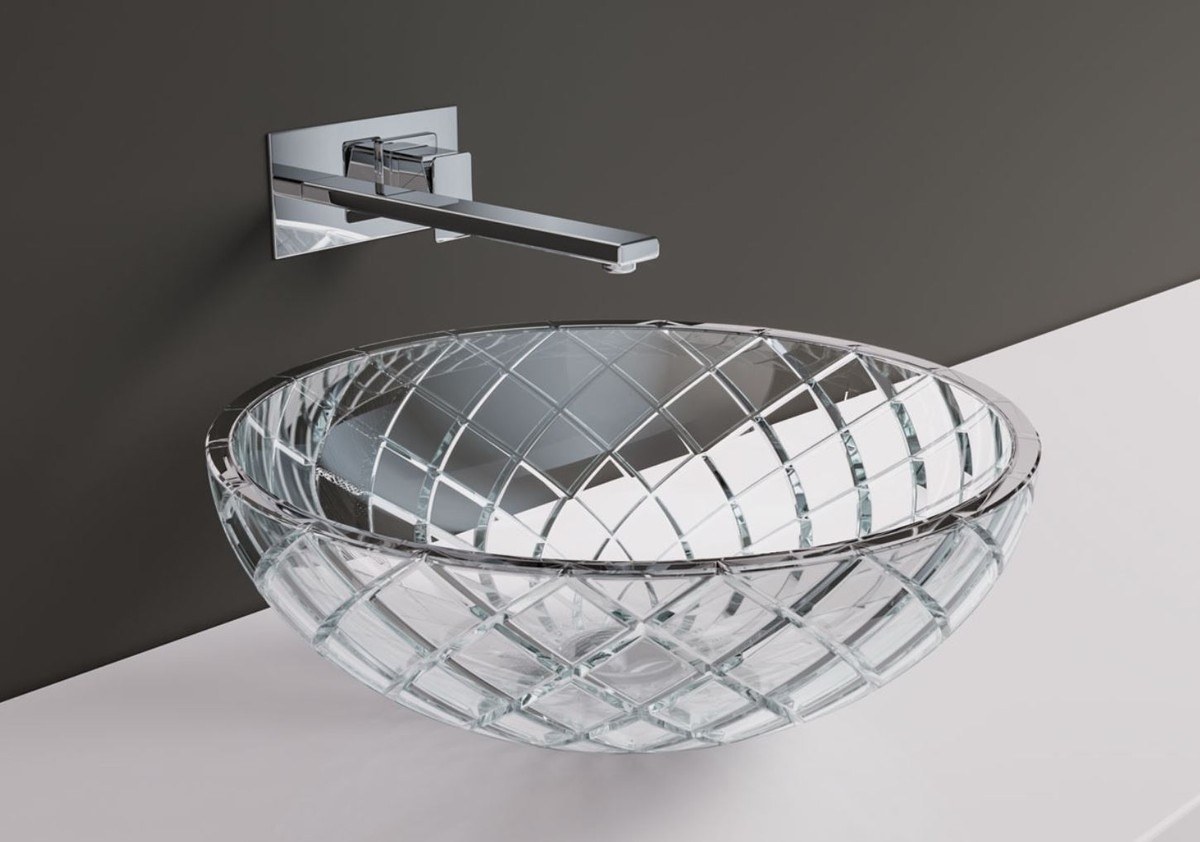
Clear crystal glass with a cut pattern, 44 cm across and made in Italy, under a wall-mounted spout. Pictured: Casa Padrino Luxury Crystal Glass Washbasin Bowl Transparent Ø 44 cm
Waste, seal and installation
Many vessel basins have no overflow. In that case you need a waste without overflow function, often called an unslotted waste. A slotted waste in a bowl without overflow lets water escape in the wrong place. Your plumber will know this, but it is worth checking the product data and mentioning it when you order. Most basins are supplied without tap and without waste, so both should be planned at the same time.
Between bowl and counter sits a thin bead of silicone or a seal, which supports the basin and stops water creeping underneath. This joint is the only real maintenance point and should be renewed every few years. On a solid top that is all there is to it.
Weight is the other point to check. A ceramic bowl of 44 cm weighs 9.3 kg, a stone bowl of the same size noticeably more, and the large pedestal basins reach around 50 kg. A solid vanity unit carries this without difficulty. With slim wall consoles, the load-bearing capacity of the wall and the fixings should be checked before installation.
Basins without a vanity: freestanding and pedestal
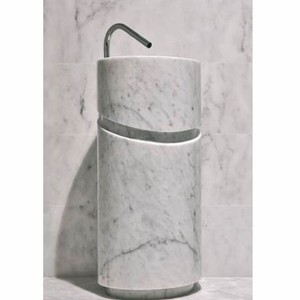
Not every bathroom has room for a cabinet, and not every design wants one. Freestanding basins bring the bowl to a comfortable height on their own: a freestanding white marble basin, 90 cm high; ceramic basins on a sculptural metal stand in white or black, 85 cm high and made in Italy; a high gloss white ceramic column of 95 cm; and a pedestal basin of 88 cm in cast cultured marble.
They are the answer for a cloakroom without space for furniture, and for rooms in which the basin should stand freely, like a sculpture. In hotels they are popular for exactly that reason: they look generous, are easy to clean around and need nothing but a floor or wall connection.
For the hospitality sector the basin offers a very concrete advantage. It changes the effect of a bathroom completely without touching tiles, pipes or furniture. Hotels that want to refresh their rooms without closing them often find that a new vessel basin and a new tap are the only practical intervention. And on booking platforms the bathroom is one of the most viewed photographs: a natural stone bowl reads as high quality at first glance.
Casa Padrino: luxury washbasins for homes and hotels
Casa Padrino has long stood for luxury furniture and exclusive bathroom design in the baroque, Art Nouveau and Art Deco tradition. The range runs from a single marble bowl to complete vanity units, freestanding baths and bespoke fit-outs for villas, hotels and restaurants. We work with architects and interior design studios, supply series of identical basins for entire room categories and deliver internationally. Discover the complete collection at www.casa-padrino.de/en.
Our bathroom series at a glance
- Victorian bathroom
- Traditional radiators
- Designer radiators
- Luxury towel warmer
- High level cistern toilet
- Freestanding bath taps
- Victorian bathtub
- Freestanding bathtub
- Gold bathtub
- Luxury vanity unit
Frequently asked questions about luxury washbasins
Which material is right for a luxury washbasin?
Marble has the most vivid veining and the most luxurious feel, but needs pH-neutral care. Travertine is warmer and calmer, with an open-pored texture. Grey natural stone is the most restrained. Ceramic is far easier to look after, while crystal glass and brass are the choices for a strong design statement.
Why should acidic cleaners never be used on marble?
Marble and travertine contain lime. Vinegar, citric acid, descalers and many bathroom cleaners etch the surface and leave dull patches that cannot be wiped off. The damage happens within seconds and is permanent. Use a pH-neutral cleaner and a soft cloth instead.
What diameter should a vessel sink have?
Most of our round bowls measure 40 to 44 cm, larger basins reach 58 to 80 cm. On a vanity unit of 90 cm, a 42 cm bowl leaves enough space on both sides. On narrow furniture, choose a smaller or rectangular model.
Which tap suits a vessel basin?
A tall basin mixer or a wall-mounted tap. A standard mixer does not reach over the rim, because the bowl adds 12 to 17 cm. The spout should end about five centimetres above the rim and reach well into the bowl.
Do the vessel basins have an overflow?
Many do not. In that case an unslotted waste without overflow function is required, otherwise water escapes in the wrong place. Check the product data and mention it to your plumber before installation.
Does every marble basin look the same?
No, and that is the point. Veining, colour and pattern come from the stone block, so each bowl is unique. Differences from the product photograph are not a defect but the nature of the material.
What is a vintage basin, and what do you offer?
A vintage or retro basin recalls Victorian, Edwardian and Art Nouveau bathrooms. We offer embossed brass bowls in antique yellow gold and rose gold, a porcelain corner basin with wall bracket, an Art Deco inset basin and a 121 cm porcelain basin on a pedestal.
Does natural stone need to be sealed?
It is not essential, but it makes care much easier. A stone sealer applied once or twice a year keeps water and soap on the surface. Wiping the bowl dry after use also prevents limescale rings, which is particularly useful in hard water areas.
Are there washbasins that need no vanity unit?
Yes. We offer freestanding marble basins of 90 cm, ceramic basins on a metal stand of 85 cm made in Italy, a ceramic column of 95 cm and a pedestal basin of 88 cm. They suit cloakrooms without space for furniture.
Can Casa Padrino supply washbasins in series for hotels?
Yes. We supply identical basins for entire room categories, internationally and in coordination with architects and interior designers. As a vessel sink can be replaced without touching tiles or pipes, it is the upgrade with the least disruption to hotel operations.