

Beach Cabana and Pavilion: the Bookable Shade Space by the Sea
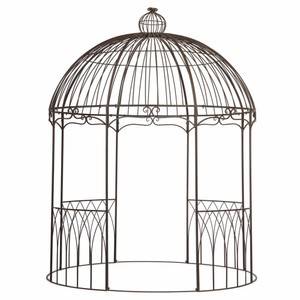
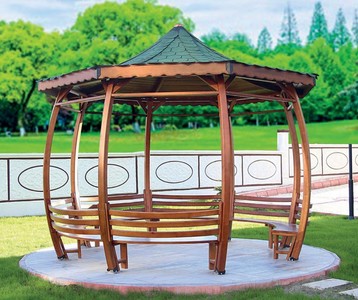
A parasol gives shade. A pavilion gives a place. That is the whole difference, and it can be expressed in money: for two sun beds under a parasol a guest pays the day rate, for a cabana with its own sofa, its own table and its own service they pay a multiple of it. Beach cabanas are therefore the single item with the highest yield per square metre a beach site can install. Casa Padrino supplies pavilions and garden houses for beach clubs, hotel beaches, resort pools and garden restaurants.
The idea is old and has worked on every coast for a hundred years: a defined, shaded area in which a family or a group spends the day without giving up their spot. What is new is that these areas are now bookable, reserved in advance and served individually. Sun protection has become a product.
As a supplier of luxury furniture with experience in hotel and contract furnishing, we put such areas together completely, from the structure through the furniture to the lighting.
Why a Cabana Pays Off Faster Than a Row of Sun Beds
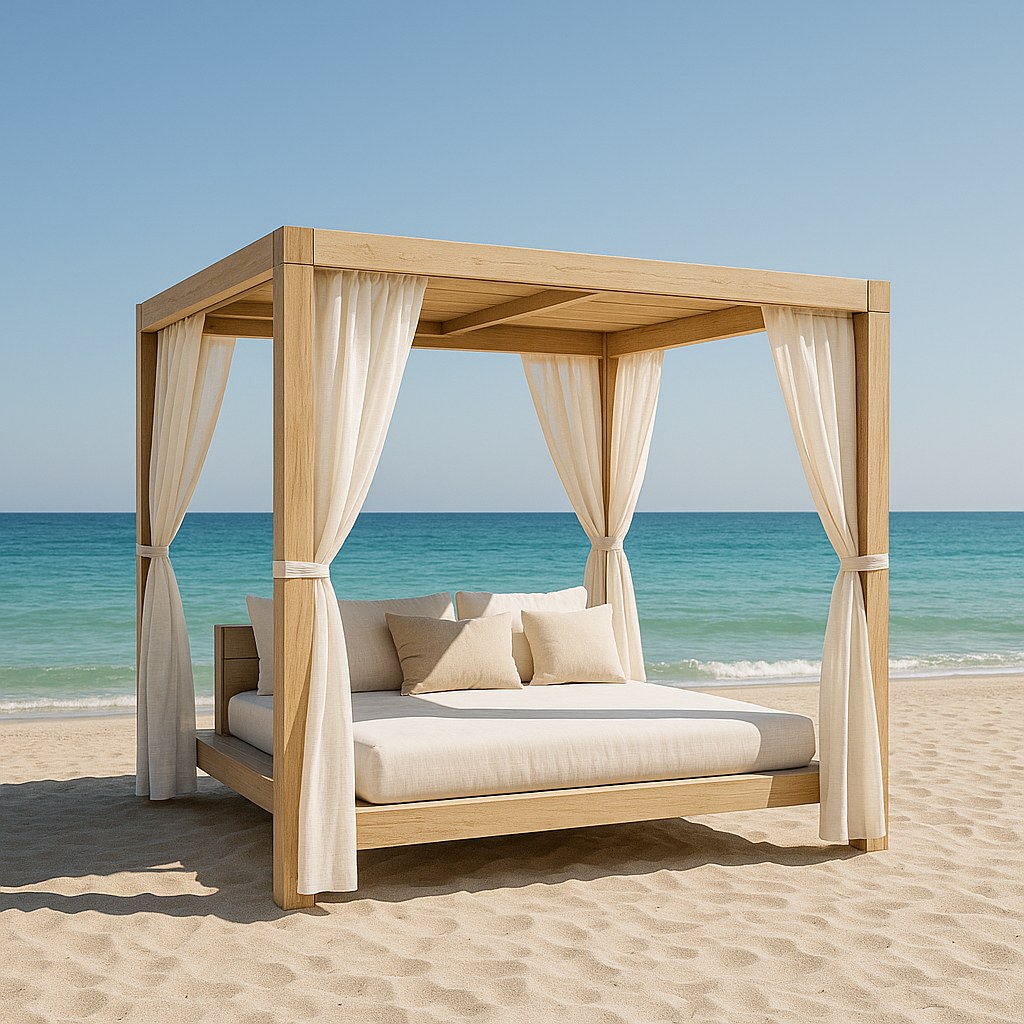
The arithmetic is simple. A cabana occupies the footprint of roughly four to six bed spaces. It is not billed by the bed, though, but rented as an area in its own right, usually for the whole day and frequently booked in advance. On top of that, groups in a cabana order continuously, because they do not have to leave the space and nobody has to chase after them.
The second effect is occupancy. A cabana gets booked on mixed days when the open bed rows stay empty, because it offers shelter from wind and the occasional shower. Exactly those days on which a beach site otherwise earns nothing, it carries.
The third effect is the picture. A pavilion is a structure and is perceived as one. It gives a surface a silhouette, a focal point and a motif that guests photograph and pass on. No parasol achieves that, however beautiful it is.
Forms: From an Open Roof to a Closed Cabin
Between a parasol and a permanent building there are several steps, and each serves a different purpose:
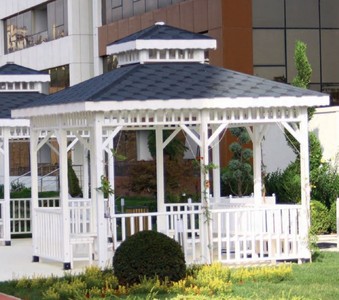
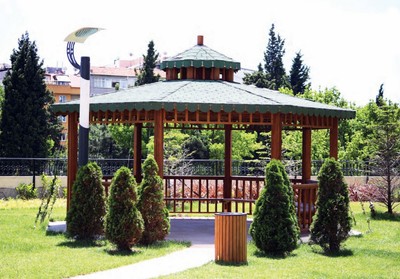
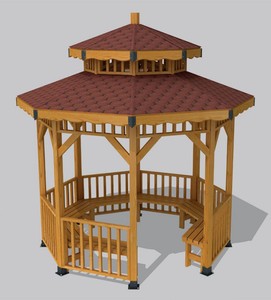
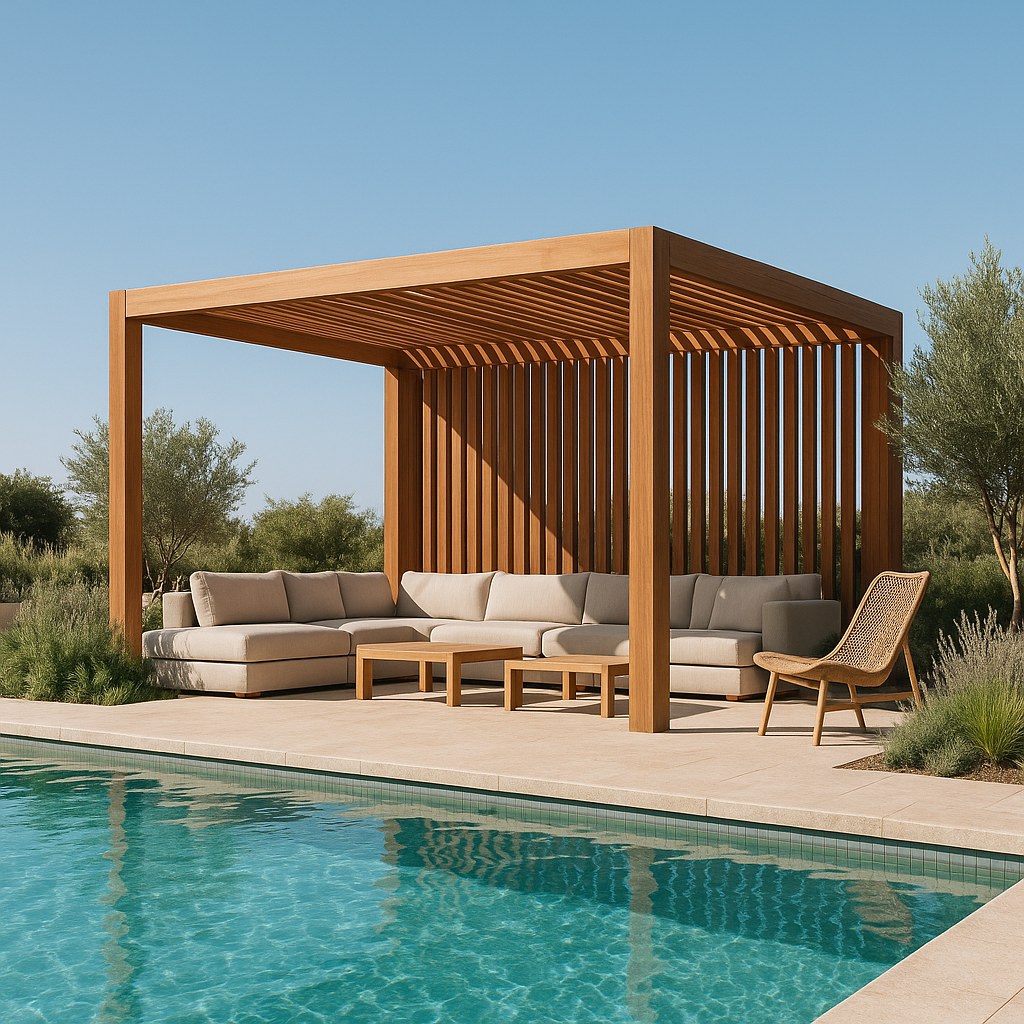
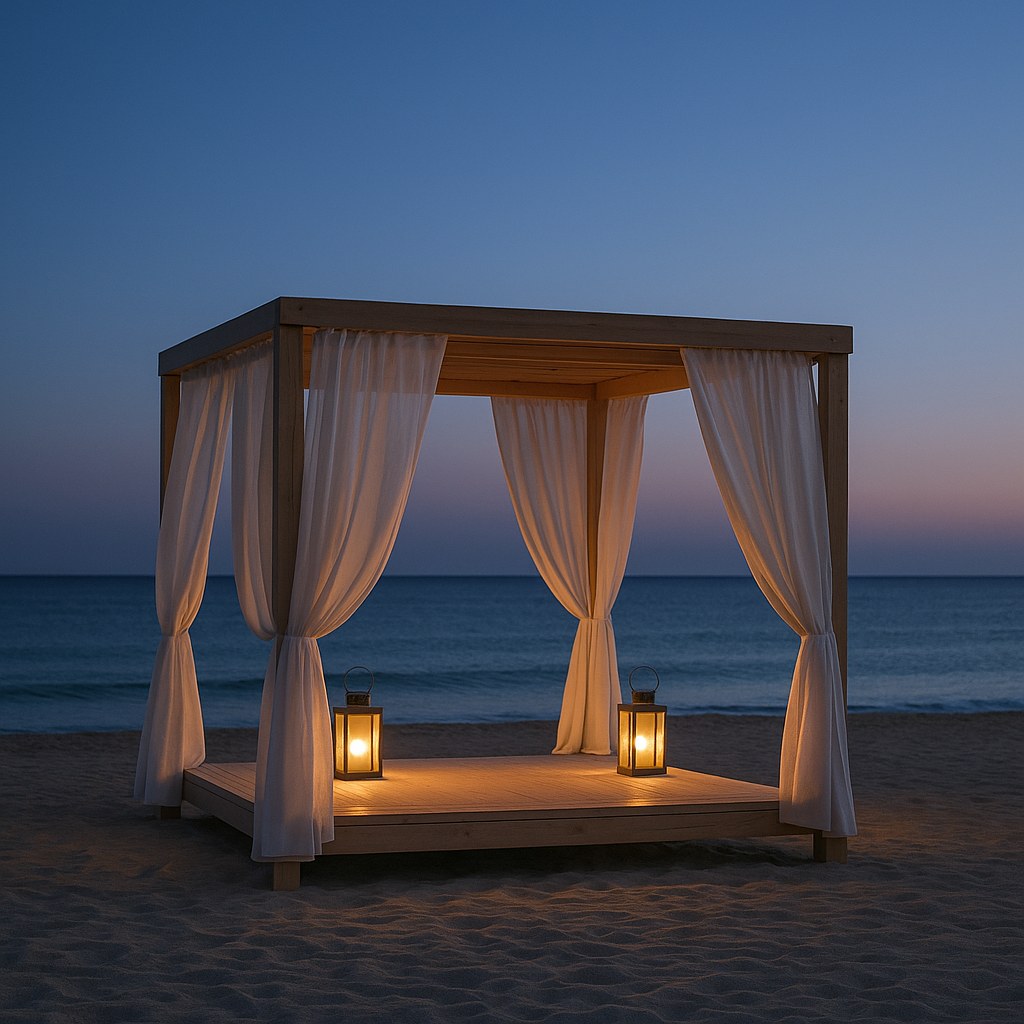
- Open pavilion with four posts and a solid roof: the classic, all day shade, open views in every direction
- Pavilion with curtains: the same structure plus fabric panels, closed according to sun angle and wind
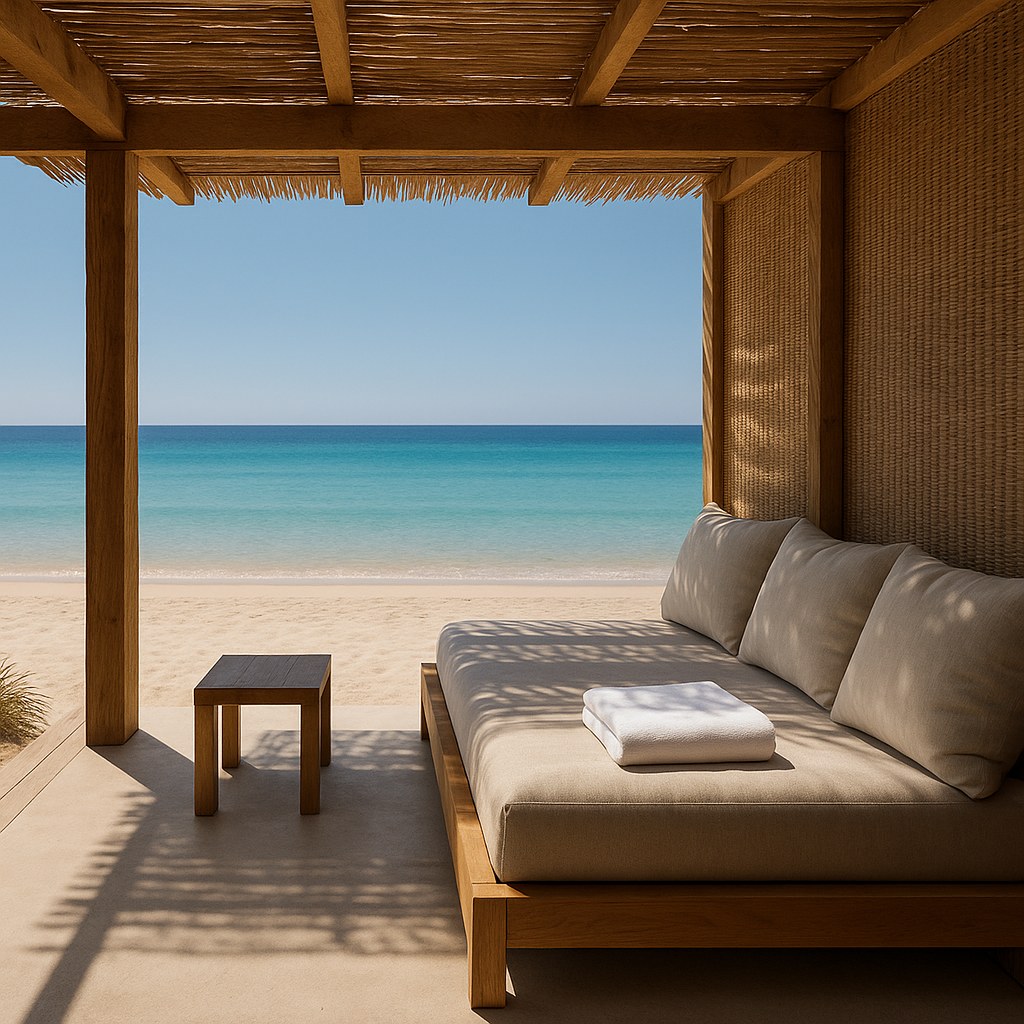
- Cabana with a back wall: one closed side against the prevailing wind, the remaining sides open
- Garden house or solid pavilion: for sites with a fixed position and multi year use, also usable as storage or a service point
- Fully enclosed cabin: as a changing room, for massage and wellness offers, or as a private retreat
Our pavilions and garden houses cover that range. For sites building several zones, the pavilion combines with classic shade as described on the page about beach club parasols.
Position: Where a Cabana Belongs
The best place for a cabana is rarely the front row. In the front row it stands in everyone else's view, shades the most expensive bed spaces and takes the water view away from the site. The second or third row has proven itself, at an edge or along a natural boundary, where the structure itself becomes the division and still has a sea view.
Orientation matters. The closed side belongs to the prevailing wind, the open roof to the afternoon sun, because that is when a cabana is genuinely needed. Plan only for midday sun and you get low, raking light under the roof from four o'clock and an unusable area.
The third point is the path. A bookable cabana needs service, and service walks back and forth all day. A firm path from the bar to the cabana saves staff time, protects the drinks and makes the area usable for guests with limited mobility.
Anchoring: Where It Gets Serious
A pavilion is a large surface on few supports, which makes it a sail. What causes material damage on a parasol becomes a safety issue on a pavilion, because people sit underneath it. Anchoring is therefore not a question of appearance but the central planning decision.
On sand the answer is buried foundations or ground sockets that sit below the surface and leave the beach walkable. On solid ground, bolted base plates or weighted footings are used. The ballast has to match the roof area and the wind exposure, not the price. In exposed positions, removable roof panels belong in the specification so they can be taken down within minutes when a storm is forecast.
For permanent structures, local building law applies on top. What counts as a temporary structure, a seasonal building or a structure requiring permission differs from country to country and often from municipality to municipality, particularly in coastal protection zones. That question belongs at the beginning of planning, not the end, because it determines the form.
What Belongs Inside a Cabana
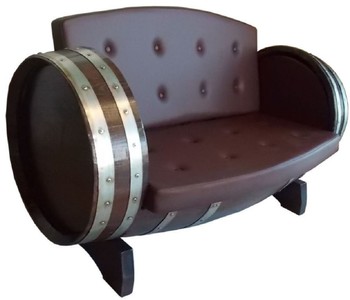
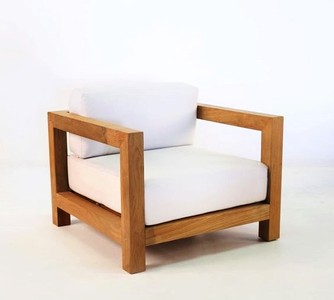
An empty pavilion is a roof. Only the furnishing turns it into a product somebody books in advance. A proven base specification is a daybed or deep seat, a low table, two armchairs, a surface for bags and hooks for towels. Everything beyond that is positioning.
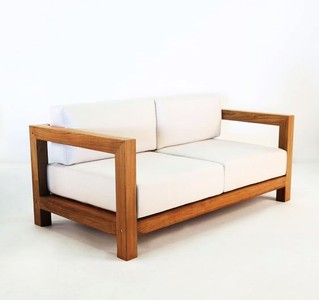
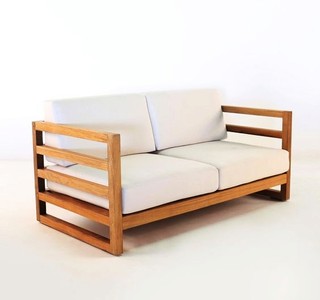
Suitable pieces are found in our solid wood lounge range and the luxury garden furniture collection. What to watch for in materials and upholstery in a salt climate is set out in detail on the page about beach bar lounge furniture.
Two additions make a large difference. A hammock or hanging swing beside the pavilion becomes the most photographed point on the entire site. And large planters along the open sides provide the privacy that makes a cabana a cabana, without blocking the view of the water.
The Cabana in the Evening
A pavilion left dark in the evening is cleared at six. With light it becomes the most sought after spot on the site, because it is the only area with walls, a roof and an atmosphere of its own. Two warm points of light inside, one low beam from outside onto the roof, and that is enough. Bright light from above destroys the effect immediately.
Suitable garden and terrace lights and the ground rules of lighting on a beach are collected on the page about beach club lighting. For cool evenings, terrace stoves and fire bowls extend the area, though always outside the pavilion and never under a fabric roof.
End of Season and Care
Fabric panels and roof covers belong in dry storage at the end of the season, not damp in a crate. Timber structures are oiled or deliberately left to grey depending on the species, fittings and foot points rinsed weekly with fresh water. Keep to that single step and the life of the connections extends considerably.
Structures assembled and dismantled every year should be designed for it from the outset: bolted or slotted rather than glued, using standard parts rather than bespoke pieces, and with assembly instructions a seasonal team can follow. That work returns every spring, which makes it a bigger factor in running costs than the purchase price.
Casa Padrino for Beach Structures and Contract Projects
Casa Padrino is among the large European suppliers of high quality furniture and furnishes hotels, villas and hospitality projects. Pavilions, garden houses and the matching furniture are delivered internationally, for individual areas as well as entire sites. Contract quotations are prepared individually according to area, quantity and specification.
The full selection of pavilions and the complete beach club fit out can be found at https://www.casa-padrino.de/en
Frequently Asked Questions About Beach Cabanas and Pavilions
What is the difference between a pavilion and a cabana?
In language, cabana refers to the rentable, often curtained retreat on a beach or by a pool, while pavilion describes the structural form: four posts, a solid roof, open sides. In practice the same structure is called either depending on how it is furnished and marketed. What matters is not the name but whether the area is bookable as a product.
How much space does a cabana need?
Typical footprints run between nine and sixteen square metres, so three by three to four by four metres. That corresponds to four to six bed spaces. Built smaller, the area feels cramped and does not justify the premium; built much larger, it only gets booked at sites with plenty of space.
How is a pavilion anchored in sand?
With buried foundations or ground sockets below the surface, so the beach stays walkable. On solid ground, bolted base plates or weighted footings are used, with ballast matched to the roof area and the wind exposure. In exposed positions, removable roof panels belong in the specification so they can come down quickly when a storm is forecast.
Does a beach pavilion need planning permission?
That depends on the location. What counts as a temporary structure, a seasonal building or a structure requiring permission differs by country and often by municipality, especially in coastal protection zones. The question should be settled before the form is chosen, because it decides between a permanent build and a demountable structure.
Is a cabana worthwhile for a small site?
Yes, often particularly so. Even a single bookable area lifts the price level of an entire site, because it creates an offer above the day rate and gives the surface a silhouette. The important thing is not to place it in the front row, where it blocks the view for everyone else.
How should a cabana be furnished?
A daybed or deep seat, a low table, two armchairs, a surface for bags and hooks for towels have proven themselves as the base specification. Materials and upholstery must meet the same requirements as in the open area, because the salt air stands under the roof as well.
How do you provide privacy without losing the sea view?
With curtain panels on two sides and tall planters along the open edges. Both screen side views and leave the outlook to the front clear. Solid walls on more than one side take away the air movement, and a pavilion without a through breeze does not get used on hot days.
How much light does a pavilion need in the evening?
Little, but well placed. Two warm points of light inside and one low beam from outside onto the roof are enough. Bright light directly overhead destroys the character of the area instantly and turns it into an illuminated tent rather than a retreat.
What matters for annual assembly and dismantling?
Structures for seasonal use should be bolted or slotted, built from standard parts, and come with instructions a changing seasonal team can follow. Textiles go into dry storage. The annual effort affects running costs more than the purchase price does.
Does Casa Padrino deliver pavilions internationally?
Yes. Pavilions and garden houses are freight goods and ship dismantled, with kerbside delivery. Access, unloading point and interim storage should be settled beforehand, because at many beach locations an articulated lorry cannot reach the site itself.