

Dining Table on Rug: Which Size Belongs Under Table and Chairs
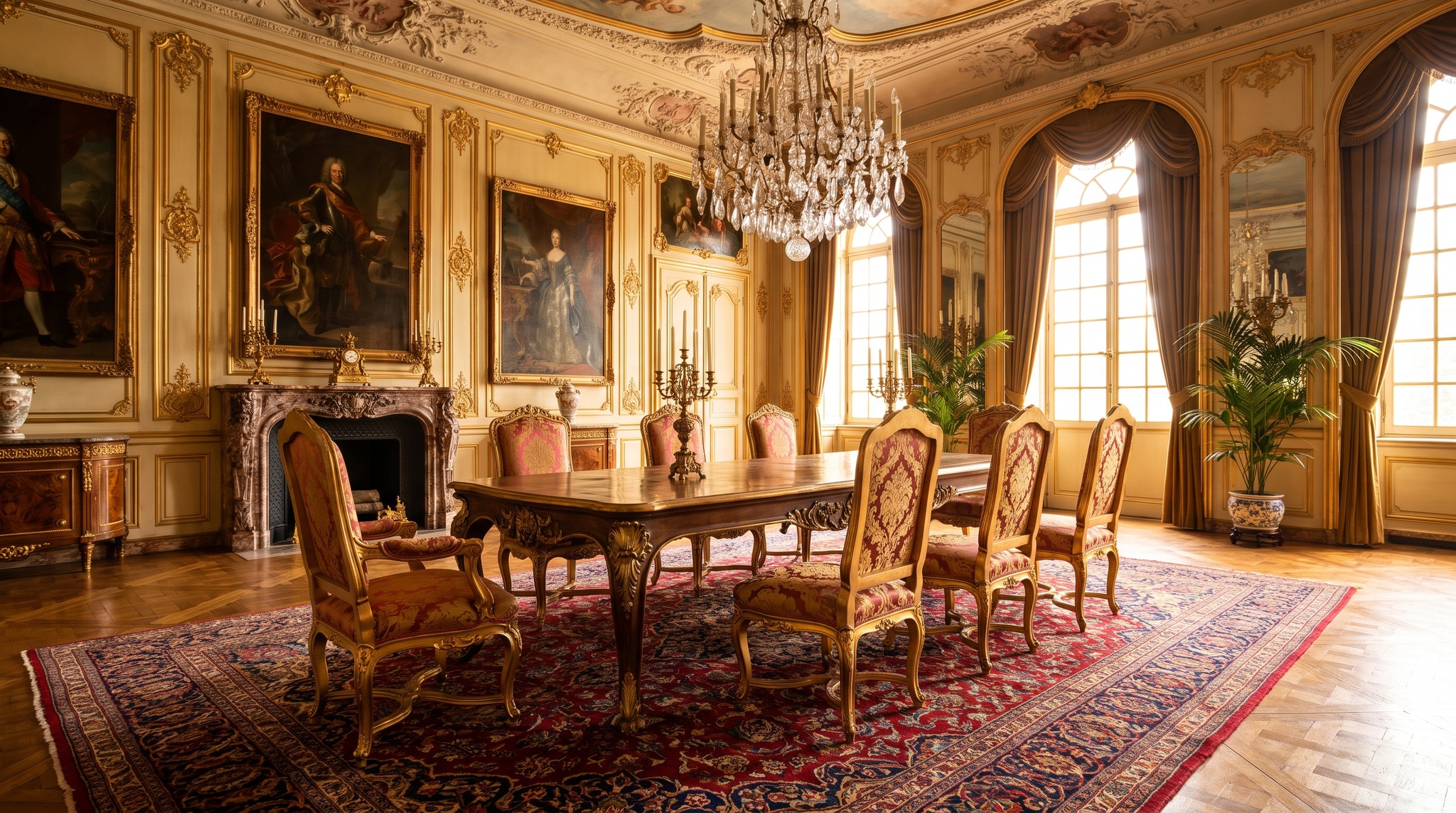
You are planning to place a rug under your dining table and wondering how large the surface needs to be? The right rug size ensures that chairs do not slip over the edge when pulled out and that the room appears harmonious. Too small appears restless, too large can visually constrict the space. In this article you will learn which dimensions make sense and what you should pay attention to regarding material and shape.
Rule of Thumb: At Least 60 cm Overhang on Each Side
To allow a chair to be pulled out comfortably without the back legs leaving the rug, add at least 60 cm to the table edge on each side. For a table measuring 160 × 90 cm, this results in a rug surface of at least 280 × 210 cm. Those who plan more generously or use heavy chairs with armrests can also choose 70 to 80 cm overhang. This leaves enough room even when guests push the chair somewhat further back.
Rectangular or Round Rug: Form Follows the Table
The rug shape should correspond to the table shape. Under a rectangular table, a rectangular rug appears calmer and clearer. Round or oval tables harmonize with round rugs, whereby the diameter of the rug should be at least 120 cm larger than the table diameter. With square tables you can also choose a square rug, provided the room proportions allow it. Ensure that the rug lies centrally under the table so that the overall appearance remains balanced.
Material and Pile Height: Practical and Easy to Maintain
For the dining area, flat woven rugs or those with short pile up to approximately 10 mm are suitable. They facilitate moving the Chairs and are easier to clean. High pile rugs make rolling more difficult and catch crumbs more strongly. Materials such as wool, cotton or synthetic fiber with dense fibers are robust and resistant to stains. An underlay mat prevents slipping and protects both rug and floor.
Consider Room Size and Furniture Arrangement
In smaller rooms, a rug that is too large can appear overwhelming. Leave at least 40 to 50 cm distance all around to the wall or to other furniture so that the room remains airy. In open living areas, the rug may also be more generous and visually separate the dining zone from the living area. Check in advance with painter's tape or newspaper on the floor whether the planned surface appears harmonious. This way you avoid incorrect purchases and find the appropriate proportion for your Dining Tables.
Checklist: The Most Important Dimensions at a Glance
So that you overlook nothing when purchasing, here are the most important reference values in overview:
- Overhang per side: at least 60 cm, better 70 to 80 cm
- Rug width: table width plus 120 to 160 cm
- Rug length: table length plus 120 to 160 cm
- Pile height: maximum 10 mm for easy chair movement
- Distance to wall: at least 40 cm all around
With these dimensions you create a functional and visually harmonious foundation for your dining area.
Related items: Sofas, Mirrors, Garden Fountains. baroque mirrors. The complete range: Baroque Furniture.
Related categories: Sofas, Mirrors, Garden Fountains. The full range: Baroque Furniture.
Read more: Coffee Table with Drawer: When Enclosed Storage Makes Sense, Sofa in the centre of the room: when it works and what goes behind it, Dividing a Room into Zones Without Walls: Practical Solutions, Baroque, Art Nouveau, Chesterfield: how to recognise the styles, Marble in Living Spaces: Which Slab Can Withstand What