

Sofa in the centre of the room: when it works and what goes behind it
Many people automatically place their sofa against the wall because it saves space and creates order. However, particularly in larger living rooms, a freestanding sofa can be the better solution. It divides the room into zones, creates passageways and often appears more inviting than the classic wall placement. The only question is: when is this arrangement truly worthwhile, and what should sensibly be placed behind the sofa?
From which room size a freestanding sofa makes sense
A sofa in the centre of the room requires space. As a rule of thumb: the room should be at least 25 square metres, preferably 30 or more. Behind the sofa, at least 80 centimetres should remain to the next wall or piece of furniture, so that one can pass by comfortably. In front of the sofa, one calculates 120 to 150 centimetres to the coffee table or opposite seating group. Anyone who cannot maintain these distances should rather move the sofa to the wall.
Which sofa shapes are suitable for the centre of the room
Not every sofa works well freestanding in the room. Two-seaters or three-seaters with a clear back line function best because they look presentable from all sides. L-shaped sofas can also structure the centre of the room if they form a seating corner and separate the dining area or work area. Bulky upholstered suites with high backrests, however, often appear like a barrier and divide the room too strongly. With Sofas featuring Chesterfield upholstery or Baroque elements, the back should be as carefully finished as the front, since it remains visible.
What can stand behind a freestanding sofa
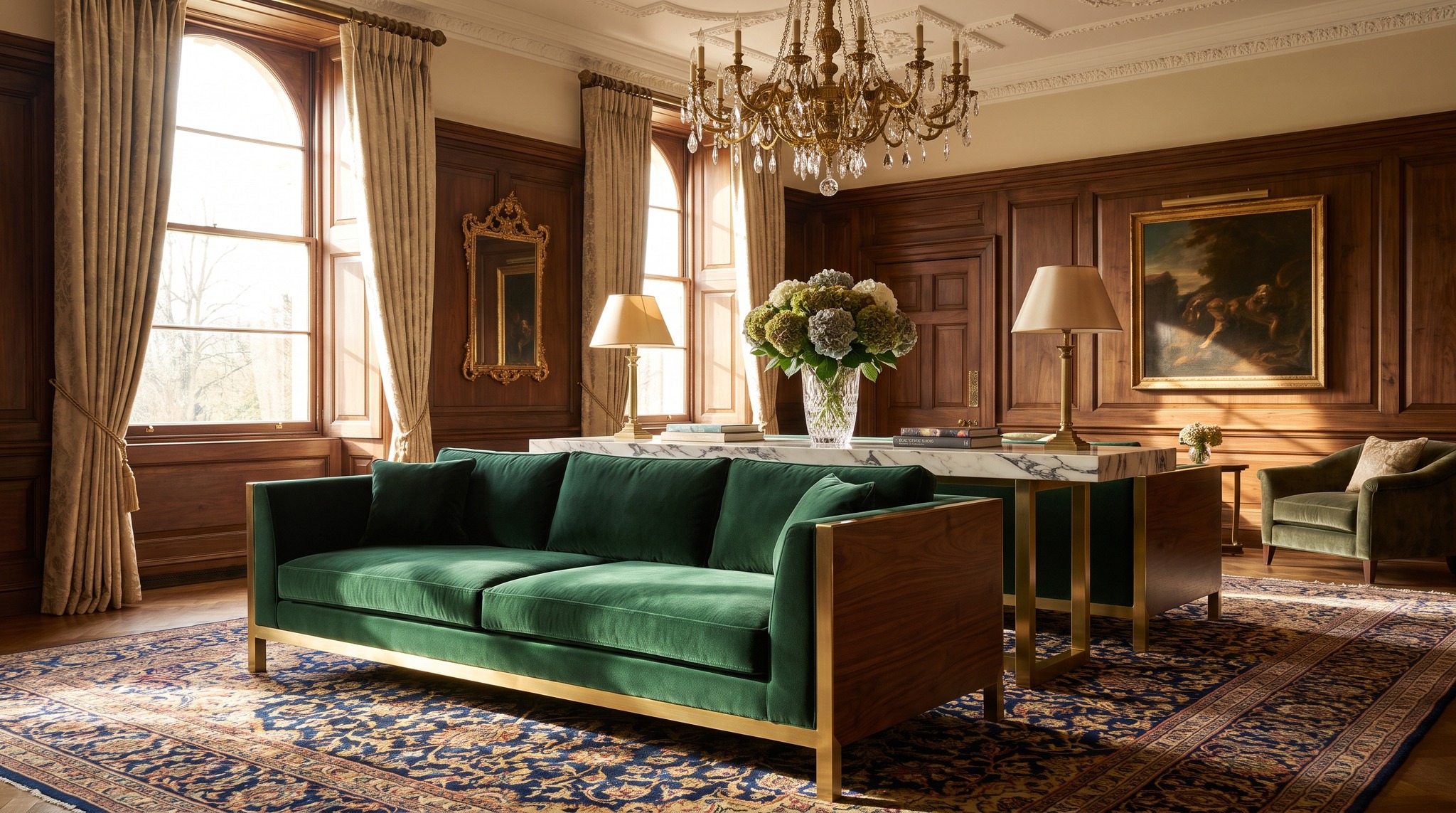
The area behind the sofa should not remain empty, otherwise the arrangement appears unfinished. A narrow console at seat height, approximately 80 to 100 centimetres high, is the classic solution. It accommodates lamps, books or plants. A low sideboard can also work if it is not wider than the sofa itself. Alternatively, the area can be used as a passageway; in that case, however, a rug or room divider should mark the boundary between living and dining areas. Open shelving appears airy but should not be higher than the sofa back, otherwise an unsettled appearance results.
How to visually connect the space behind the sofa
For the sofa not to appear lost in the centre, it requires visual anchors. A large rug that runs beneath the sofa and also includes the area behind creates cohesion. Pendant lights or floor lamps behind the sofa provide accents and emphasise the new room division. Plants in floor containers or a group of pictures on the wall behind also help to animate the area. It is important that the elements behind the sofa match the remaining furnishings and do not appear like afterthought gap fillers.
When wall placement remains the better choice
In rooms under 20 square metres or in narrow rooms with an unfavourable layout, the sofa should remain against the wall. Even when much storage space is necessary, wall placement offers advantages: shelves, sideboards and chests of drawers can be better accommodated behind it. Anyone with pets or small children also avoids toys or food ending up behind the sofa with wall placement. Freestanding placement is a design decision that both space and routine must permit.
Related items: Baroque and Art Nouveau Garden Furniture, Commodes, Consoles. baroque mirrors. The complete range: Baroque furniture.
Related categories: Baroque and Art Nouveau Garden Furniture, Commodes, Consoles. The full range: Baroque Furniture.
Read more: Sideboard in the Living Room: Open or Closed Compartments, Sculpture on Pedestal: Which Height for Which Viewing Angle, XXL Figures on the House Wall: Scale, Mounting and Impact, Garden furniture made of metal or wood: what works best where, Dining Table in the Kitchen: When Round, When Rectangular