

Sideboard in the Living Room: Open or Closed Compartments
When planning a sideboard for the living room, you face the question: Should it have open shelves, closed doors, or a combination of both? The decision influences not only the appearance but also everyday practicality. Open compartments display decoration and books but attract dust. Closed cabinets conceal clutter but can sometimes appear heavier. This article helps you find the right solution for your space.
Open Compartments: Decoration and Lightness
Open shelves in the sideboard are ideal for showcasing vases, coffee table books, or collectibles. They break up the front and make the furniture appear more airy, especially in smaller rooms under 20 square metres. The disadvantage: everything is visible, and dust accumulates more quickly. Plan to dust approximately every two weeks if you use several open compartments. For families with children or households with pets, this can become burdensome.
Closed Compartments: Order Behind Doors
Doors and drawers conceal everything that should not be constantly visible: cables, remote controls, toys, or paperwork. A completely closed sideboard appears calmer and more reduced, fitting well with minimalist interiors. Maintenance is limited to wiping down the fronts. However, a fully closed piece of furniture can appear bulky in small rooms, especially with dark surfaces or high-gloss lacquer.
Combination: Flexibility in Everyday Life
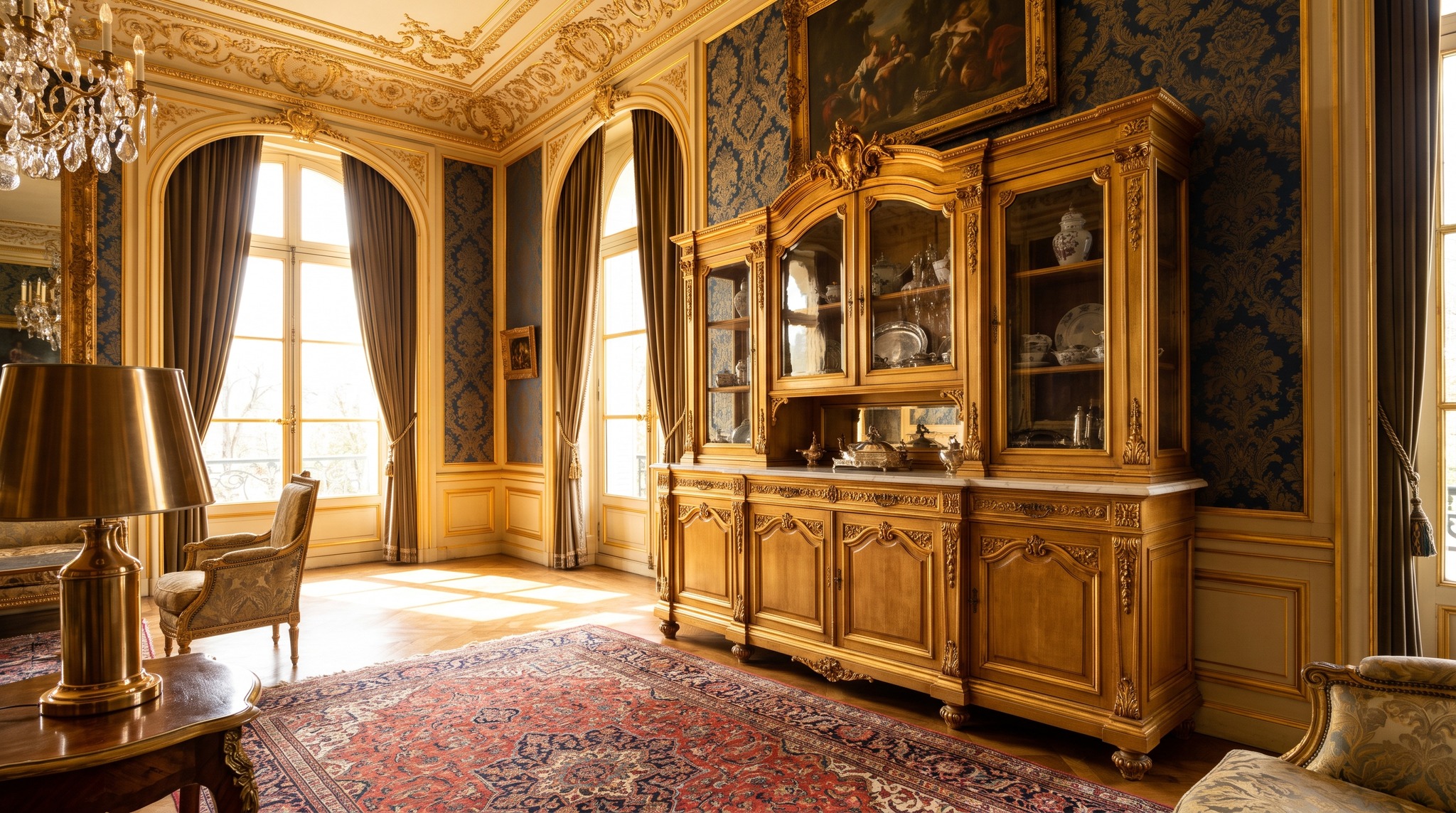
Many Sideboards combine open and closed areas. A proven division: two thirds closed, one third open. This gives you storage space for everyday items whilst providing room for two to three decorative objects. In practice, this means approximately 120 centimetres with doors and 60 centimetres of open space for a 180 centimetre wide sideboard. This mixture works in most living rooms between 15 and 30 square metres.
Consider Room Size and Ceiling Height
In rooms with low ceilings under 2.40 metres, open compartments work advantageously because they do not block the view. In period buildings with 3 metre heights, closed fronts may be more generous. The depth of the sideboard also plays a role: models with 45 to 50 centimetres depth offer enough space for files and crockery without constricting the room. Measure the distance to the opposite wall beforehand; at least 80 centimetres should remain as a passage.
Material and Style Direction
Wood with visible grain tolerates open compartments particularly well because the structure creates depth. High-gloss fronts reflect light and make closed surfaces appear less massive. In Baroque style with carvings and ornaments, closed doors often appear more elegant because the decoration comes into its own. Modern designs with clean lines benefit from the variation between open and closed elements. Ensure that handles and hinges match the rest of the interior.
Practical Rule of Thumb for Planning
Consider what you actually need to accommodate. Count items that should remain permanently in the living room. A simple rule: everything you use daily or like to display belongs in open compartments. Everything else behind doors. If you are uncertain, choose a model with adjustable shelves. This allows you to adapt the layout later without purchasing new furniture.
Related items: Display Cabinets, Resin and Fiberglass Sculptures, baroque mirrors. baroque mirrors. The complete range: Baroque Furniture.
Related categories: Display Cabinets, Resin and Fiberglass Sculptures, baroque mirrors. The full range: Baroque Furniture.
Read more: Armchair by the Window: Reading Spot or Decoration, Console Table Under the Mirror: Which Depth Does Not Get in the Way, Casa Padrino presents a hand-carved baroque throne chair with eagle feather armrests, Dining Table Against the Wall: How Much Space Remains for Seating, Armrests on Dining Chairs: When They Hinder and When They Help