

Sculpture on Pedestal: Which Height for Which Viewing Angle
Anyone wishing to place a sculpture in the garden or living space is quickly faced with the question: How high should the pedestal be? The correct height determines whether the figure unfolds its effect or disappears in the space. The location, the size of the sculpture and above all the eye level of the viewer play a central role. This article shows which pedestal heights make sense for which situations.
Eye Level as Starting Point
The average eye level of a standing adult is approximately 160 to 170 cm. If the sculpture is to be viewed at eye level, add the height of the figure to the pedestal height. A 40 cm high bust appears frontal on a 120 cm high pedestal and is perceived in all details. For portraits, busts or figures with fine facial expressions, this height is ideal. If the sculpture stands in a passageway, the pedestal should be chosen rather lower so that the figure does not stand in the way.
Pedestal Height for Large Format Figures
For life-sized or larger than life figures, a low pedestal of 20 to 40 cm is often sufficient. It lifts the sculpture slightly off the ground without making it appear too dominant. Outdoors, this height ensures that the figure stands out from the vegetation and does not disappear in the lawn. For Sculptures with a height from 120 cm onwards, such a pedestal is completely sufficient to show presence.
View from Above: Low Pedestals for Ground Proximity
Small animal figures, abstract forms or flat reliefs benefit from pedestals between 30 and 60 cm in height. The viewer looks slightly downwards, which appears natural for garden sculptures. Indoors, this height is suitable for side tables or chests of drawers on which the figure is additionally placed. It is important that the pedestal is stable enough to bear the weight and that the base area matches the sculpture.
View from Below: High Pedestals for Representative Effect
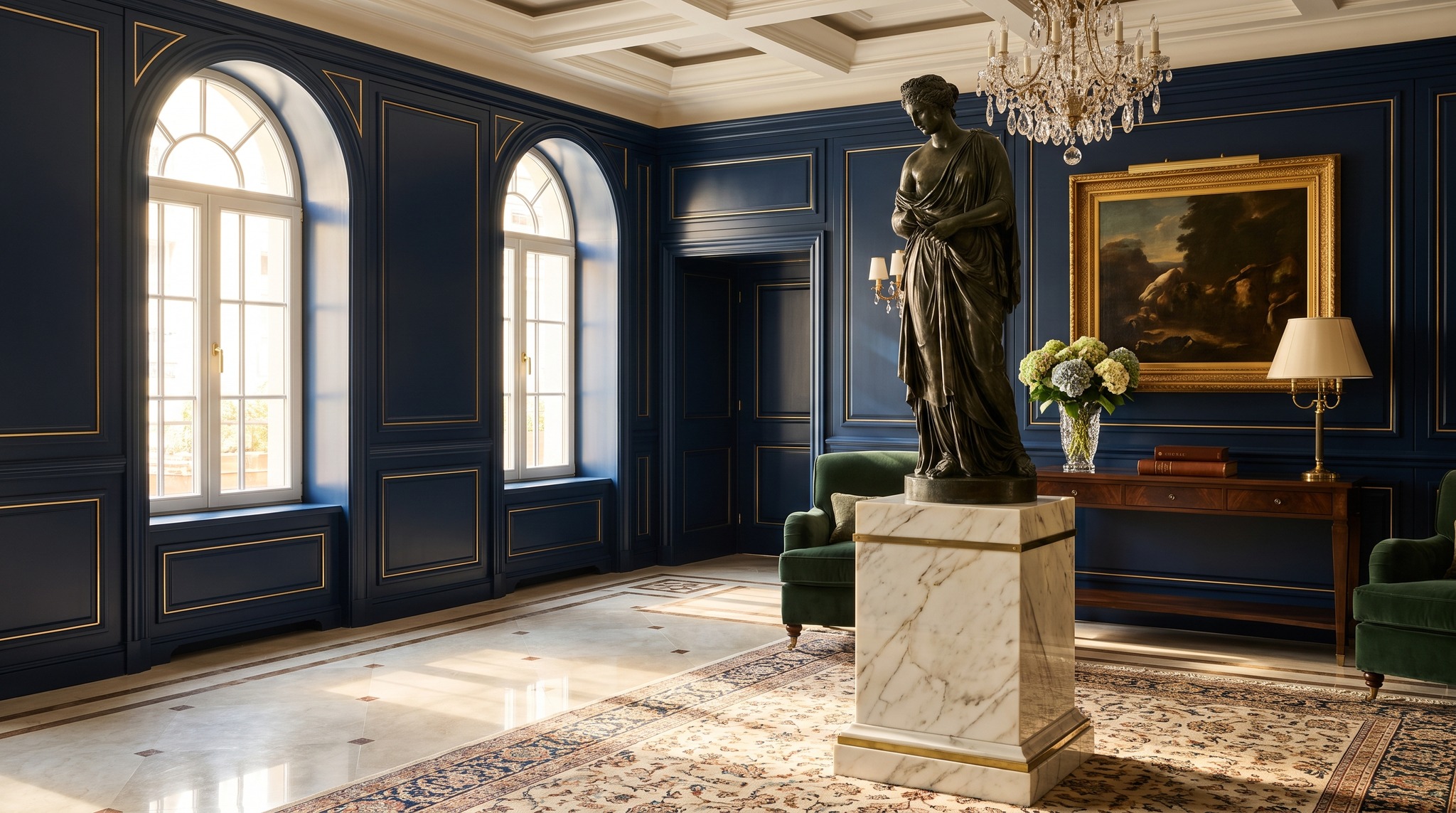
Pedestals from 100 cm in height create a representative, almost monumental effect. The sculpture becomes the dominant element of the space, the gaze goes upwards. This height is suitable for entrance areas, stairwells or gardens with plenty of space. With Columns and Pedestals at this height, the sculpture itself should not be too small, otherwise the proportion appears unbalanced. A rule of thumb: the sculpture should make up at least one third of the total height.
Consider Material and Proportions
In addition to height, the material of the pedestal plays a role. Marble, granite or sandstone appear classic and suit figurative sculptures. Metal or concrete are suitable for modern forms. The base area of the pedestal should be stable: for a 50 cm high sculpture at least 25 x 25 cm, correspondingly wider for heavier figures. A pedestal that is too narrow tips easily, one that is too wide appears clumsy.
Include Location and Lighting Conditions
In the garden, perception changes depending on the time of day and position of the sun. A pedestal of 80 cm in height allows the sculpture to remain clearly visible even when the sun is low. Indoors, the pedestal height should match the room height: in a 2.40 m high room, a 150 cm high pedestal appears oppressive, in a hall with 4 m height, however, appropriate. Try out the height in advance with cardboard boxes or crates before you permanently install the pedestal.
Related items: baroque mirrors, Side Tables, Beds. baroque mirrors. The complete range: Baroque furniture.
Related categories: baroque mirrors, Side Tables, Beds. The full range: Baroque Furniture.
Read more: Sideboard in the Living Room: Open or Closed Compartments, Armchair by the Window: Reading Spot or Decoration, Sideboard on a Long Wall: How Wide It May Be, Combining Armchair and Floor Lamp: Height, Distance and Light Direction, Dividing a Room into Zones Without Walls: Practical Solutions