

Dining Table in the Kitchen: When Round, When Rectangular
You are planning a dining table for your kitchen and wondering which shape suits best? The decision between round and rectangular depends on several factors: the available space, the room geometry, and the number of people who regularly sit at the table. Both shapes have their advantages, but not every shape is equally suitable for every room. In this article, you will learn when which table shape is the right choice.
Space Requirements and Room Size as Decision Criteria
A round table generally requires more space than a rectangular one, as it cannot be pushed against the wall. For a round table with four seats, you should plan for at least 120 cm in diameter, plus 80 to 100 cm of movement space all around. This results in a space requirement of approximately 280 to 320 cm in each direction. A rectangular table measuring 120 x 80 cm, on the other hand, also fits into narrow kitchens, as it can stand parallel to the wall or in a niche.
Number of People and Sociability
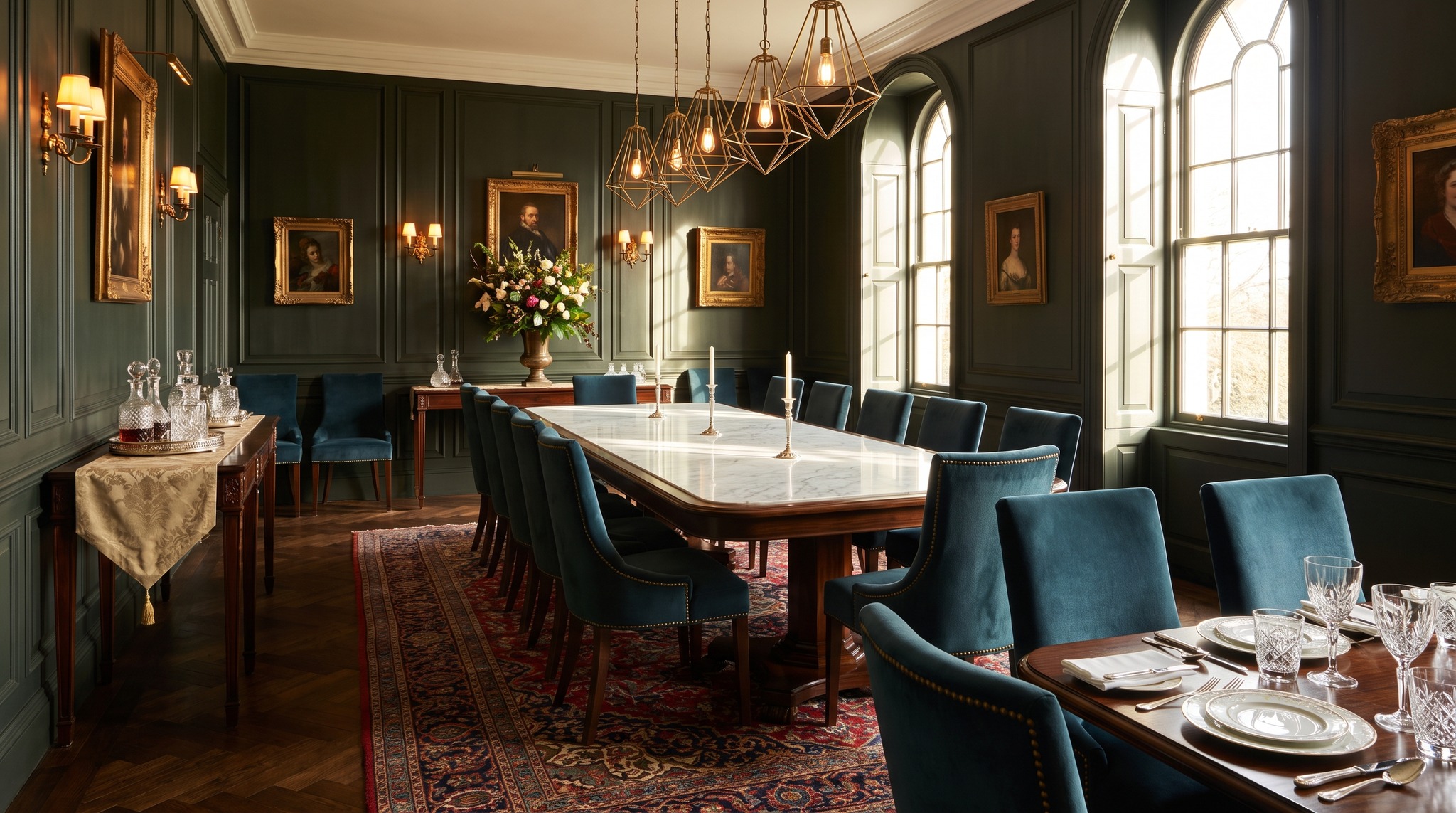
Round tables promote communication, as all people sit at equal distances from each other and can look at each other directly. For four to six people, a round table with a diameter of 120 to 140 cm is ideal. At rectangular tables, people sit opposite or next to each other, which is more practical for larger groups of six or more people. The rule of thumb here is: 60 cm width and 40 cm depth per person. A table for eight people should therefore measure at least 200 x 100 cm.
Room Shape and Traffic Routes
In square rooms, a round table is particularly effective and uses the space harmoniously. Rectangular or elongated kitchens require rectangular tables that adapt to the room geometry. Ensure that at least 80 cm of space remains between the table edge and the wall or furniture, so that Chairs can be pulled out comfortably. In passageways, it should even be 100 cm, so that one can pass by unhindered.
Style Considerations and Interior Design Concept
Round tables appear softer and more inviting; they suit playful or classic interior styles well. Rectangular shapes appear clearer and more structured; they fit harmoniously into modern or streamlined kitchen concepts. When selecting suitable Dining Tables, you should also consider the material: solid wood emphasizes the country house character, while glass or metal appear contemporary.
Flexibility Through Extendable Models
If you occasionally wish to host more guests, extendable tables are a good option. Rectangular models are usually easier to extend than round ones, as the extension leaves maintain the shape. A table that can be extended from 140 to 180 cm provides space for two additional people. Round tables often become oval when extended, which also works but changes the character.
Practical Use in Everyday Life
Rectangular tables offer more surface area and are better suited if you also want to use the table as a work surface. Laptops, newspapers, or cookbooks find space more easily here. Round tables have no corners where one can bump into, which is particularly an advantage in households with small children. Furthermore, with round tables, an additional chair can be squeezed in if necessary, without anyone sitting at a corner.
Related items: Sofas, Mirrors, Garden Fountains. baroque mirrors. The complete range: Baroque furniture.
Related categories: Sofas, Mirrors, Garden Fountains. The full range: Baroque Furniture.
Read more: Combining Armchair and Floor Lamp: Height, Distance and Light Direction, Coffee Table in Front of the Sofa: Which Shape Suits Which Floor Plan, Dosing decoration: the rule of odd numbers, Gold Leaf, Patina and Lacquer: Which Surface Suits Which Room, Fountain, Wall Fountain or Water Column: Which Fountain Suits Which Garden