

Dosing decoration: the rule of odd numbers
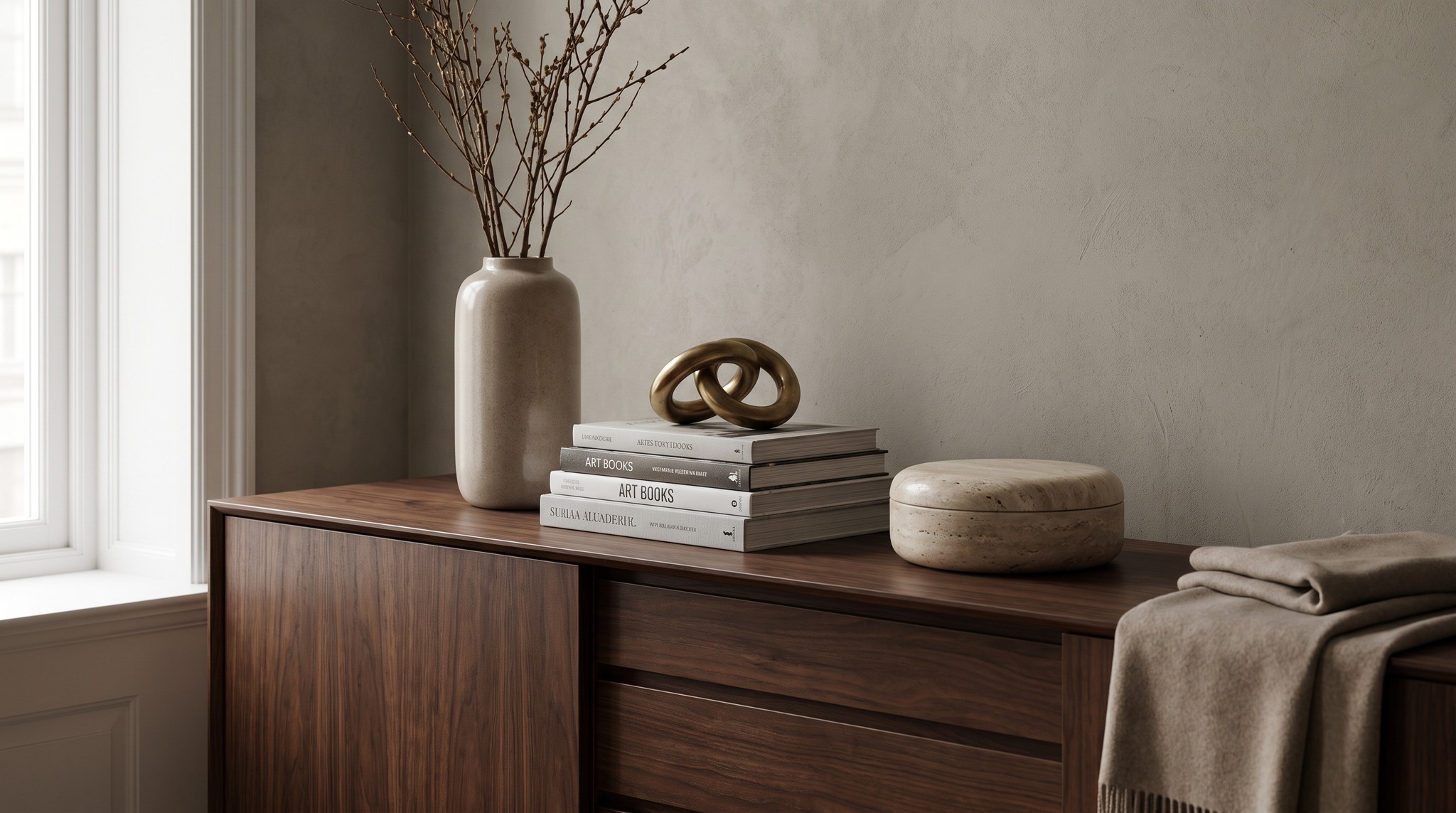
You have purchased a new sideboard and want to decorate it, but somehow the arrangement of vases, candles and picture frames looks restless or arbitrary. Many people instinctively place two or four objects next to each other and wonder why the result looks static or dull. The so-called rule of odd numbers provides a remedy: odd quantities create tension, guide the eye and appear more natural than symmetrical pairings.
Why odd numbers appear more harmonious
The human eye perceives even numbers more quickly and automatically arranges them into pairs. With three, five or seven objects, the gaze must linger longer because no immediate pattern emerges. This minimal delay creates visual tension without causing disorder. Three candlesticks of different heights on a console table invite the eye to wander between them, while two candlesticks side by side are simply ticked off. The odd number prevents perfect symmetry and makes the composition more lively.
Practical application on shelves and chests of drawers
The rule works particularly well on Sideboards: group three vases in different sizes, five picture frames on the wall above or seven small decorative objects on a tray. Pay attention to different heights within the group so that the arrangement does not look like a row. A large object on the left, a medium one on the right and a small one in between create a triangle that conveys stability. With five pieces, you can form two pairs and place a fifth element slightly offset.
Observing size ratios and spacing
The objects should differ in height by at least one third so that the graduation becomes clear. A vase 30 cm high is ideally combined with one of 20 cm and one of 15 cm. Leave about a hand's width between the objects, more for larger furniture. Too close together, the pieces merge visually, too far apart they lose their connection to each other. The total width of the group should occupy about two thirds of the furniture width, so that enough free space remains.
Colour and material as connection
For three or five different objects to belong together, they need a connecting element. This can be a common colour, such as three vases in different shades of blue, or a material such as brass, glass or ceramic. The stylistic period also helps: baroque Decorations with ornate forms harmonises better with itself than a wild mix of different style periods. Choose a maximum of two to three colours per group so that the arrangement remains calm.
Exceptions and deliberate symmetry
The rule of odd numbers is not a law, but a tool. In formal rooms or with classic mantelpieces, deliberate symmetry may be desired: two identical candlesticks left and right, a mirror in the centre. Even with very small surfaces, three pieces are sometimes not sufficient, then a single statement object is enough. What matters is that you understand the effect: even numbers calm and order, odd numbers enliven and energise. Choose according to room function and personal taste.
Related items: Sofas, Mirrors, Garden Fountains. baroque mirrors. The complete range: Baroque furniture.
Related categories: Sofas, Mirrors, Garden Fountains. The full range: Baroque Furniture.
Read more: Wall Colours for Dark Furniture: Which Colours Harmonise Best, The Right Rug Under Dining Table and Sofa: Size and Placement, How Many Chairs Fit at Which Dining Table? Correct Space Planning, Living Room in Grand Hotel Style, Luxury to Feel Good, Casa Padrino Baroque Wardrobes, Magnificent Cabinets for a Luxurious Bedroom