

Display Cabinet Against an External Wall: When Condensation Becomes a Problem
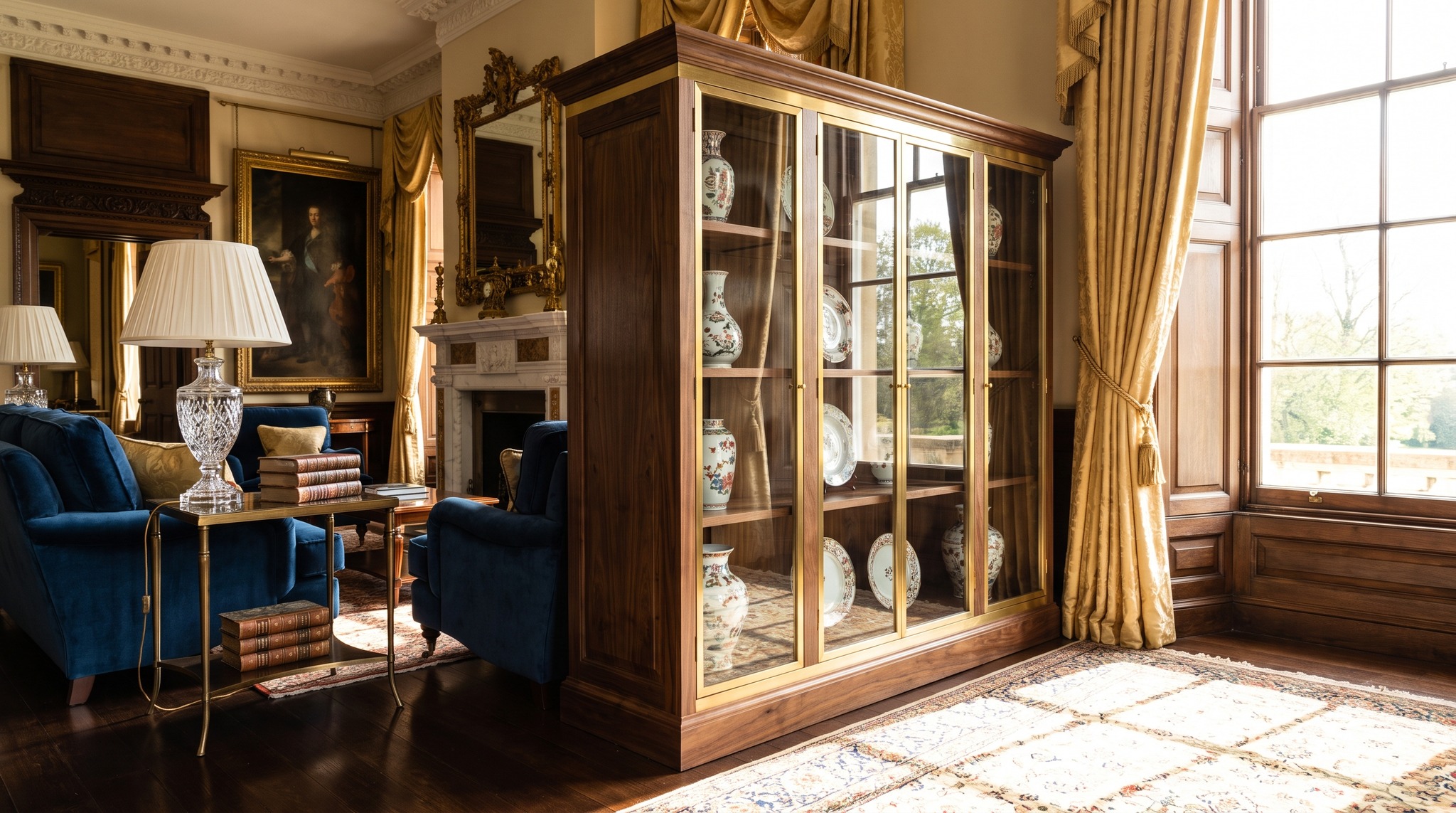
You have purchased a beautiful display cabinet and would like to place it against an external wall to present porcelain, glassware or collectibles. However, after a few weeks you notice fogged glass or even moisture stains inside. Condensation can indeed become a problem in such cases, especially in older buildings or with uninsulated walls. We explain when placement becomes critical and how you can avoid damage.
Why Condensation Forms on External Walls
External walls are cooler than internal walls during the heating season because they have direct contact with the outside air. Warm room air cools down on this cold surface, and the humidity condenses. If a display cabinet stands close to the wall, a cold zone with poor air circulation forms behind it. The back panel of the furniture becomes cold, and moisture settles. Rooms with high humidity such as dining rooms or kitchens where cooking or laundry drying takes place are particularly affected.
Which Display Cabinets Are Particularly Susceptible
Closed Display Cabinets with glass doors and solid carcasses are more at risk than open shelving units. The enclosed interior hardly exchanges air with the surroundings, and moisture accumulates. Models with a back panel made of wood or MDF conduct cold less effectively than those with a glass back panel, so temperature differences remain greater. Depth also plays a role: display cabinets over 40 cm deep leave less space between furniture and wall, and the air layer becomes too narrow for adequate circulation.
Guidelines for Wall Distance
To avoid condensation, you should maintain the following distances:
- At least 5 cm distance from the external wall in well-insulated new buildings
- 10 to 15 cm distance in older buildings without thermal insulation or in rooms with high humidity
- No direct placement above radiators or in front of window recesses where thermal bridges occur
- Regular ventilation by opening windows fully, at least twice daily for 5 to 10 minutes
When the External Wall Is Unproblematic
In modern buildings with full thermal insulation and controlled ventilation, the external wall usually poses no risk. Even in heated rooms with constant temperatures above 18 degrees and relative humidity below 60 percent, the risk of condensation remains low. If you open the display cabinet regularly and ventilate the room well, the temperature equalises. An internal wall nevertheless remains the safer choice, especially for valuable collections or delicate wooden furniture.
Damage Prevention with Existing Placement
If you already have the display cabinet standing against the external wall, check the back panel regularly for moisture. Small spacers made of wood or cork can create air space retrospectively. A hygrometer in the room shows whether the humidity is permanently above 65 percent. In this case, a dehumidifier or more frequent ventilation helps. Do not place plants or water containers next to the display cabinet, as this unnecessarily increases the local moisture load.
Related items: Coffee Tables, Decorations, Dining Tables. baroque mirrors. The complete range: Baroque Furniture.
Related categories: Coffee Tables, Decorations, Dining Tables. The full range: Baroque Furniture.
Read more: Sideboard in an Alcove: What Depth with a Radiator Behind, Armchair without side table: practical solutions for drinks and snacks, Casa Padrino News, All Articles at a Glance, Casa Padrino Baroque Consoles, Magnificent Console Tables for Stylish Hallways and Living Spaces, Exclusive Country Style Cabinet Collection by Casa Padrino, Refined Living in Timeless Elegance