

Sideboard in an Alcove: What Depth with a Radiator Behind
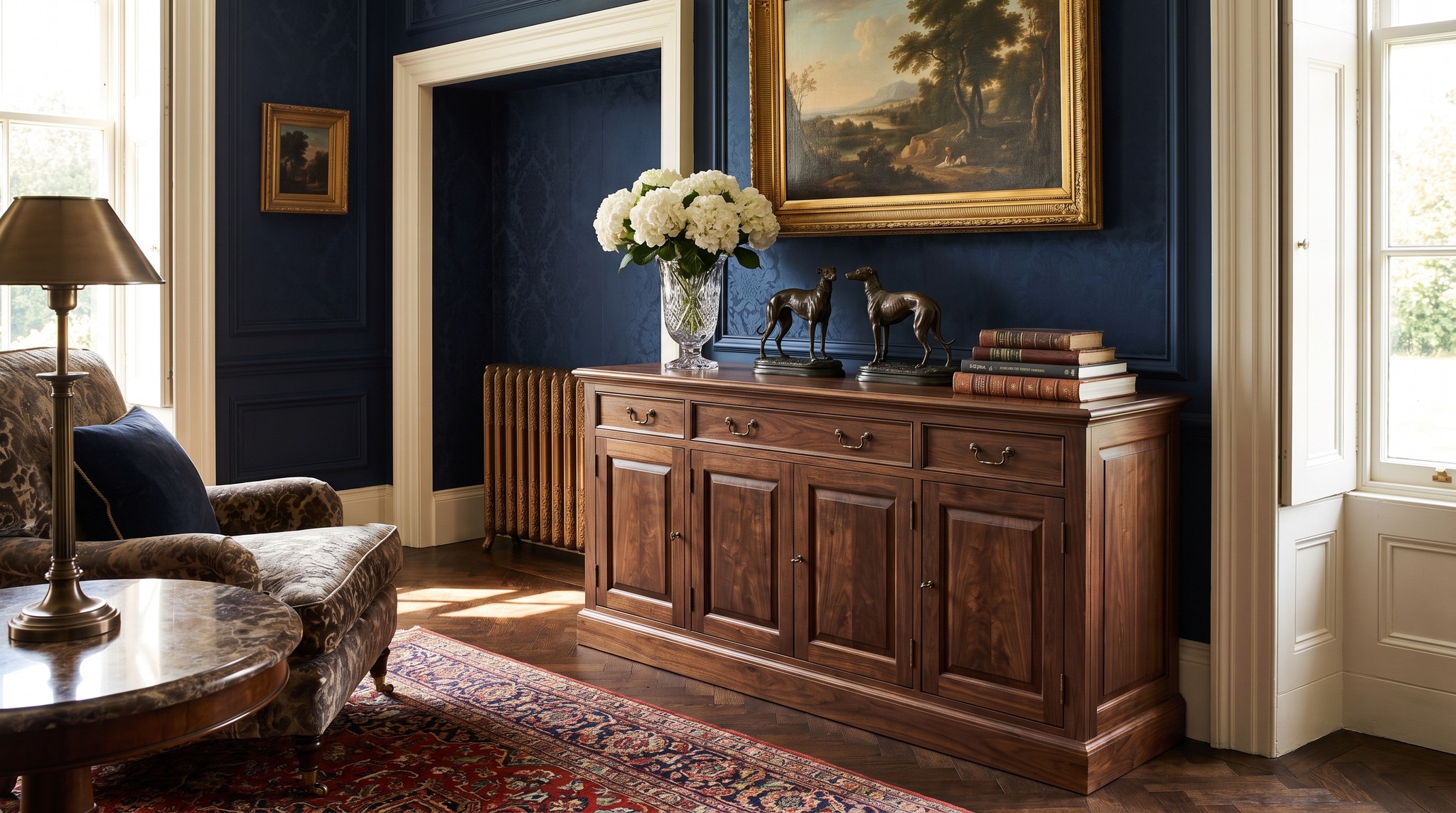
You would like to make use of a wall alcove and place a sideboard there, but there is a radiator behind the planned location? This raises the question of how deep the furniture may be without impairing the heating performance or risking heat accumulation. The correct depth depends on the type of radiator, the necessary air gap and the heat output. In this article you will learn which dimensions you should observe and what you need to consider when planning.
Minimum Distance Between Furniture and Radiator
At least 5 to 10 centimetres of air should remain between the back panel of a sideboard and the front of the radiator. This distance enables convection, that is the rise of warm air, and prevents heat from accumulating in the furniture. With modern flat radiators of shallow depth, the smaller value is often sufficient, while with older column radiators you should allow for 10 centimetres. Also bear in mind that some radiators emit warm air at the top and the sideboard should not close directly above it.
Typical Dimensions of Radiators and Alcoves
Standard flat radiators have a construction depth of approximately 6 to 12 centimetres, older sectional radiators can reach 15 centimetres or more. Before purchasing furniture, measure the exact depth of your radiator including bracket and thermostatic valve. If your alcove is 40 centimetres deep, for example, and the radiator projects 10 centimetres into the room, 30 centimetres remain for the sideboard plus clearance. A piece of furniture with a depth of 20 to 25 centimetres would then be suitable.
Suitable Sideboard Depths for Alcoves with Heating
For alcoves with radiators, shallow Sideboards with a depth of 30 to 40 centimetres are most suitable. Such cabinets offer sufficient storage space for crockery, table linen or decorative items without blocking the heating performance. Ensure that the back panel of the furniture is not completely closed or at least has ventilation slots. Solid wooden back panels without air circulation can warp or trap heat.
Choice of Material and Ventilation
Choose a material for the area behind the radiator that can tolerate heat. Solid wood and MDF are generally suitable, provided the distance is correct. Avoid furniture with plastic coating or foils directly on the back, as these can become brittle with continuous heat. Open back panels or lattice structures that allow air to pass through are ideal. If you choose a closed sideboard, drill a few ventilation holes in the back panel afterwards to improve air circulation.
Alternatives and Practical Solutions
If the alcove is too shallow, you can have the radiator relocated or replaced with a flatter model. Another option is a custom-made sideboard with a recess for the radiator. Some manufacturers also offer furniture with integrated radiator casing, where ventilation grilles ensure heat output. Before purchasing, check whether the chosen model is approved for use in front of radiators.
Planning Checklist
- Measure radiator depth including valve
- Calculate alcove depth minus radiator and 5 to 10 centimetres clearance
- Select sideboard with appropriate depth, ideally 30 to 40 centimetres
- Check back panel for ventilation or provide holes
- Pay attention to heat resistance of material
With these guidelines you will find suitable furniture for your alcove without having to sacrifice heating comfort. The selection of Sideboards offers various depths and styles, so that a solution can be found for almost any room situation.
Related items: Display Cabinets, Resin and Fiberglass Sculptures, baroque mirrors. baroque mirrors. The complete range: Baroque Furniture.
Related categories: Display Cabinets, Resin and Fiberglass Sculptures, baroque mirrors. The full range: Baroque Furniture.
Read more: Armchair without side table: practical solutions for drinks and snacks, Side Table in a Passageway: Which Width Does Not Narrow the Path, Casa Padrino park benches for towns and municipalities, Baroque style desks by Casa Padrino - luxury baroque secretaries, Chest of Drawers with Marble Top on Period Floorboards: Check Load Capacity