


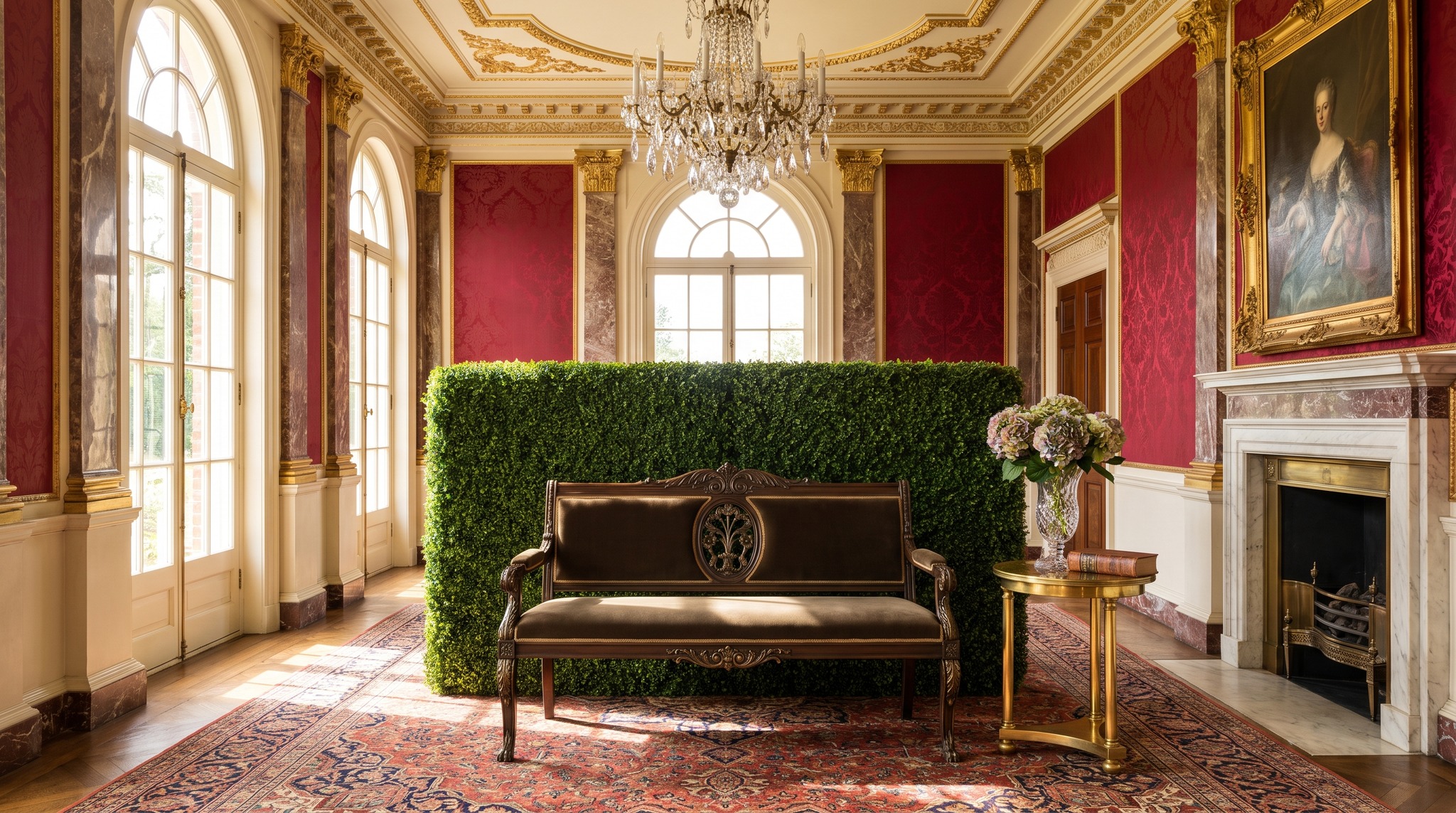
Garden Bench in Front of a Hedge: What Distance for the Backrest
You are planning a seating area in your garden and would like to place the bench in front of a hedge. This raises the question of how much space should remain between the backrest and the hedge so that the bench not only looks good but also remains practical to use. Too little distance means that branches will interfere or moisture will damage the bench. Too much space looks unharmonious and wastes space in the garden.
Minimum Distance for Air Circulation and Maintenance
There should be at least 20 to 30 centimeters of space between the backrest of your garden bench and the hedge. This space allows sufficient air circulation so that wood or metal can dry more quickly after rain. It also leaves enough room to trim the hedge from the front without having to move the bench each time. With dense, evergreen hedges such as thuja or yew, this minimum distance is particularly important as they retain moisture even in winter.
Optimal Distance for Comfort and Appearance
For comfortable use, a distance of 40 to 60 centimeters is recommended. This allows you to walk comfortably behind the bench to remove leaves or maintain the hedge. This space also ensures that branches do not protrude into your neck when you lean back. The selection of Garden Furniture includes benches with backrests of different heights, each requiring different distances: a low backrest up to 70 centimeters in height requires less space than a high backrest over 90 centimeters.
Bench Material and Weather Protection
The material of your bench influences the necessary distance. Wooden benches require more air to prevent rotting, especially if they are untreated or stained. Metal or stone are less sensitive, but even here distance prevents green deposits from forming due to constant moisture. With Baroque and Art Nouveau Garden Furniture made of cast iron or decorated wood, a generous distance makes sense so that the ornaments are not obscured by branches and can unfold their effect.
Consider Hedge Growth and Trimming Rhythm
Fast-growing hedges such as privet or hornbeam grow 30 to 50 centimeters per year. If you only trim once a year, you should factor in this growth when positioning. Slow-growing species such as yew or boxwood allow a tighter distance. Plan the space so that the hedge does not touch the bench even shortly before the next trim.
Ground Surface and Stability
The surface also plays a role. On grass, the bench can easily sink in when it rains and slide closer to the hedge. A solid surface of gravel, paving or wooden planks keeps the distance constant. If necessary, lay a layer of bark mulch or gravel between the bench and hedge to prevent weed growth and complete the appearance.
Related items: Columns and Pedestals, Armchairs, Sideboards. baroque mirrors. The complete range: Baroque Furniture.
Related categories: Columns and Pedestals, Armchairs, Sideboards. The full range: Baroque Furniture.
Read more: Coffee Table for Chesterfield: Which Height for the Deep Seat, Bed Under a Sloped Ceiling: What Head Height Is Still Comfortable, Water Column in the Entrance Area: Which Height Suits Your Ceiling, Placing Sculptures in Pairs: Which Distance Creates Symmetry, Armchairs with Wing Backs: Which Corner of the Room Emphasizes the Seat