


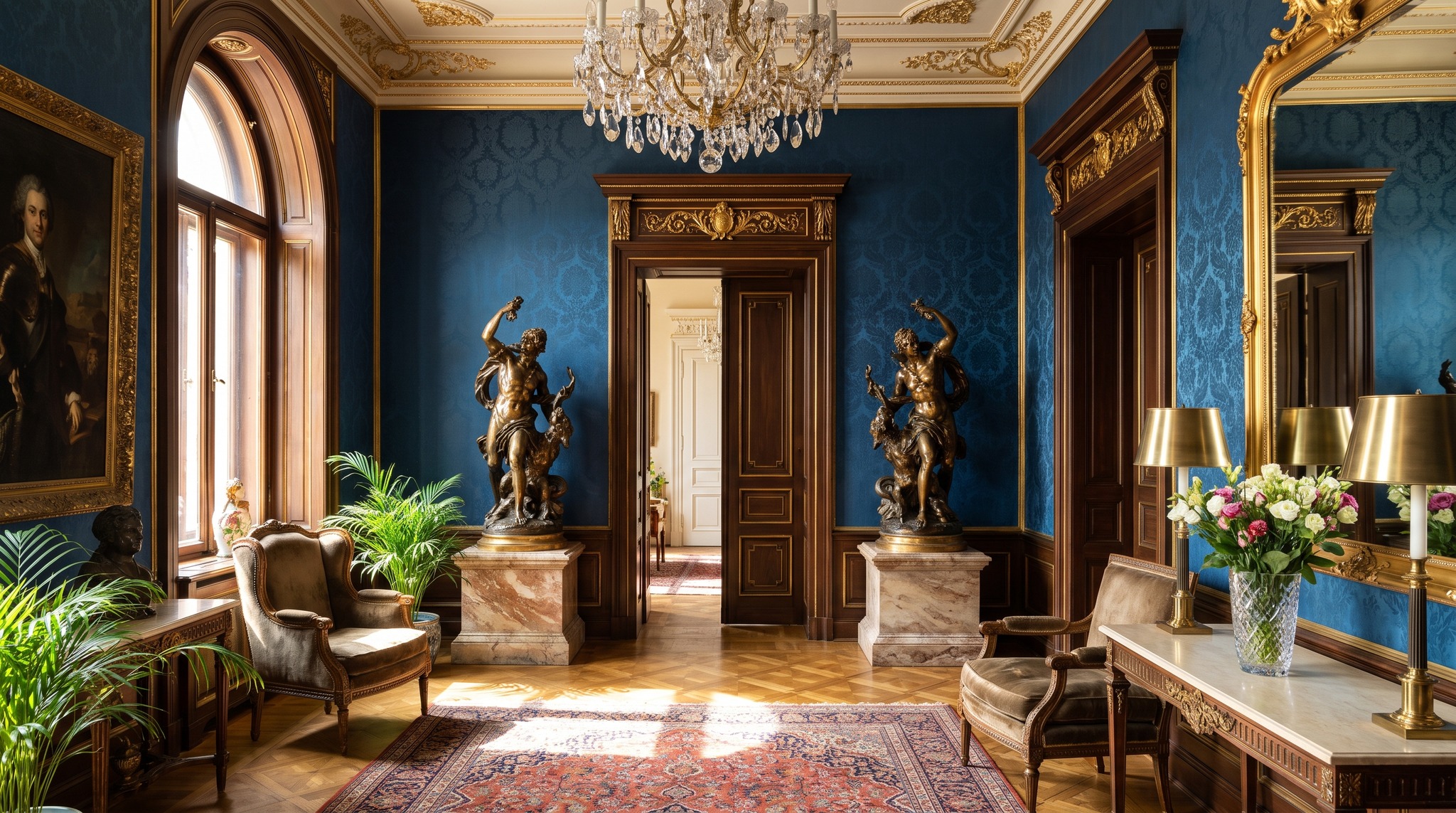
Placing Sculptures in Pairs: Which Distance Creates Symmetry
Two identical sculptures positioned left and right of an entrance, staircase or fireplace can elegantly frame a room or garden. But how far apart should they stand for the effect to remain harmonious? Too close appears cramped, too far apart and the symmetry loses its impact. The correct distance depends on the size of the figures, the width of the object in the centre and the viewing distance.
Basic Rule: Distance Equals the Height of the Sculpture
As a rule of thumb, the distance between two sculptures should be at least equal to their own height. For 80 cm tall figures, therefore at least 80 cm spacing, measured from outer edge to outer edge. This proportion ensures that both objects are perceived as a pair without visually crowding each other. For very delicate figures, the distance may be slightly less, whilst for solid bronze sculptures or baroque lion figures it should be chosen rather larger.
Reference Point in the Centre Determines the Distance
When the sculptures flank a passageway, piece of furniture or staircase, the distance is based on the width of this reference point. For a 120 cm wide entrance door, the figures should each stand 60 to 80 cm from the door edge. This creates a balanced ratio. For a fireplace 150 cm wide, a distance of 70 to 100 cm between the fireplace edge and sculpture can be appropriate. It is important that the total width of the arrangement does not exceed twice the central surface.
Include Viewing Distance and Room Size
The further the viewer stands from the Sculptures, the greater the distance between them may be. In a long corridor or extensive garden setting, 2 metres distance between two 100 cm tall figures appears harmonious. In a small entrance hall or on a narrow sideboard, the same distance would seem excessive. Here 80 to 100 cm suffices. Test the effect by initially placing the sculptures provisionally and viewing them from various angles.
Symmetry Through Equal Floor Height and Alignment
For the symmetry to be convincing, both sculptures must stand at exactly the same height. Unevenness in the floor or different plinths disturb the balance. Use shims or adjustable pedestals if necessary. Alignment also plays a role: figures should either both face forward or be slightly inclined towards each other, never away from each other. With animal figures or busts, the viewing direction is crucial. A deviation of more than 5 degrees is already noticeable and weakens the symmetrical effect.
Consider Material and Style of the Sculptures
Heavy materials such as marble, bronze or cast iron tolerate greater distances because they show presence even from afar. Delicate ceramic figures or slender Art Nouveau sculptures work better at closer distance. Baroque angel figures or classical column figures develop their full effect when placed with 1.5 to 2 times their own width as spacing. When Decorations interior spaces, the colouring of the sculptures should also harmonise with wall and floor, so that the symmetry is not disturbed by contrasts.
Practical Notes on Installation and Safety
Heavy sculptures require a stable standing surface. On smooth marble or parquet, non-slip underlays should be used. Outdoors, anchoring in the ground or on a concrete plinth is recommended, particularly for figures over 50 kg. Ensure that passageways remain clear: at least 90 cm width should be available between the sculptures for comfortable passage. When positioning on stairs, a minimum distance of 30 cm from the step edge applies to avoid tripping hazards.
Related items: Commodes, Consoles, Columns and Pedestals. baroque mirrors. The complete range: Baroque Furniture.
Related categories: Commodes, Consoles, Columns and Pedestals. The full range: Baroque Furniture.
Read more: Sideboard with Glass Doors: Which Depth for Glasses and Decanters, Extendable Dining Table: How Much Space the Mechanism Needs at the Sides, Sideboard Under the Television: Which Width and Which Height, Display Cabinet in the Dining Room: Which Depth for Crockery and Glassware, Chest of Drawers as Room Divider: The Right Height and Back Panel Design