


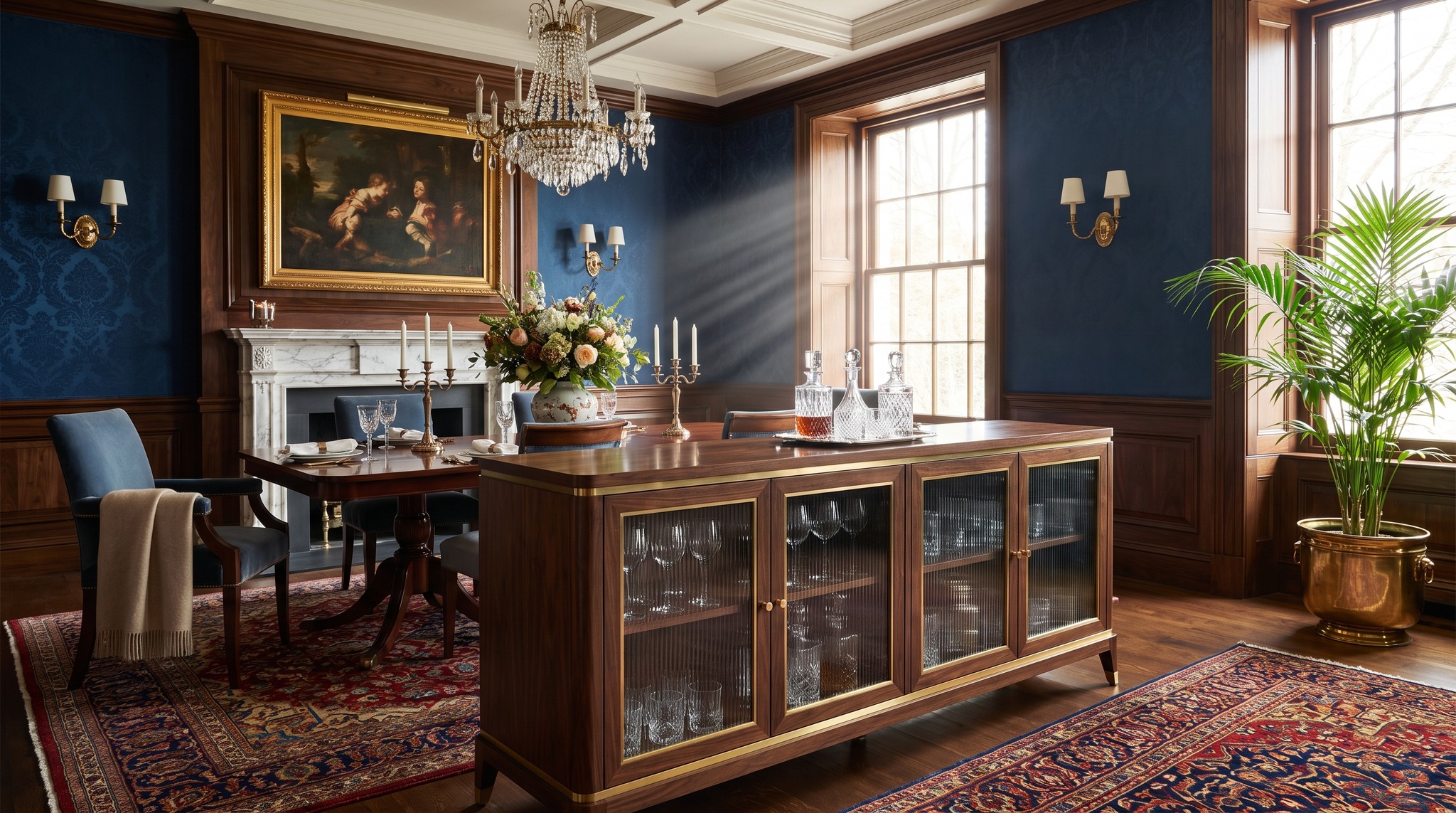
Sideboard with Glass Doors: Which Depth for Glasses and Decanters
You are planning a sideboard with glass doors for your dining room or living room and would like to store glasses, decanters and tableware in it. This raises the question of what depth the piece of furniture should have so that everything stands securely and clearly. Too shallow seems impractical, too deep protrudes unnecessarily into the room. In this article you will learn which dimensions have proven effective and what you should pay attention to when making your selection.
Standard Depth for Glasses and Decanters
Most Sideboards have a depth between 40 and 50 centimetres. This range is ideal for glasses, decanters, plates and bowls. A wine glass typically requires 8 to 10 centimetres in diameter, a decanter approximately 12 to 15 centimetres. With 40 centimetres depth, there is enough space to arrange the objects in one or two rows without them wobbling or falling over when you open the door.
If You Wish to Store Larger Serving Platters
Serving platters, large bowls or vases can reach a diameter of 30 to 35 centimetres. In this case, you should choose a sideboard with at least 45 centimetres depth. This way you can also place bulkier pieces securely without them touching the glass door at the front. Bear in mind that with glass doors with frames, another 2 to 3 centimetres are taken up by the construction.
Consider the Height of the Shelves
Besides depth, the height of the individual compartments plays a role. Wine glasses are often 20 to 25 centimetres tall, champagne glasses can reach 28 centimetres. Check whether the shelves are adjustable so that you can adapt the spacing to your glasses. A fixed distance of 30 centimetres between shelves offers sufficient clearance for most glasses.
Depth and Spatial Effect
A sideboard with 50 centimetres depth offers plenty of storage space, but can quickly appear bulky in small rooms. In narrow hallways or dining areas, 35 to 40 centimetres are often sufficient, especially if you only store glasses and no large serving platters. Measure the available space in front of the wall and allow at least 80 centimetres distance to the opposite side so that you can open the doors comfortably.
Material and Care of Glass Doors
Glass doors protect the contents from dust and display your tableware decoratively. Clear glass shows everything openly, frosted or ribbed glass conceals slight disorder. Ensure that the hinges are stable and the doors close flush so that no draught enters. Clean the panes regularly from inside and outside to remove fingerprints and dust.
Rule of Thumb for Selection
- For glasses and decanters: 40 to 45 centimetres depth
- For large serving platters: 45 to 50 centimetres depth
- Shelf height adjustable or at least 30 centimetres
- Distance to opposite wall: at least 80 centimetres
With these guidelines you will find a sideboard that stores your glasses securely whilst fitting harmoniously into the room.
Related items: Display Cabinets, Resin and Fiberglass Sculptures, baroque mirrors. baroque mirrors. The complete range: Baroque Furniture.
Related categories: Display Cabinets, Resin and Fiberglass Sculptures, baroque mirrors. The full range: Baroque Furniture.
Read more: Extendable Dining Table: How Much Space the Mechanism Needs at the Sides, Oval Dining Table: Which Length Is Suitable for How Many People, Side Table Between Two Armchairs: Which Shape Connects, Armchair in front of bookshelf: planning a reading nook without wasting space, Sideboard in the Living Room: Open or Closed Compartments