

Side Table Between Two Armchairs: Which Shape Connects
When placing two armchairs side by side, you often face the question: Which side table fits in the middle? The shape determines whether the table serves both seats equally well or whether it visually disrupts the arrangement. Round, rectangular or oval, each variant has its merits, but not every one works in every configuration. This article shows what you should consider when making your choice and which shape suits which arrangement.
Round Tables for Symmetrical Arrangements
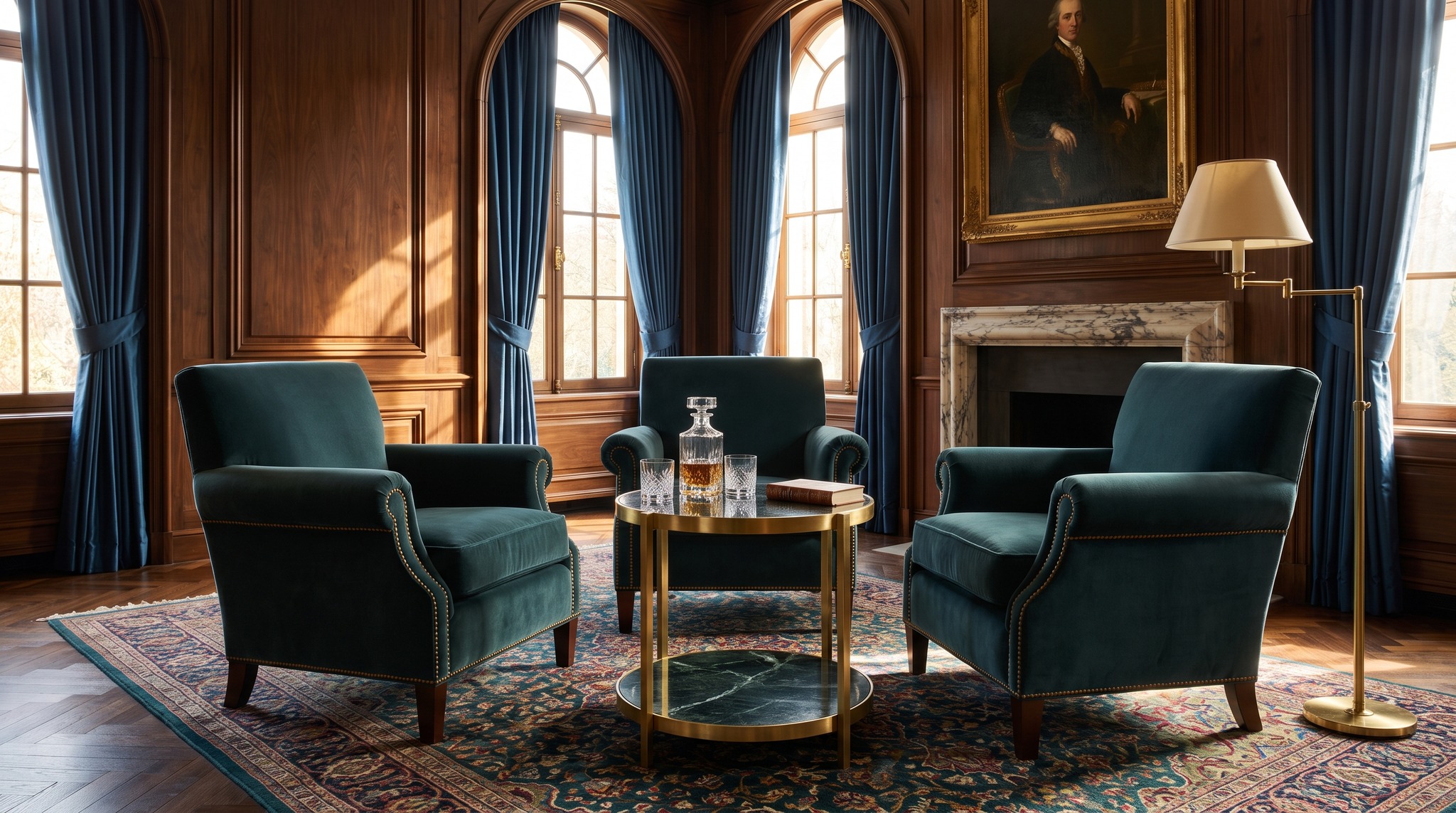
A round side table is the classic choice when two Armchairs are positioned symmetrically to each other. The shape has a balancing effect and can be reached equally well from both sides. The diameter should be between 40 and 60 centimetres to provide sufficient surface area without the table dominating the space between the seats. Particularly with Baroque or Art Nouveau armchairs, a round table emphasises the curved lines of the furniture.
Rectangular Tables for Offset Placement
If the armchairs are slightly offset or positioned at right angles to each other, a rectangular side table may be more practical. The longer side then aligns with the main seating direction and offers more surface area in depth. Ideal dimensions are 50 to 70 centimetres in length and 30 to 40 centimetres in width. Rectangular shapes suit straight-lined, modern armchairs or Chesterfield models with clear contours.
Oval Tables as a Compromise
The oval shape combines the advantages of both variants: it is softer than a rectangle and offers more surface area than a circle. An oval table works particularly well when the armchairs are not positioned exactly parallel or when you frequently change between different seating positions. The selection of Side Tables in oval form is extensive, from Baroque models with curved legs to simple country house variants.
Consider Height and Proportions
Regardless of shape, the table height should match the seat height of the armchairs. As a rule of thumb: the table may be a maximum of five centimetres higher or lower than the armrest. For armchairs without armrests, orient yourself to the seat height plus 15 centimetres. This keeps the table comfortably accessible without requiring you to stretch or bend.
Coordinate Material and Style
Shape alone does not determine the effect. A round marble table creates a different impression than a round wooden table, even with identical dimensions. With Baroque furniture, gilded or bronze-coloured metal legs harmonise with curved forms. Modern armchairs tolerate clear lines and materials such as glass or matt metal. Ensure that the table does not appear heavier than the armchairs, otherwise the balance in the room shifts.
Related items: Columns and Pedestals, Sideboards, Sculptures. baroque mirrors. The complete range: Baroque Furniture.
Related categories: Columns and Pedestals, Sideboards, Sculptures. The full range: Baroque Furniture.
Read more: Sideboard or Display Cabinet in the Dining Room: What for Which Purpose, Mirror Next to the Front Door: Height and Distance from the Door Frame, How to Combine Side Tables: Height, Distance, Material, Luxury Materials: Using Gold, Silver & Marble Right, Furnishing a Luxury Hotel Room, How to Create the Perfect Suite