
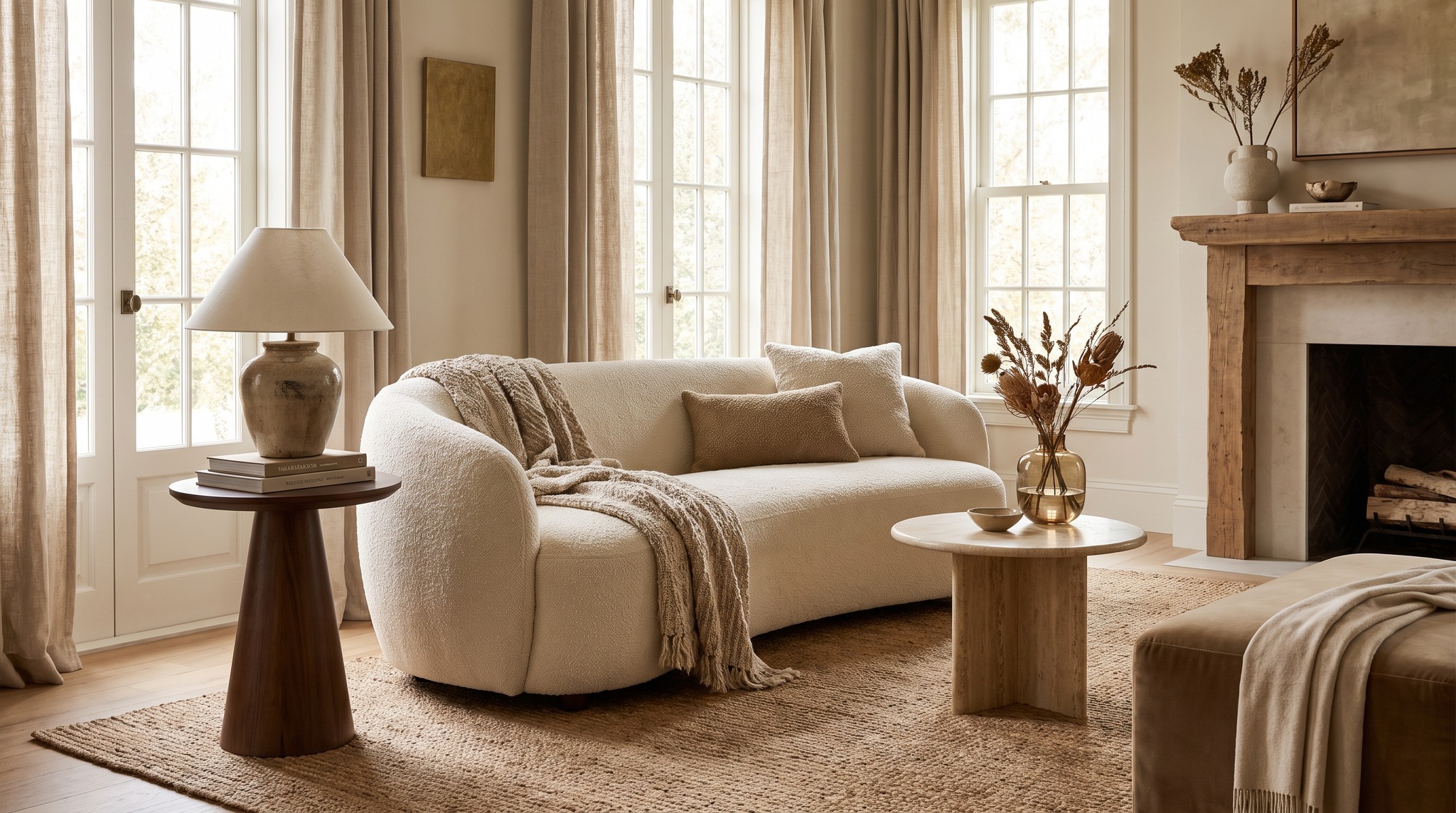
How to Combine Side Tables: Height, Distance, Material
You have a new sofa or armchair and are wondering which side table would suit it? The choice is not only a matter of style, but above all of function. A side table must be at the right height so that you can comfortably set down a cup. It should be close enough, but not in the way. And the material should match the rest of the furnishings. This article shows you what matters.
The Right Height for Your Sofa
The height of the side table is based on the seat height of your sofa or armchair. As a rule of thumb: the table should be approximately level with the armrest or at most 5 cm below it. For most Sofas, the armrest height is between 55 and 65 cm, so the side table should be 50 to 65 cm high. This allows you to reach for a glass comfortably without stretching or bending. For armchairs without armrests, use the seat height plus about 10 to 15 cm as your guide.
Distance and Placement
The side table should be close enough that you can reach it from your seat without standing up. A distance of 30 to 50 cm from the edge of the seat is ideal. Make sure the table does not protrude into walkways. In small rooms, you can also slide the table slightly behind the armrest so that only half of it stands beside the sofa. This saves space and often looks more elegant.
Material Choice to Match Your Furnishings
The material of the side table should either complement the sofa or other furniture in the room. Side Tables made of dark wood or metal go particularly well with a leather sofa. With fabric sofas, you can be bolder: marble, glass or lacquered wood create accents. If you already have a coffee table, the side table does not have to be identical, but should harmonize in color or finish. A mix of different materials creates vitality, as long as there is a connecting element.
Size of the Table Top
The table top should be large enough for the essentials, but not too bulky. For a cup, a book and a small lamp, 35 to 45 cm diameter for round tables or 40 x 40 cm for square models is sufficient. If you place the table between two armchairs, it may be somewhat larger. Tables that are too small disappear visually, while those that are too large dominate the room and create a cramped feeling.
Combining Multiple Side Tables
You can also combine two or three side tables in different heights and sizes. This works particularly well in large living rooms or with L-shaped sofas. Make sure the tables share a common style or color tone so that the overall picture does not become restless. Different heights create depth, but should not vary by more than 10 cm to maintain harmony.
Practical Additional Functions
Some side tables offer a storage surface or an open compartment below the main top. This is practical for magazines or the remote control. Models with casters can be moved flexibly, for example when you have guests. Foldable or stackable versions are a good solution for small rooms where the table is not intended to stand permanently.
Related categories: Garden Decoration, Garden Furniture, Baroque and Art Nouveau Garden Furniture. The full range: Baroque Furniture.
Read more: Wall Colours for Dark Furniture: Which Colours Harmonise Best, The Right Rug Under Dining Table and Sofa: Size and Placement, Luxury fountains by Casa Padrino in Baroque and Art Nouveau Design, Marble in Living Spaces: Which Slab Can Withstand What, Designing the Garden Like a Room: Zones, Sight Lines and Proportions


