

Marble Side Table: Which Weight for Which Floor
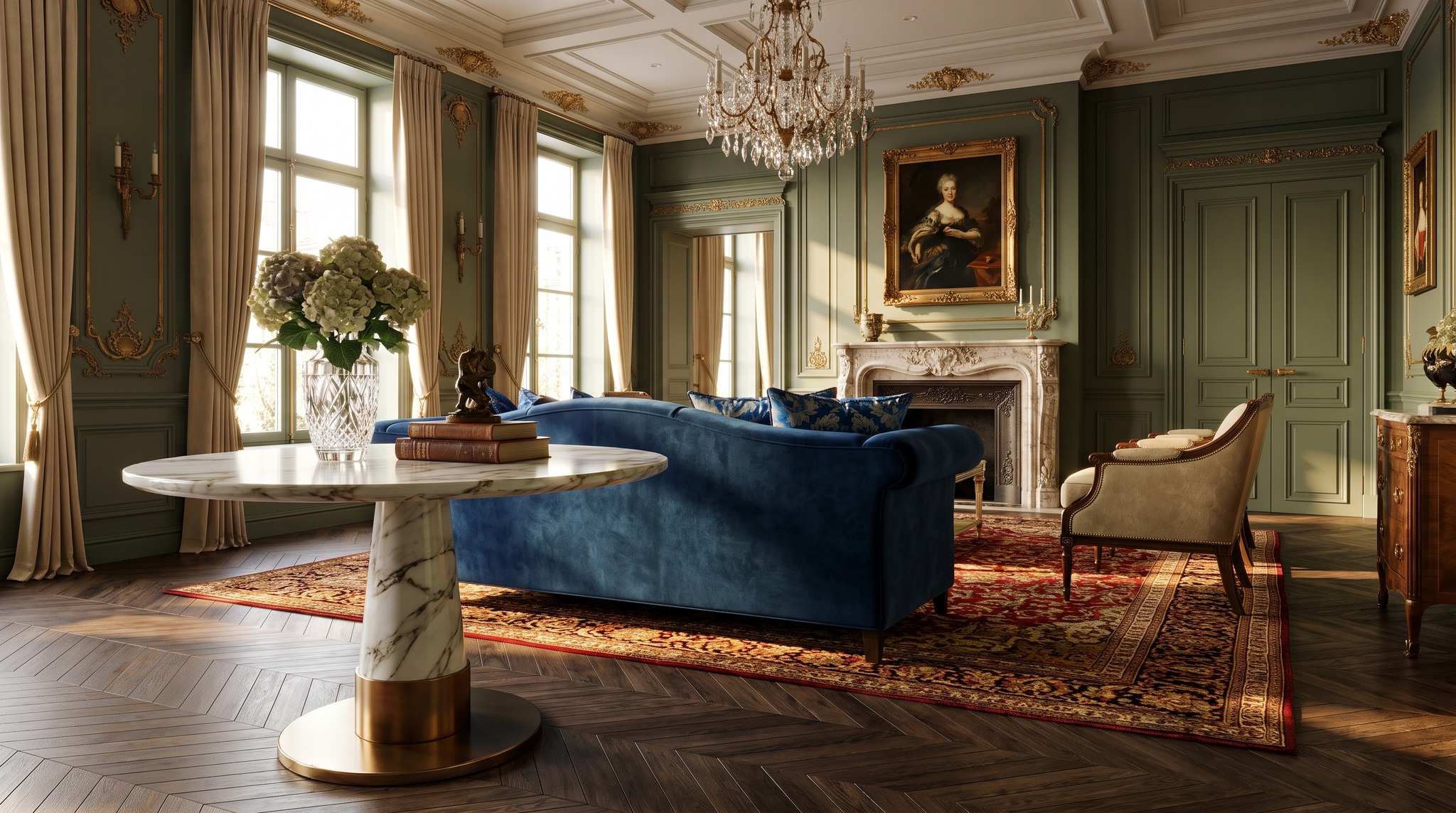
A marble side table brings elegance to the living room, but its weight raises questions. Many buyers are uncertain whether their parquet, laminate or tiled floor can bear the load. The risk of pressure marks or damage to the surface also plays a role. This article shows which weights are common and what you should consider with different floor coverings.
Typical Weight of a Marble Side Table
A small side table with a top measuring 40 by 40 centimeters and two centimeters thick weighs approximately 15 to 20 kilograms. Larger models measuring 60 by 60 centimeters can reach 35 to 50 kilograms. The weight depends on the type of marble: Carrara is lighter than dark Nero Marquina. The frame made of metal or wood also adds a few kilograms, but usually remains under five kilograms.
Parquet and Laminate: Consider Pressure Load
Parquet and laminate tolerate point loads only to a limited extent. The critical threshold is approximately 50 kilograms per square centimeter of contact surface. A table with four narrow metal feet, each with only one square centimeter of surface area, distributes 40 kilograms across four points. This results in ten kilograms per foot, which is not critical. Problems arise with very thin pins or pointed feet. Felt glides or small rubber washers help here, distributing the load across five to ten square centimeters.
Tiles and Stone Floors: Usually No Problem
Tiles, natural stone and concrete floors easily support even heavy Side Tables. The compressive strength is several hundred kilograms per square centimeter. Even a 60 kilogram table with narrow feet leaves no traces. Only with very old, cracked tiles or hollow-laid slabs should you be cautious. A quick tap test shows whether the tile is firmly seated.
Carpet and Vinyl: Avoid Pressure Marks
Deep-pile carpets and soft vinyl tend to develop permanent pressure marks. A heavy marble table presses into the surface over weeks. With short-pile carpets or firm vinyl, the risk is lower but not eliminated. Wide feet or a continuous base plate on the frame provide a solution. Alternatively, you can place thin metal plates or acrylic discs under the feet to distribute the load across ten to 20 square centimeters.
Underfloor Heating: Check Heat Insulation
A heavy marble table on underfloor heating is fundamentally possible, but can locally reduce heat output. The top acts like an insulating layer. With modern systems with low flow temperature, this is hardly significant. Ensure that the table does not remain permanently in the same spot if you use the heating heavily in winter. Occasional repositioning by a few centimeters is sufficient.
Practical Tips for Everyday Use
Measure the contact surface of the feet before purchase. Anything over three square centimeters per foot is not critical for parquet and laminate. Use self-adhesive felt glides with at least five centimeters diameter on soft floors. Do not slide the table across the floor, but lift it. This avoids scratches and pressure marks. If uncertain, a trial month helps: place the table and check after four weeks whether impressions have formed.
Related items: Chairs, Display Cabinets, Resin and Fiberglass Sculptures. baroque mirrors. The complete range: Baroque Furniture.
Related categories: Chairs, Display Cabinets, Resin and Fiberglass Sculptures. The full range: Baroque Furniture.
Read more: Oval Dining Table: Which Length Is Suitable for How Many People, Marble Coffee Table: What Weight the Floor Must Support, XXL Figure in the Front Garden: Distance to the Road and Visibility, Planters at the Front Entrance: Which Height Suits Your Door, Console Table in a Passageway: Which Depth Does Not Block the Way