


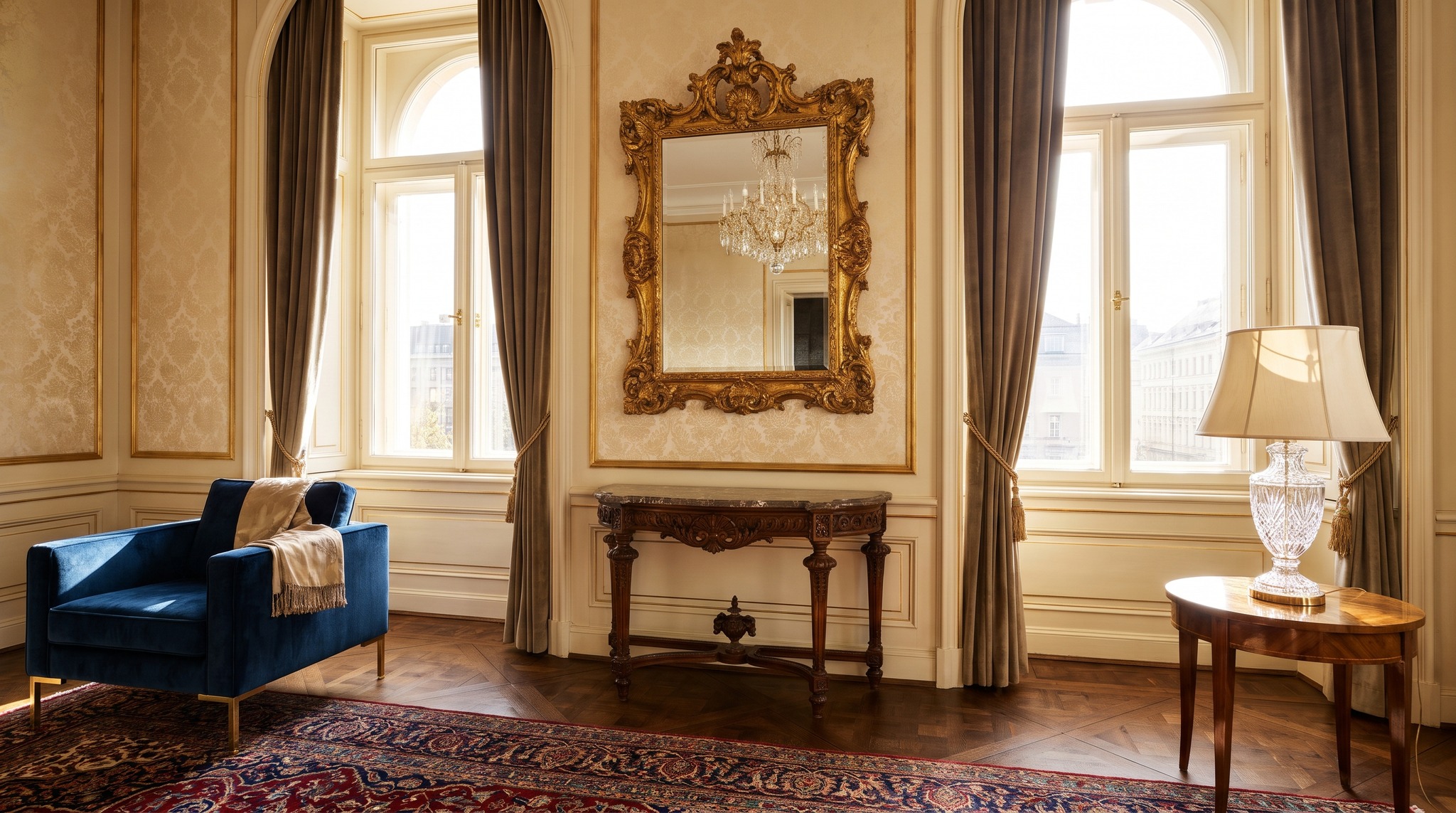
Mirror Between Two Windows: Which Width for a Narrow Wall
Many living spaces have two windows on one wall, leaving a narrow strip of wall between them. This area often appears empty or unused, but offers the perfect opportunity for a decorative accent. A mirror can reflect light here, visually enlarge the room and emphasize the symmetry of the windows. The central question is: How wide may or should the mirror be so that it appears harmonious and respects the proportions of the wall?
Measuring the Wall Width Correctly
First measure the distance between the two window frames from outer edge to outer edge. This value is your starting point. Subtract at least 10 to 15 cm on each side so that the mirror does not directly abut the windows. With a wall width of 80 cm, the mirror should therefore be a maximum of 50 to 60 cm wide. For very narrow gaps under 60 cm, an even slimmer model or a portrait-format mirror that emphasizes the vertical line is recommended.
Proportions and Visual Balance
A mirror appears balanced when it occupies about half to two thirds of the available wall width. Models that are too wide make the room appear overloaded, those that are too narrow get lost in the space. Also pay attention to the height: a portrait-format Mirrors visually stretches the room, while a landscape-format model emphasizes the width. In classic living rooms with stucco ceilings or baroque-style elements, magnificent frames that themselves become eye-catchers often fit well.
Distance to Window Sills and Radiators
Check whether there is a window sill or radiator under the windows. The mirror should maintain a distance of at least 5 to 10 cm from the top edge of the window sill so that it does not appear cramped. With radiators, a greater distance makes sense to avoid heat accumulation and facilitate cleaning. Hang the mirror so that its center is at eye level, approximately 150 to 160 cm above the floor, provided the room height permits.
Frame Style and Material Choice
The frame significantly influences the perceived width. A wide, ornate baroque frame often adds 10 to 20 cm to the mirror surface on each side. Include this frame width in your planning. Narrow metal frames or frameless models appear more delicate and are particularly suitable for narrow wall sections. In rooms with dark furniture, light or gilded frames create contrast, while dark frames recede into the background.
Utilizing Light and Spatial Effect
A mirror between windows reflects daylight into the room and thus enhances natural brightness. Position it so that it does not look directly at an opposite wall with an unattractive appearance. Ideal is the reflection of another window, a work of art or a well-maintained piece of furniture. In narrow hallways or small living rooms, this placement can visually double the space.
Installation Tips for Narrow Wall Strips
Use suitable dowels and screws for heavy mirrors that hold securely in the wall. For lightweight walls, cavity dowels or distributing the load across several attachment points are advisable. Mark the position with pencil and spirit level before drilling. For valuable mirrors with heavy baroque frames, professional installation is recommended to avoid damage to wall and mirror.
Related items: Garden Decoration, Garden Furniture, Baroque and Art Nouveau Garden Furniture. baroque mirrors. The complete range: Baroque Furniture.
Related categories: Garden Decoration, Garden Furniture, Baroque and Art Nouveau Garden Furniture. The full range: Baroque Furniture.
Read more: Chest of drawers under a sloping ceiling: which height suits the roof pitch, Baroque Armchairs in the Study: The Correct Seat Height for the Desk, Baroque Chest of Drawers in a Modern Bedroom: Which Wall Colour Works, Sofa on the Short Wall: When This Placement Stretches the Room, Chest of Drawers with Top Unit: Which Overall Height Fits Under Stucco