

Planters in a Row: What Distance from the Facade Protects Roots
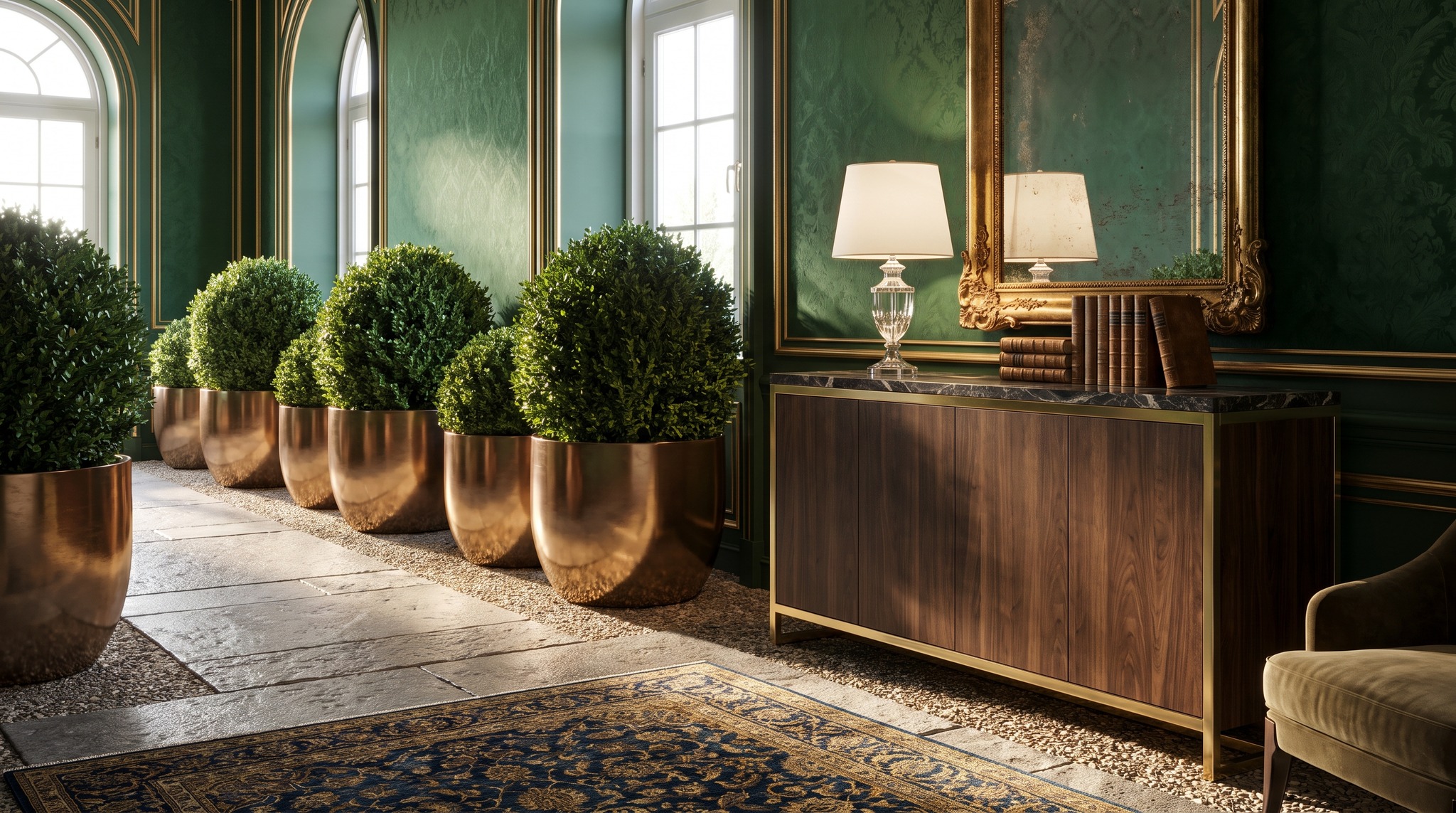
Anyone wishing to design their terrace or house entrance with a row of planted containers soon faces the question: How far must the vessels be positioned from the wall? Placed too close, roots can damage plaster, insulation or masonry over time. Too far away, the arrangement appears lost. This article shows which distances make sense and what you should consider when planning.
Minimum Distance Depends on Plant Selection and Container Size
As a general rule: the larger the container and the stronger the root growth of the plant, the more space you should leave to the facade. For smaller Flower Pots with boxwood, lavender or grasses, 15 to 20 centimetres are sufficient. For large containers from 60 centimetres in diameter, especially with bamboo, hydrangeas or small shrubs, you should plan for at least 30 to 40 centimetres of distance. This leaves enough space for air circulation and maintenance work, without roots growing through drainage holes or over the container edge towards the wall.
Why Roots Become a Hazard Even in Closed Containers
Even if a planter has no open bottom, roots can direct moisture to the facade in cases of waterlogging or overly dense positioning. Fine roots find their way through the smallest cracks in the material or press against the container wall, causing water to run along the outside. If the container stands directly against the wall, this moisture cannot dry out. The result is algae formation, discolouration or, in the worst case, frost damage in winter.
Practical Guidelines for Different Container Sizes
- Containers up to 30 cm diameter: 15 cm wall distance
- Containers 30 to 50 cm diameter: 20 to 25 cm wall distance
- Containers from 50 cm diameter: 30 to 40 cm wall distance
- Containers with vigorously growing plants such as bamboo: at least 50 cm
These values take into account both the protection of the facade and the visual effect. Too large a gap makes the arrangement appear restless, while too little distance leads to technical problems.
Drainage and Saucers Prevent Moisture Damage
In addition to distance, drainage plays a central role. Every container should have sufficient drainage holes and stand on feet or a drainage mat so that water does not accumulate beneath the base. Saucers are useful to avoid soiling but must be emptied regularly. Ensure that excess irrigation water does not flow towards the house wall but is directed outwards.
Complete the Design with Suitable Garden Decoration
A row of planters appears more harmonious if you use the spaces between them deliberately. Small lanterns, candle holders or sculptures break up the line and draw the eye. Here too: less is more. Choose elements from suitable Garden Decoration that match the containers in material and style without overloading the plants. This creates a coherent overall picture that showcases both facade and planting equally.
Regular Inspection Provides Long-Term Protection
Even with correct distance, it is worthwhile to check containers and facade once a year. Check whether roots are pushing through the base, whether moisture is visible on the wall or whether the containers have been displaced by frost. If necessary, you can readjust the position or renew the drainage. This keeps your plants healthy and the house wall protected in the long term.
Related items: Sideboards, Sculptures, Sofas. baroque mirrors. The complete range: Baroque Furniture.
Related categories: Sideboards, Sculptures, Sofas. The full range: Baroque Furniture.
Read more: Oval Dining Table: Which Length Is Suitable for How Many People, Marble Coffee Table: What Weight the Floor Must Support, Exclusive Chesterfield Furniture in Genuine Leather, Luxury & Craftsmanship by Casa Padrino, Luxury hotel furniture and project furniture from Casa Padrino, Magnificent massive baroque fountains by Casa Padrino