

Decorating Shelves: Ideal Height and Spacing Between Objects
When decorating a shelf, one often faces the question: How tall should the objects be, and how much space is needed between them? An overcrowded shelf appears restless, an empty one boring. The right balance emerges through clear proportions and considered spacing. This article shows which measurements and rules of thumb help create a harmonious overall appearance.
Height of Decorative Objects in Relation to the Shelf
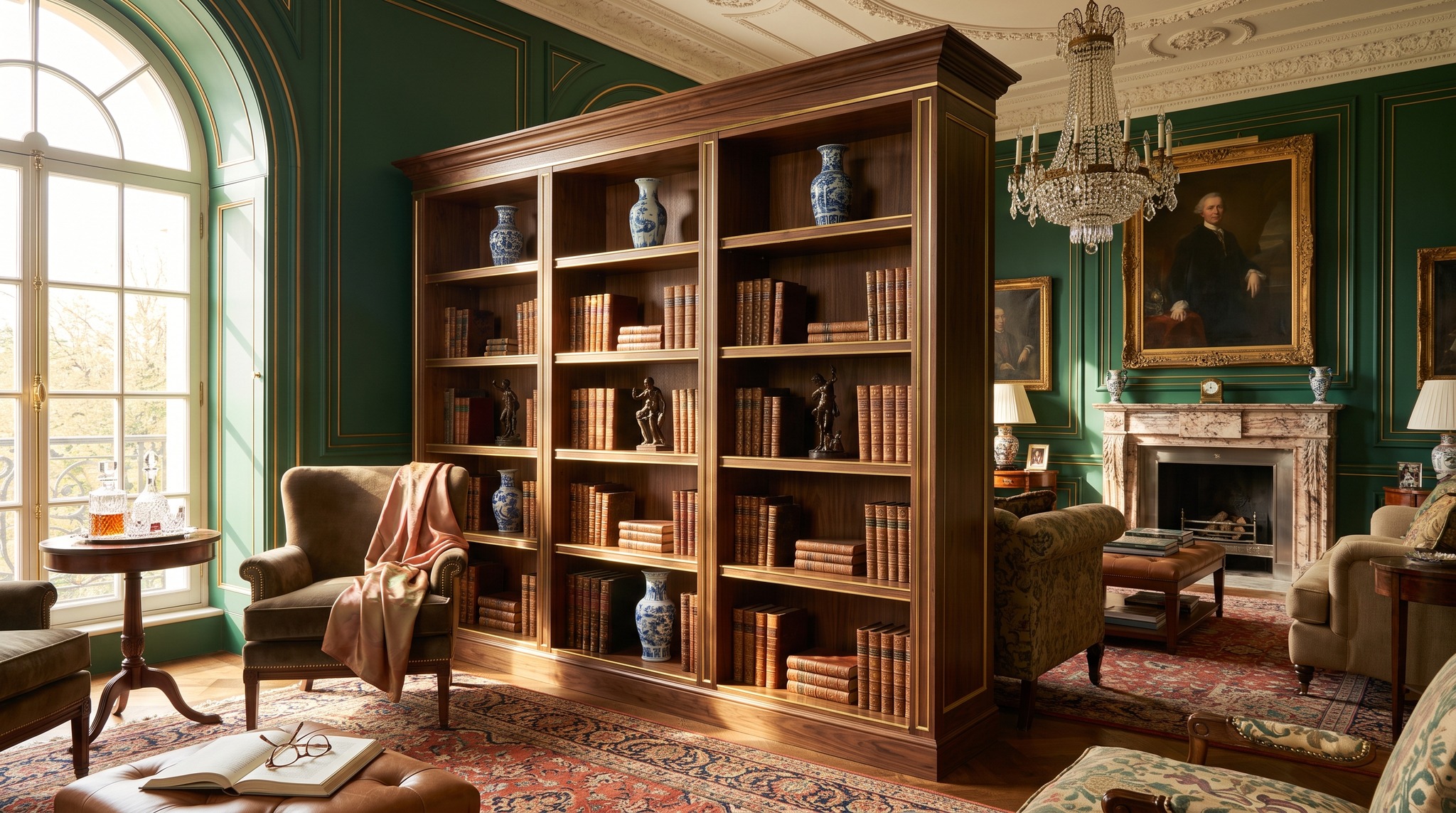
The height of a decorative piece should measure approximately two thirds to three quarters of the distance to the next shelf above. For a shelf with 30 cm height, objects up to 20 to 23 cm fit well. If at least 5 to 7 cm of space remains above, the arrangement does not appear cramped. Objects that are too small, occupying only a third of the height, are visually lost and then require pedestals or groupings to gain presence.
Horizontal Spacing Between Individual Objects
Between two decorative pieces on the same level, at least 8 to 12 cm of free space should remain. This corresponds roughly to the width of a hand and ensures that each object is perceived individually. If three vases stand side by side, the spacing may also shrink to 5 to 7 cm when they form a deliberate group. Individual, large pieces such as a sculpture or candlestick, however, require 15 to 20 cm distance to the next element so that their impact is not diluted.
Vertical Rhythm Across Multiple Shelves
Across the height of the shelf, tall and low objects should alternate. A proven pattern: on one shelf a large piece, above it two smaller ones, then again a medium one. This creates a rhythm that guides the eye. If equally tall objects stand on each shelf, the unit appears monotonous. Colours and materials should also be distributed across the levels rather than clustering on one shelf.
Grouping and Triangle Rule
Three objects of different heights, arranged in an imaginary triangle, form a classic, calm composition. The tallest stands at the back or to the side, the two smaller ones in front or beside it. This arrangement works on a single shelf as well as distributed across multiple levels. Straight lines and symmetrical pairs appear more formal, odd numbers more relaxed. Those working with Decorations can create tension through deliberate asymmetry without producing chaos.
Using Depth and Creating Layers
Shelves with 25 to 35 cm depth allow objects to be staggered one behind another. A flat tray or picture frame stands at the back against the wall, with a vase or bowl in front. The distance between front and rear layer should be at least 10 cm so that both objects remain visible. This creates spatial depth without the shelf appearing overloaded. Flat objects such as plates or books are suitable as a backdrop, three-dimensional ones as foreground.
Less Is More: Empty Space as a Design Element
A shelf may also remain empty or carry only a single, striking piece. Empty space is not a deficiency but directs the gaze to the occupied surfaces. As a rule of thumb: a maximum of 60 to 70 per cent of the shelf surface should be occupied. The rest remains free or is filled with books, boxes or other functional elements that serve as calm surfaces. If uncertain, begin with few pieces and add gradually until the balance is right.
Related items: Armchairs, Sideboards, Sculptures. baroque mirrors. The complete range: Baroque Furniture.
Related categories: Armchairs, Sideboards, Sculptures. The full range: Baroque Furniture.
Read more: Coffee Table with Storage Shelf: When Two Levels Make Sense, Planters on the Balcony: Which Depth for Which Plant, Luxury Garden Fountains & Water Columns by Casa Padrino, Elegant Accents for Sophisticated Outdoor Spaces, Luxury Art Nouveau park bench collection from Casa Padrino for hotels, cities, restaurants, commercial parks and private individuals, Magnificent baroque marble columns from Casa Padrino