


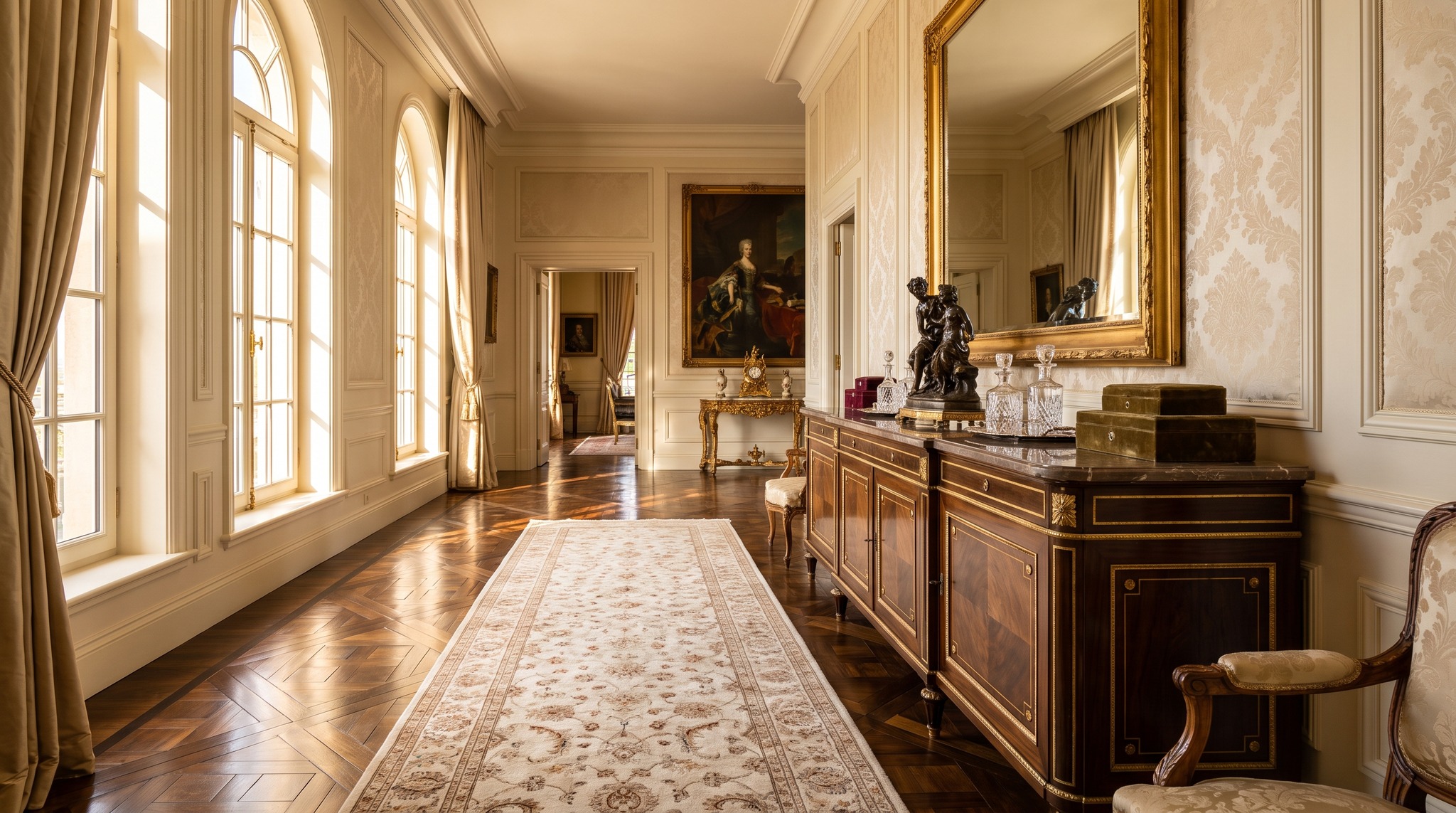
Sideboard in the Hallway: Which Length Does Not Narrow the Corridor
The hallway is often the underestimated zone of the home. You wish to place a sideboard that offers storage space while not blocking the passage. The question of the right length is crucial, as furniture that is too large makes the entrance area cramped and uncomfortable. How do you find the right balance between function and freedom of movement?
The Minimum Width for the Passage
As a rule of thumb: the remaining passage should be at least 80 cm wide, preferably 90 to 100 cm. This allows comfortable passage, even when you are carrying bags or when several people are using the hallway simultaneously. First measure the width of your hallway and subtract the desired passage width. The difference gives you the maximum depth of the sideboard. In a 180 cm wide hallway, approximately 80 to 100 cm remain for the furniture.
Choosing Length According to Available Wall Space
The length of the sideboard depends on the free wall space between doors, radiators or junctions. A classic measurement is between 120 and 180 cm in length. Shorter models from 100 cm are suitable for narrow hallways or alcoves, while longer variants up to 200 cm fit in spacious entrance areas. It is important to leave approximately 10 to 15 cm distance on both sides to the next door or corner, so that the furniture does not appear visually squeezed.
Considering Height and Proportions
The height significantly influences the spatial effect. Low Sideboards with 70 to 85 cm height make the hallway appear more airy and provide space for a mirror or pictures above. Higher models up to 110 cm have a more prominent presence and offer more storage space, but can appear bulky in low rooms. Ensure that the proportions match the room height: in a hallway with 240 cm ceiling height, the sideboard should not be higher than one third of that.
Practical Reference Values for Different Hallway Widths
Depending on the hallway width, different recommendations arise for the sideboard depth:
- Hallway 120 to 140 cm wide: sideboard maximum 30 to 35 cm deep
- Hallway 150 to 180 cm wide: sideboard 35 to 45 cm deep possible
- Hallway over 200 cm wide: sideboard up to 50 cm depth acceptable
These values already take into account the minimum passage width and allow room for movement.
Visual Tricks for More Spaciousness
Light surfaces and slender legs make the sideboard appear lighter and visually give the hallway more space. Models with open compartments or glass elements break up the closed front and create transparency. If you choose several smaller chests instead of one long sideboard, you can respond more flexibly to alcoves or projections. A wall distance of a few centimeters behind the furniture also facilitates cleaning and prevents dust accumulation.
Related to this: Display Cabinets, Resin and Fiberglass Sculptures, baroque mirrors. baroque mirrors. The complete range: baroque furniture.
Related categories: Display Cabinets, Resin and Fiberglass Sculptures, baroque mirrors. The full range: Baroque Furniture.
Read more: Oval Dining Table: Which Length Is Suitable for How Many People, Marble Coffee Table: What Weight the Floor Must Support, Side Table Next to the Bed: Which Height Suits the Mattress, Planters on the Patio: Material, Size and Winter Hardiness, Coffee Table in Front of the Sofa: Which Shape Suits Which Floor Plan