


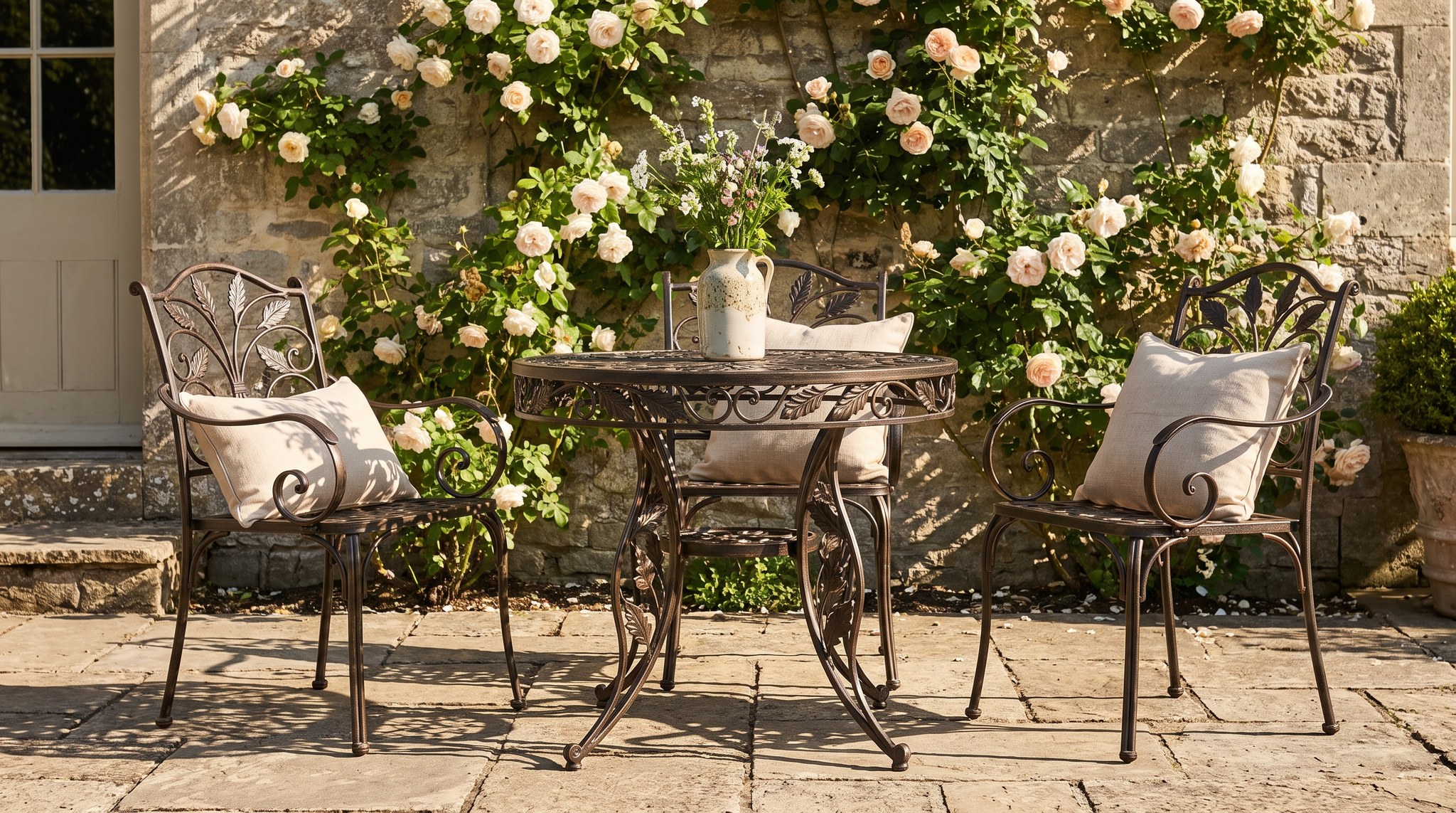
Wrought Iron in the Garden: Stability, Care and What Rust Means
Those interested in wrought iron garden furniture often ask the same questions: How heavy must a bench or chair be to prevent it from tipping over in the wind? How do I care for the material properly, and is rust a sign of poor quality or part of its character? This article provides you with concrete guidance so you can enjoy your furniture for years to come.
Why Wrought Iron Is So Popular Outdoors
Wrought iron combines stability with design versatility. The material can be formed into delicate ornaments whilst remaining robust enough for year-round outdoor use. Unlike wood, it does not swell; unlike plastic, it does not become brittle. Particularly with Baroque and Art Nouveau Garden Furniture, the traditional craft of forging comes into its own, as scrollwork and curved lines can be executed with precision.
Stability: Weight and Ground Contact
A typical wrought iron garden chair weighs between 8 and 12 kilograms, whilst a two-seater garden bench weighs approximately 20 to 30 kilograms. This mass is generally sufficient to remain stable in normal wind conditions. The construction of the feet is also crucial: wide bases or cross braces increase resistance to tipping. On soft surfaces such as lawns, you can place flat metal plates under the feet to prevent sinking.
Care: Cleaning and Protection from Moisture
Wrought iron requires no elaborate care; a few simple steps suffice. Remove dust and leaves regularly with a soft brush or damp cloth. Twice a year, you should inspect the surface for damage to the coating. Touch up small scratches with metal protective paint before moisture can penetrate. In winter, a cover or dry storage location is advisable to extend the lifespan.
Rust: Patina or Damage?
Surface flash rust is normal on untreated or slightly damaged iron and can be removed with a wire brush and rust converter. Many manufacturers provide their Garden Furniture with powder coating or paint that protects the metal. If you deliberately want a rusted appearance, ensure that the structure itself remains stable. Rust penetration at load-bearing points is a safety risk and should not be ignored.
Combination Options and Site Selection
Wrought iron harmonises with many materials: wood provides warmth, stone provides elegance, gravel provides Mediterranean flair. Position the furniture preferably not directly on permanently damp ground, but on slabs, gravel or paved surfaces. A slight gradient helps rainwater to drain away. This prevents standing water at the feet and significantly extends durability.
Related items: Columns and Pedestals, Armchairs, Sideboards. baroque mirrors. Complete range: Baroque Furniture.
Related categories: Columns and Pedestals, Armchairs, Sideboards. The full range: Baroque Furniture.
Read more: Wall Colours for Dark Furniture: Which Colours Harmonise Best, The Right Rug Under Dining Table and Sofa: Size and Placement, XXL Garden Figures: Which Size Suits Which Property, How Many Chairs Fit at Which Dining Table? Correct Space Planning, Living Room in Grand Hotel Style, Luxury to Feel Good