

Arranging a Display Cabinet: What Works Behind Glass and What Does Not
You have purchased or inherited a display cabinet and are now wondering what to fill it with. Not everything that matters to you comes into its own behind glass. Some objects disappear visually, others appear restless or out of place. This article shows you which objects work in a display cabinet and which are better left on a shelf or sideboard.
Why Display Cabinets Have Special Requirements
A display cabinet frames its contents through glass and often through lighting. This creates a stage that directs attention. Whatever you place inside is automatically perceived as selected and valuable. At the same time, glass reflects, absorbs colour nuances and demands clear contours. Objects that appear charming on an open shelf can look pale or chaotic behind glass. It is therefore worth checking before arranging whether form, material and size suit the cabinet.
These Objects Come Into Their Own Behind Glass
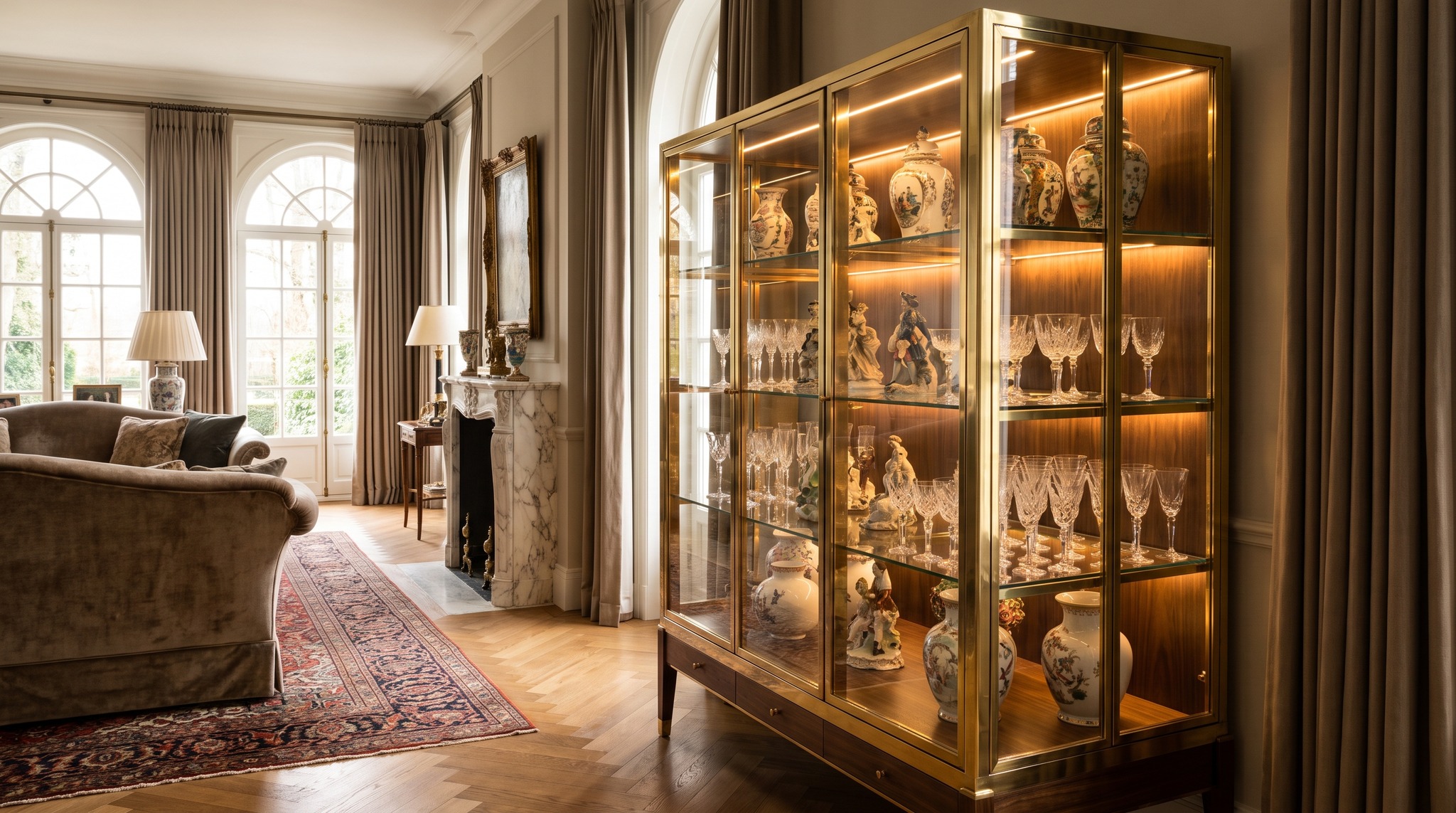
Objects with a clear silhouette and surface texture are well suited. Porcelain, ceramics, glass, polished metal and lacquered wood reflect light and create depth. Collections in which form or colour repeats appear orderly: a series of cups, small vases in graduated heights, pewter figures or minerals. Books with beautiful bindings, framed miniatures and clocks also work, provided they are not too flat. If you own several Display Cabinets or are arranging a large standing cabinet, you can create thematic groups: one level for travel souvenirs, one for heirlooms, one for seasonal objects.
What You Should Better Leave Out
Soft toys, textiles and unframed paper lose presence behind glass. They absorb light, appear dusty and create no contours. Very small, delicate objects such as costume jewellery or coins also get lost in the depth of a display cabinet, unless you place them on a contrasting surface. Objects with a restless surface, such as printed packaging or colourful plastic figures, create visual noise. If you are unsure, place the object inside as a test and view it from two metres away: does it disappear or does it draw the eye?
Using Height, Spacing and Background Correctly
Arrange objects by height: large pieces to the back, low ones to the front. This way everything remains visible. Leave space between objects, at least three to five centimetres. Display cabinets placed too densely appear overloaded. A calm background helps: if the back wall of the cabinet shows patterned wallpaper or a window lies behind it, stretch a plain fabric or cardboard. White, cream or dark grey work almost always. With illuminated cabinets, check whether shadows are disturbing: LED strips installed at the top or sides prevent harsh cast shadows.
How Much Decoration a Display Cabinet Can Take
Less is more. A rule of thumb: fill a maximum of two thirds of the available surface. Empty zones give the objects space and let the cabinet breathe. If you wish to display seasonal Decorations, replace it completely rather than constantly adding more. Three to five objects per shelf are often sufficient. With collections there may be more, but then at uniform height and with a clear rhythm. Avoid filling every gap: particularly in baroque or Art Nouveau cabinets with richly decorated frames, the eye needs points of rest.
Care and Rotation Keep the Display Cabinet Alive
Display cabinets protect against dust, but not completely. Wipe glass and objects with a damp cloth every two to three months. Use microfibre cloths and clear water, with a little vinegar for limescale marks. Change the contents occasionally: what stands for months becomes invisible. A change every six months is sufficient to keep the cabinet interesting. This way it remains what it should be: a frame for what matters to you, not a storage place for everything that finds no other location.
Related categories: Sideboards, Sculptures, Sofas. The full range: Baroque Furniture.
Read more: Wall Colours for Dark Furniture: Which Colours Harmonise Best, The Right Rug Under Dining Table and Sofa: Size and Placement, Luxury Garden Fountains & Water Columns by Casa Padrino, Elegant Accents for Sophisticated Outdoor Spaces, Stylish free-standing luxury Art Nouveau bathtubs by Casa Padrino with lion feets, News