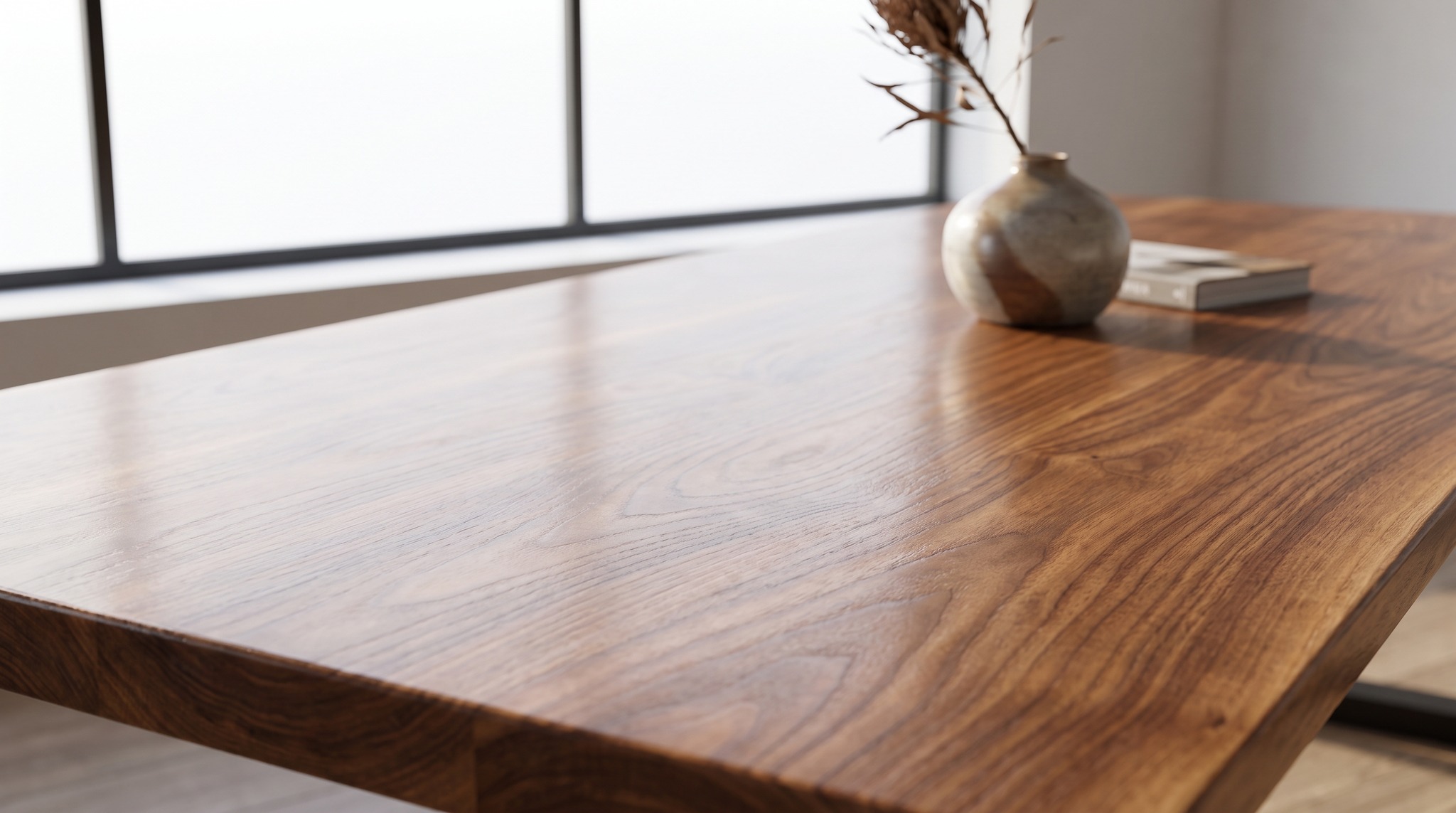
Caring for Solid Wood: Oil, Wax and What Heating Air Does
Solid wood furniture brings warmth and naturalness to any room. However, after a few months, dull spots, fine cracks or rough surfaces often appear. Many people then wonder whether they should oil or wax and why the wood suddenly moves in winter. Proper care keeps the surface supple and protects against premature ageing. This article explains which products make sense when and how to keep your solid wood beautiful in the long term.
Oil or Wax: What Is the Difference?
Oil penetrates deep into the wood fibres and nourishes the material from within. It emphasises the natural grain but remains open-pored and allows the wood to breathe. Wax, on the other hand, forms a thin protective layer on the surface that repels moisture and creates a slight sheen. Both variants are suitable for untreated or already oiled furniture. Lacquered surfaces tolerate neither oil nor wax; a damp cloth is sufficient here. For heavily used surfaces such as Dining Tables, a combination is recommended: first oil, then apply a thin layer of wax after drying.
How Often Should You Retreat?
The frequency depends on use. A dining table that is set daily needs refreshing every six to twelve months. Commodes or sideboards that have less contact often manage two years without retreatment. A simple test shows the need: spray a few drops of water onto the surface. If the water beads off, the protection is intact. If it soaks in immediately and darkens the wood, a new layer is due.
Heating Air and Crack Formation: Why Wood Moves
Solid wood reacts to fluctuations in air humidity. In winter, the relative humidity in heated rooms often drops below 40 per cent, in summer it rises to 60 per cent or more. The wood releases moisture or absorbs it, expands or contracts. Fine cracks, known as shrinkage cracks, are normal with solid wood and not a defect. They can be minimised by maintaining constant room humidity between 45 and 55 per cent. Humidifiers or regular ventilation help to avoid extreme fluctuations.
Oiling Correctly: Step by Step
First clean the surface with a slightly damp cloth and allow it to dry completely. Apply the wood oil thinly with a lint-free cotton cloth or brush, always in the direction of the grain. After 15 to 30 minutes, wipe off excess oil, otherwise sticky spots will form. A second coat after 24 hours strengthens the protection. The surface is fully resilient after approximately 48 hours. Use only oils based on linseed oil, tung oil or hard wax oil, not cooking oils.
Waxing for Silky Sheen
Hard wax is applied sparingly with a soft cloth and polished with circular movements after a short exposure time. The layer must not be too thick, otherwise the surface will appear dull. Wax is particularly suitable for furniture with little moisture contact, such as cupboards or shelves. On heavily used table tops, wax alone often does not last long; here the combination with oil is more stable. Ensure that the wax is solvent-free and approved for indoor use.
Stains and Scratches: First Aid
Water rings can often be polished out with a mixture of olive oil and salt. Rub the paste in carefully and wipe it off after a few minutes. Light scratches disappear if you moisten the spot and allow the wood to swell. Sand deeper damage carefully with fine sandpaper (grit 220) in the direction of the grain and oil the spot afterwards. With dark stains, sanding the entire surface sometimes helps; afterwards the surface must be resealed.
Related products: Flower Pots, Fountains and Water Columns, Coffee Tables. baroque mirrors. The complete range: Baroque Furniture.
Related categories: Flower Pots, Fountains and Water Columns, Coffee Tables. The full range: Baroque Furniture.
Read more: Wall Colours for Dark Furniture: Which Colours Harmonise Best, The Right Rug Under Dining Table and Sofa: Size and Placement, Luxury fountains by Casa Padrino in Baroque and Art Nouveau Design, Marble in Living Spaces: Which Slab Can Withstand What, XXL Garden Figures: Which Size Suits Which Property