


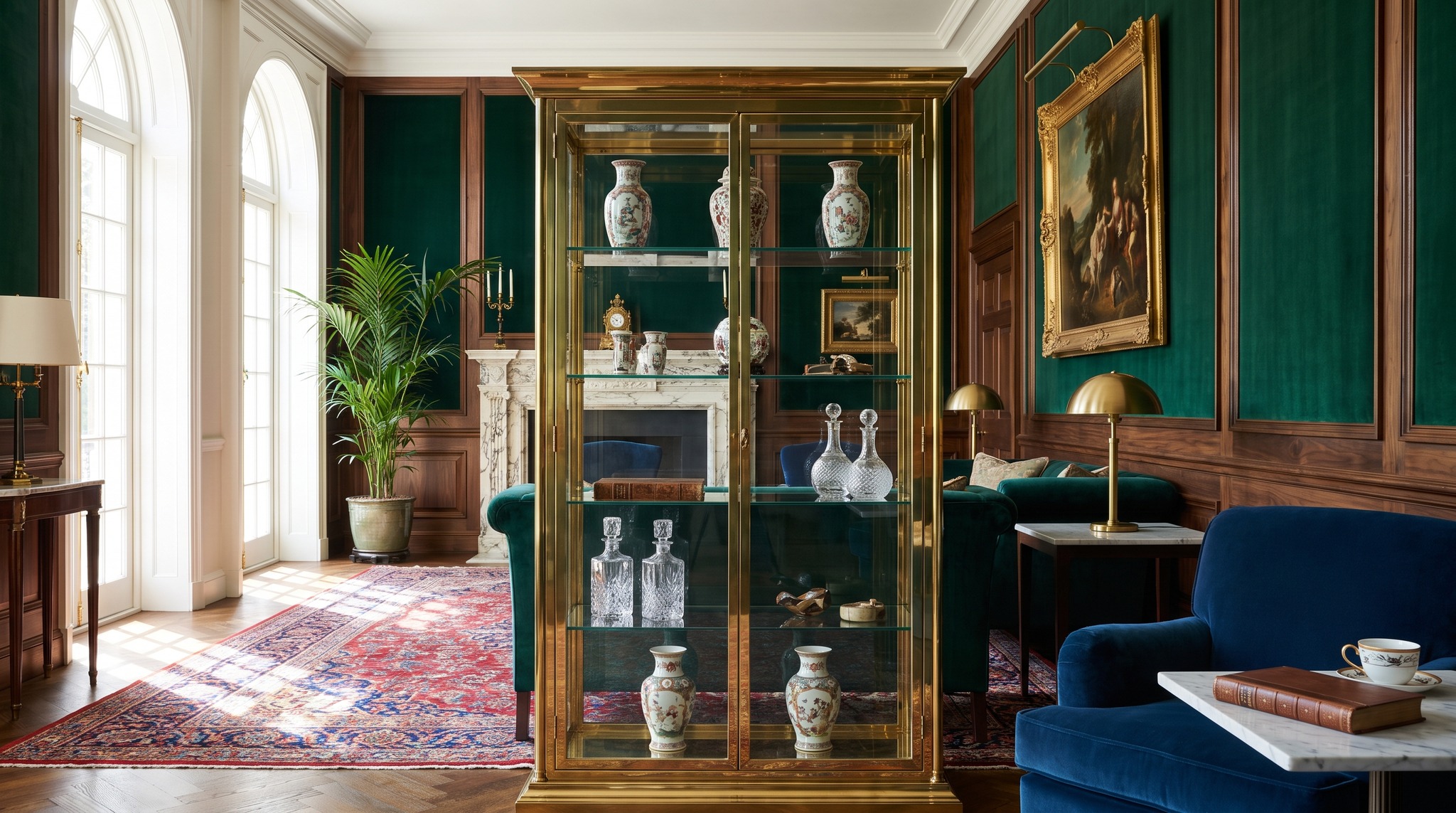
Display Cabinet Without Back Panel: When Transparency Makes Sense
You are planning to purchase a display cabinet and wondering whether a model without a closed back panel is the right choice. Display cabinets with a transparent or completely absent back panel appear lighter and allow a view through the furniture. However, this design is not advantageous in every room situation. In this article, you will learn when an open back makes sense and what you should consider when positioning the cabinet.
Freestanding Placement in the Room
A display cabinet without a back panel unfolds its effect particularly when it stands freely in the room and is viewed from multiple sides. This can be a passage area, a room divider position between living and dining areas, or an island in a spacious salon. The transparency keeps the room visually open, light can circulate unhindered, and you create a subtle zoning without blocking the view. If you wish to use high-quality Display Cabinets as room dividers, ensure that the back of the interior is also attractively designed.
Wall Placement: Background Becomes Visible
If you place the display cabinet directly against a wall, the wall surface becomes the visual background for your display pieces. This can be intentional, for example with patterned wallpaper, a coloured wall, or wood panelling that serves as a backdrop. However, you must be aware that cables, sockets, or unevenness in the wall remain visible. A closed back panel made of wood or coated material conceals such details and also provides a neutral surface that better showcases your objects.
Lighting and Light Direction
With an open back panel, daylight or room light falls through the display cabinet from behind. This can make glass, crystal, or transparent Decorations glow, but also creates cast shadows and can weaken the contours of the objects. For a targeted presentation with LED spots or cabinet lights, a closed, light-coloured back panel is often the better choice because it reflects the light forward and clearly defines the display pieces.
Stability and Assembly
A continuous back panel made of wood or chipboard contributes to the torsional rigidity of the cabinet body. Display cabinets without a back panel therefore often require reinforced side and base connections or a stable metal frame. Before purchasing, check whether the model is designed for freestanding placement or whether the manufacturer recommends wall mounting. Particularly with tall display cabinets over 180 cm, you should ensure adequate stability.
Dust Protection and Maintenance
An open back makes access from behind easier, but also means that dust can enter from two sides. If you store delicate textiles, books, or collectibles, a closed back panel offers better protection. For decorative arrangements that you regularly rearrange or clean, this point plays a lesser role.
Stylistic Effect
Display cabinets without a back panel appear more modern and airy, while closed models seem more classic and representative. In Baroque or Art Nouveau interiors, the back panel is often designed with fabric, mirror, or carved work and is an integral part of the presentation. In minimalist or Scandinavian rooms, transparency can be deliberately used to create lightness.
Related items: Sideboards, Sculptures, Sofas. baroque mirrors. The complete range: Baroque furniture.
Related categories: Sideboards, Sculptures, Sofas. The full range: Baroque Furniture.
Read more: Indoor Planters: Which Size for Which Ceiling Height, Arranging Armchairs in Pairs: Which Distance Suits Conversation, Making Small Rooms Look Bigger, Luxury in Little Space, Baroque Meets Modern, Combining Luxury Styles with Flair, Casa Padrino Baroque Dining Tables, Magnificent Tables for a Luxurious Dining Room