

Extending a Dining Table: Insert Leaf or Fixed Size
When purchasing a dining table, you often face the question of whether an extendable model with an insert leaf makes sense or whether a fixed size is sufficient. The decision depends on how often you receive guests, how much space your dining room offers, and what flexibility you need in everyday life. An extendable table offers adaptability, while a fixed table often appears more stable and has no moving parts. Both variants have their merits, and the right choice will make your life considerably easier.
When an Extendable Dining Table Is Worthwhile
A table with an insert leaf makes sense when you regularly alternate between different numbers of people. If you typically dine with two or four people in everyday life but host six to eight people several times a year, the extension function is practical. You save space when you do not need it and still have enough surface area for special occasions. This flexibility is particularly valuable in rooms under 20 square metres, because a permanently large table would overwhelm the space.
How Much Space Do You Gain with an Insert Leaf
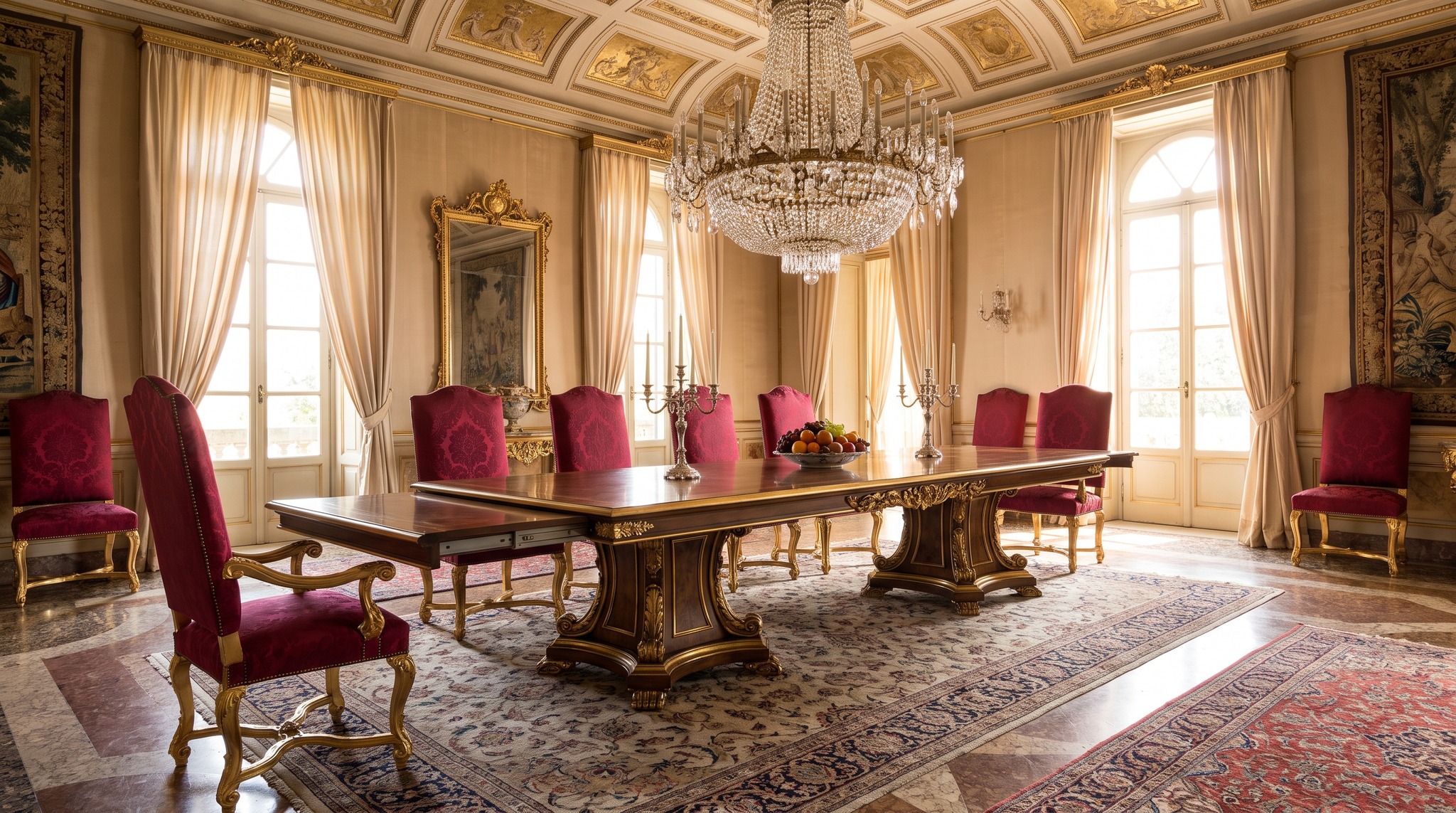
Most insert leaves extend the table by 40 to 60 centimetres. A table of 160 centimetres in length thus grows to 200 to 220 centimetres. This corresponds to the difference between four and six to eight seats. Calculate approximately 60 centimetres of width at the table per person. With Dining Tables featuring a centre extension, the insert leaf usually lies within the table itself and can be inserted by pulling the table tops apart. With end extensions, the leaf is pulled out from the side.
What Disadvantages Does an Extendable Table Have
The mechanism of an extension table brings additional weight and moving parts with it. The stability can be lower than with a fixed table, especially if the mechanism is not of high quality. Furthermore, a visible seam often appears at the location of the insert leaf, which some perceive as an optical flaw. The insert leaf must be stored when it is not integrated into the table, and extending it requires some effort each time. If you only rarely enlarge the table, this effort can become bothersome.
When a Fixed Dining Table Is the Better Choice
If you have sufficient space and the number of people remains constant, a fixed table offers advantages. It stands more stably, has no seams and no mechanism that can wear out. The appearance is uniform, and you do not need to worry about storing insert leaves. In large dining rooms from 25 square metres onwards or in open living areas, a generous fixed table often appears more harmonious. With heavy materials such as solid wood or marble, a fixed construction is often the more solid solution.
Which Table Size Suits Your Room
As a rule of thumb, you should plan for at least 80 to 100 centimetres of distance between the table edge and the wall so that chairs can be pulled out comfortably. For four people, a table of 120 by 80 centimetres is sufficient; for six people, it should be 160 by 90 centimetres. If you opt for an extendable table, measure the room in the extended state to ensure that sufficient freedom of movement remains. The selection of Dining Tables includes both variants in various styles, so you can find the appropriate solution for your room situation.
What to Look for in the Mechanism
If you decide on an extension table, examine the quality of the mechanism. Synchronised extensions, in which both table halves slide apart simultaneously, are more convenient than simple push systems. Ensure that the insert leaf sits flush with the table top and that no height differences occur. High-quality models have guide rails made of metal and a solid locking mechanism in the extended state. The insert leaf should be made from the same material and have the same surface treatment as the main top, so that no optical differences are noticeable.
Related items: Coffee Tables, Decorations, Garden Furniture, Stoves and Decoration. baroque mirrors. The complete range: Baroque furniture.
Related categories: Coffee Tables, Decorations, Garden Furniture, Stoves and Decoration. The full range: Baroque Furniture.
Read more: Side Table Next to the Bed: Which Height Suits the Mattress, Placing Sculptures in the Garden: Pedestal, Sight Line and Background, Baroque, Art Nouveau, Chesterfield: how to recognise the styles, Marble in Living Spaces: Which Slab Can Withstand What, Designing the Garden Like a Room: Zones, Sight Lines and Proportions