

Buying Baroque Furniture: Which Measurements You Should Take Beforehand
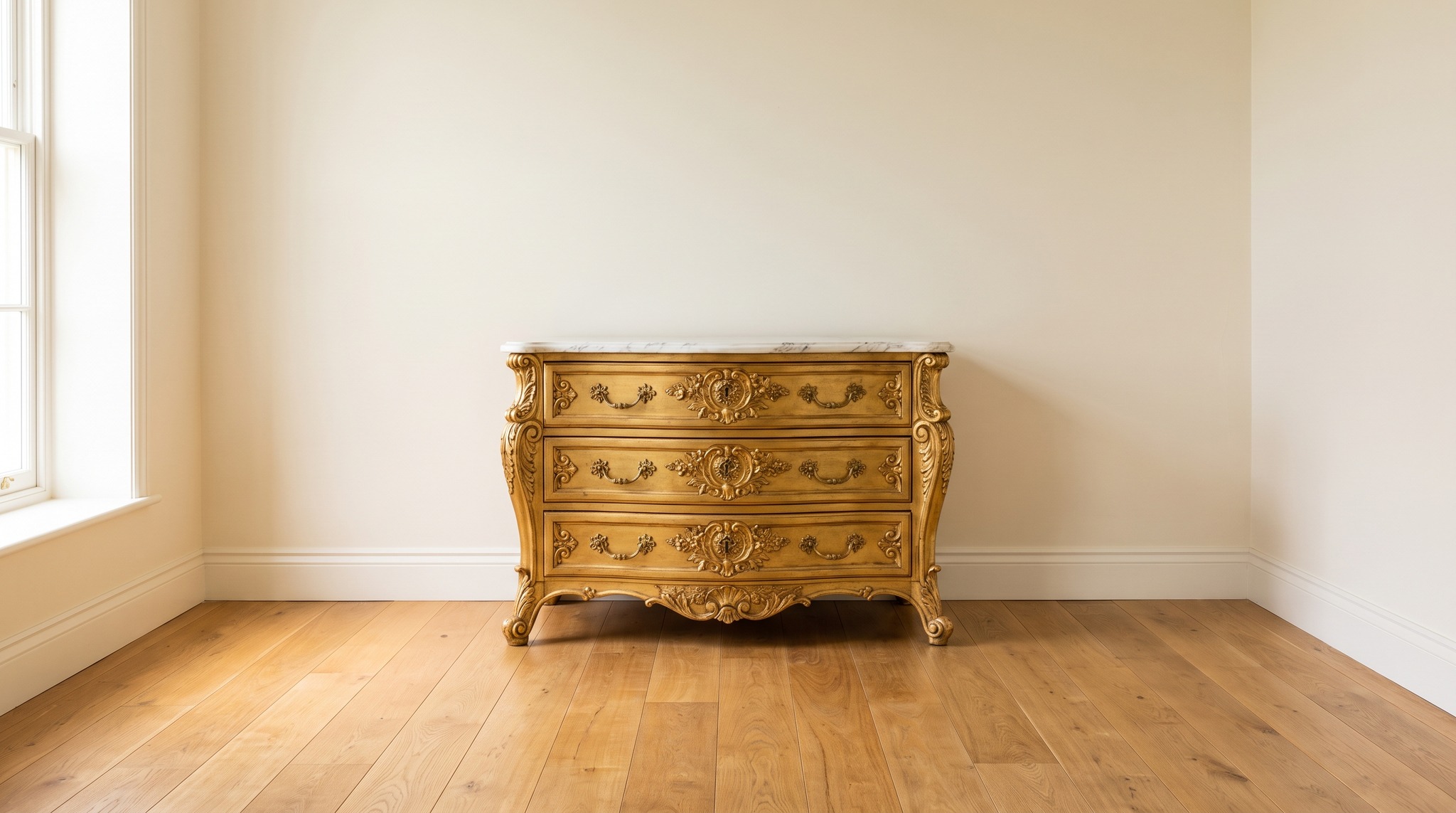
You wish to furnish your home with opulent Baroque-style furniture, but before purchasing, the question arises: Will the chosen piece even fit in the intended room? Baroque furniture is characterised by generous proportions, curved forms and elaborate ornamentation. Anyone who does not measure carefully will experience an unpleasant surprise during assembly. This guide shows you which measurements you should definitely determine before purchasing.
Determine Floor Space and Placement Area Precisely
First measure the width and depth of the location where the piece of furniture is to stand. Allow at least 10 cm clearance on all sides so that doors and drawers can open fully. With Commodes featuring expansive handles or fittings, you often require 15 to 20 cm additional clearance towards the front. Also note whether radiators, sockets or skirting boards restrict the usable area.
Consider Room Height and Ceiling Height
Baroque cabinets, display cabinets and mirrors are frequently taller than modern furniture. Measure the ceiling height and deduct at least 5 cm to allow room for manoeuvre during transport and positioning. In period buildings with stucco, you should additionally check whether ceiling roses or decorative mouldings restrict the upper area. For harmonious proportions, the following applies: a cabinet should not occupy more than two thirds of the room height.
Do Not Forget Door Widths and Staircases
Even if the furniture will later fit perfectly, it must first pass through the front door, hallway and possibly stairs. Measure all passages in width and height, paying attention to door frames, banisters and wall projections. Particularly with baroque mirrors featuring fixed superstructures or wide side sections, this point is often underestimated. Many pieces can be dismantled, but solid table tops or mirror frames remain in one piece.
Plan Distances to Other Furniture
To prevent the room from appearing overloaded, you should maintain minimum distances. Between sofa and coffee table, allow 40 to 50 cm, in front of seating at least 60 cm for comfortable standing up. Between two pieces of furniture on opposite walls, at least 90 cm distance should remain so that you can move freely. Baroque furniture works best when it has room to breathe.
Check Wall Construction and Fixing Options
Heavy mirrors, wall consoles or tall cabinets often need to be fixed to the wall. Check whether the wall consists of solid masonry, plasterboard or wood. With plasterboard walls, you require special plugs that bear at least 40 kg. Also measure the distance to corners and adjacent walls so that you have sufficient space for mounting.
Checklist: These Measurements You Should Note
- Width, depth and height of the placement area
- Ceiling height and distance to ceiling ornaments
- Width and height of all doors and passages
- Staircase width and banister height
- Distances to radiators, sockets and other furniture
- Wall construction for potential fixings
Related to this: Baroque and Art Nouveau Garden Furniture, Consoles, Columns and Pedestals. baroque mirrors. The complete range: Baroque Furniture.
Related categories: Baroque and Art Nouveau Garden Furniture, Consoles, Columns and Pedestals. The full range: Baroque Furniture.
Read more: Wall Colours for Dark Furniture: Which Colours Harmonise Best, The Right Rug Under Dining Table and Sofa: Size and Placement, Luxury Baroque Dining Room Sets by Casa Padrino, Prestigious Design for Hotels, Corporate Spaces & Elegant Homes, Authentic baroque antique style mirror and museum replica by Casa Padrino, Massive Wood Country & Baroque Style Beds by Casa Padrino