

Candles, Vases, Bowls: Decoration on the Dining Table
You want to style your dining table attractively without the decoration interfering with meals or restricting space. At the same time, the table should look inviting even when not in use for dining. Many people wonder which objects are suitable, how many elements make sense, and where exactly they should be placed. The right balance between function and atmosphere is crucial.
Basic Rule: Consider Height and Sight Line
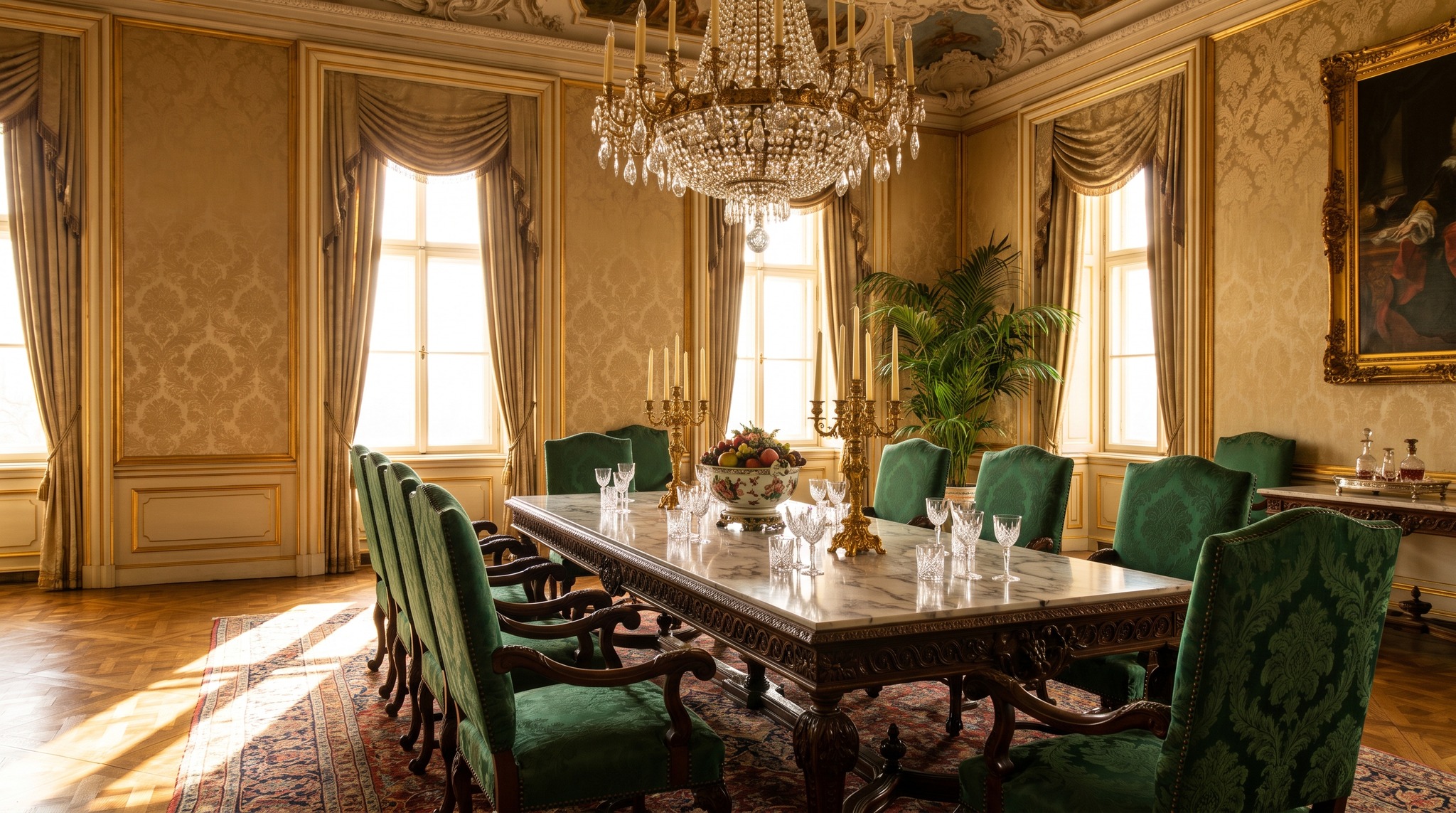
Decoration on the dining table should not block the sight line between those seated. As a guideline, a maximum height of 30 cm applies for objects in the centre of the table. Candlesticks, vases or bowls that are taller should be placed to the side or at the head of the table. For elongated tables from 180 cm in length, you can also arrange several low elements in a row instead of one large centrepiece.
Candles: Size and Number According to Table Format
For a table measuring 140 to 160 cm in length, three to five candles or a single candelabra with multiple arms are sufficient. For Dining Tables over 200 cm, you can create two groups or set a continuous row of seven to nine pillar candles. Ensure that at least 20 cm of distance remains between the candle flame and the table edge, so that no one accidentally reaches into the flame with their arm. LED candles are a safe alternative when children are seated at the table.
Vases: Adapt Form and Contents to the Occasion
A vase in the centre of the table should either be very flat, approximately 15 to 20 cm high, or slender and transparent, so that the view passes through it. Flowers or branches must not extend beyond 25 cm. For everyday use, individual grasses, dried flowers or a few stems in clear water are suitable. Reserve abundant bouquets for special occasions and then place them on a sideboard or serving table, not on the dining table itself.
Bowls: Practical and Decorative at Once
Flat bowls made of wood, ceramic or metal are versatile. You can arrange fruit, nuts or seasonal elements such as pine cones or chestnuts in them. A bowl with a diameter of 25 to 35 cm fits most tables without appearing too dominant. When choosing Decorations, you should ensure that bowls are not too deep, otherwise they appear heavy and take up too much visual space. Flat models with a rim height of 4 to 6 cm are ideal.
Combination and Colour Coordination
Less is often more: limit yourself to two or three different materials or colours. A wooden bowl, white candles and a glass vase form a calm, clear composition. Avoid lining up all decorative elements in a single row. Staggered arrangement or small groups appear more natural. Coordinate the colours with your tableware and table linen, without everything having to be identical. A contrast, such as dark wood on a light tablecloth, creates deliberate accents.
Everyday Practicality: Quick to Clear Away
Decoration should be removable in a few movements when the table is being set for a meal. Choose objects that you can group on a tray, then you can carry everything aside at once. Heavy or fragile pieces that are awkward to handle are not suitable for daily use. Decorative elements that simultaneously serve as serving utensils are also practical, such as an attractive bowl for bread or a carafe for water.
Related items: Chairs, Display Cabinets, Resin and Fiberglass Sculptures. baroque mirrors. The complete range: Baroque Furniture.
Related categories: Chairs, Display Cabinets, Resin and Fiberglass Sculptures. The full range: Baroque Furniture.
Read more: Seat Height, Seat Depth, Armrest: Why a Chair Is Comfortable, Mirror opposite the window: how much light this really provides, Magnificent massive baroque fountains by Casa Padrino, Planning a Dining Room for Twelve Guests, Velvet, leather or bouclé: which upholstery lasts how long