


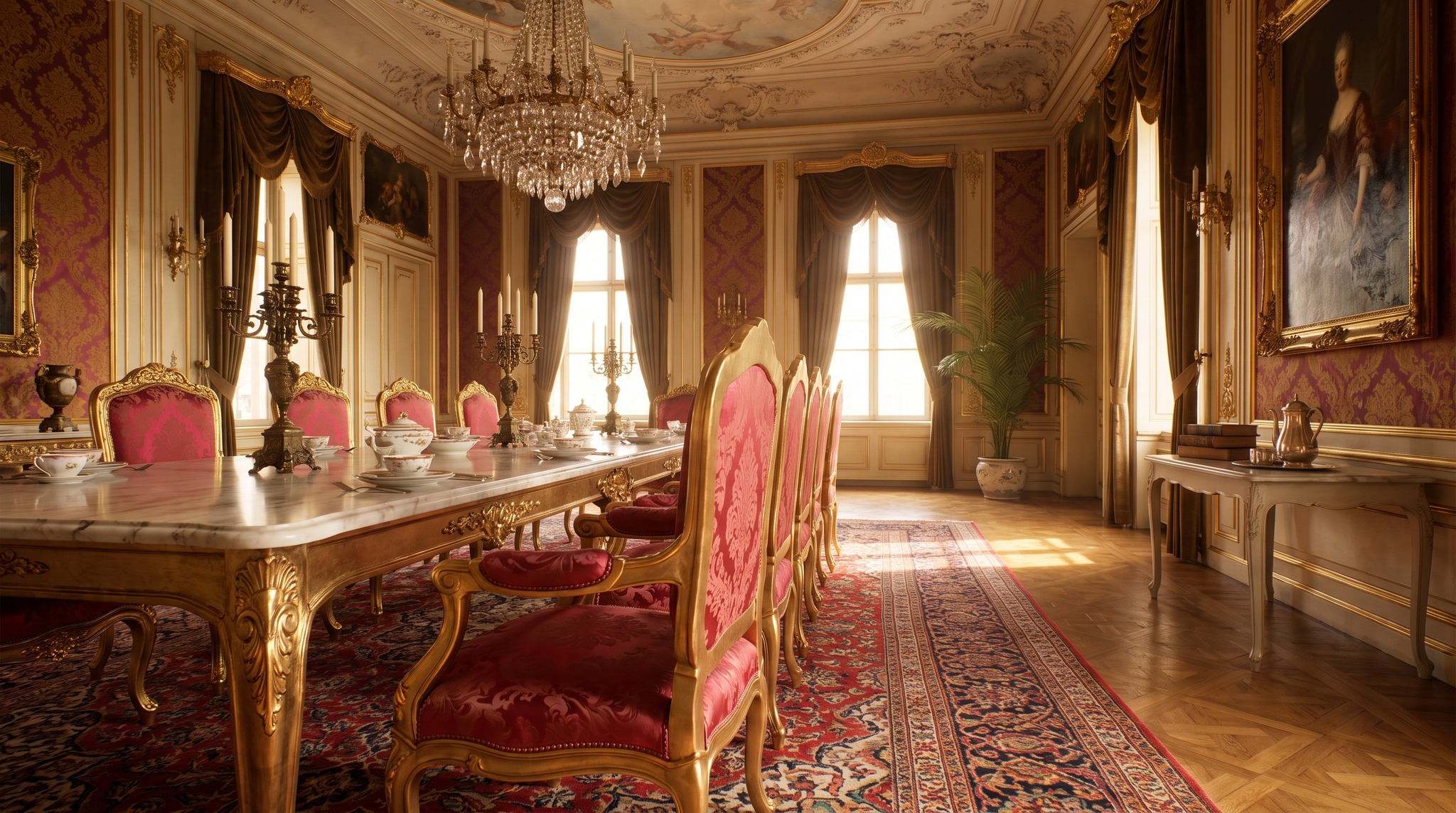
Seat Height, Seat Depth, Armrest: Why a Chair Is Comfortable
Why does one chair feel uncomfortable after ten minutes, while you can sit on another for hours? The answer lies in three measurable dimensions: seat height, seat depth and armrest height. Those who know these measurements and match them to their own body size will find furniture that not only looks good but is also comfortable in the long term. This article explains which reference values apply and what you should look for when purchasing.
Seat Height: Contact with the Floor Decides
Seat height is measured from the floor to the top edge of the seat surface. For dining chairs, the standard is between 45 and 48 centimeters, matching tables with a height of 74 to 78 centimeters. Your feet should rest flat on the floor, your knees bent at a right angle. If the seat height is too low, the pelvis tilts backwards and the lumbar spine rounds. If it is too high, the thighs lose contact with the seat surface and the weight rests on the sitting bones. With the large selection of Chairs, it is worth looking at the stated measurements before you order.
Seat Depth: Space for Thighs and Back
Seat depth describes the distance from the front edge of the seat surface to the backrest. For dining chairs, 40 to 45 centimeters is considered comfortable, while for armchairs it may be 50 to 55 centimeters. A rule of thumb: there should be about three to four fingers of space between the back of the knee and the front edge of the seat. This way, the edge does not press into the back of the knee, while at the same time the support surface for the thighs is sufficient. Seats that are too deep force you to either forgo back contact or bend your legs. Particularly with Armchairs with generous upholstery, you should check the seat depth if you are under 1.70 meters or over 1.85 meters tall.
Armrest Height: Relief for Shoulders and Neck
Armrests bear part of the weight of the arms and shoulders. Their top edge should be at elbow height when you sit upright. This usually corresponds to 18 to 24 centimeters above the seat surface. If the armrests are too high, you pull your shoulders up, resulting in tension in the neck. If they are too low, you have to bend sideways to maintain contact. For dining chairs, the armrests should also fit under the tabletop so that you can move close enough.
Backrest Height and Angle of Inclination
A backrest should reach at least to the shoulder blades, and for armchairs preferably to the neck. The inclination is ideally between 95 and 105 degrees to the seat surface. An angle that is too steep forces you into an upright posture that becomes tiring over time. An angle that is too flat causes you to slide forward. Many baroque and Chesterfield armchairs have a slightly curved backrest that adapts to the spine while providing lateral support.
Upholstery: Firmness and Material
The firmness of the upholstery influences seating comfort just as much as the measurements. Upholstery that is too soft causes you to sink in, the seat height decreases and the posture becomes unstable. Upholstery that is too firm does not distribute the weight evenly, causing pressure points. High-quality foams with a density of 35 kilograms per cubic meter or more retain their shape for years. Spring core offers point-elastic comfort, particularly during longer sitting periods. Leather adapts to body temperature, velvet and velour feel softer but can lead to slipping if the surface is smooth.
Body Height and Individual Adjustment
The reference values mentioned are suitable for people between 1.65 and 1.85 meters tall. If you are shorter, choose seat heights at the lower end of the scale and pay attention to shorter seat depths. If you are taller, seat height and seat depth may each be two to three centimeters above the standard. Some manufacturers offer chairs in several sizes or with adjustable elements. If you have the opportunity, try out the piece of furniture before purchasing: sit down, lean back, remain seated for five minutes. Only then will you feel whether the proportions suit you.
Related: Garden Decoration, Garden Furniture, Baroque and Art Nouveau Garden Furniture. baroque mirrors. The complete range: baroque furniture.
Related categories: Garden Decoration, Garden Furniture, Baroque and Art Nouveau Garden Furniture. The full range: Baroque Furniture.
Read more: Furniture on Old Floorboards: What Wobbles and What Helps, Bedroom for Two: Nightstands, Clearances, Walkways, Planning a Dining Room for Twelve Guests, Velvet, leather or bouclé: which upholstery lasts how long, XXL Garden Figures: Which Size Suits Which Property