


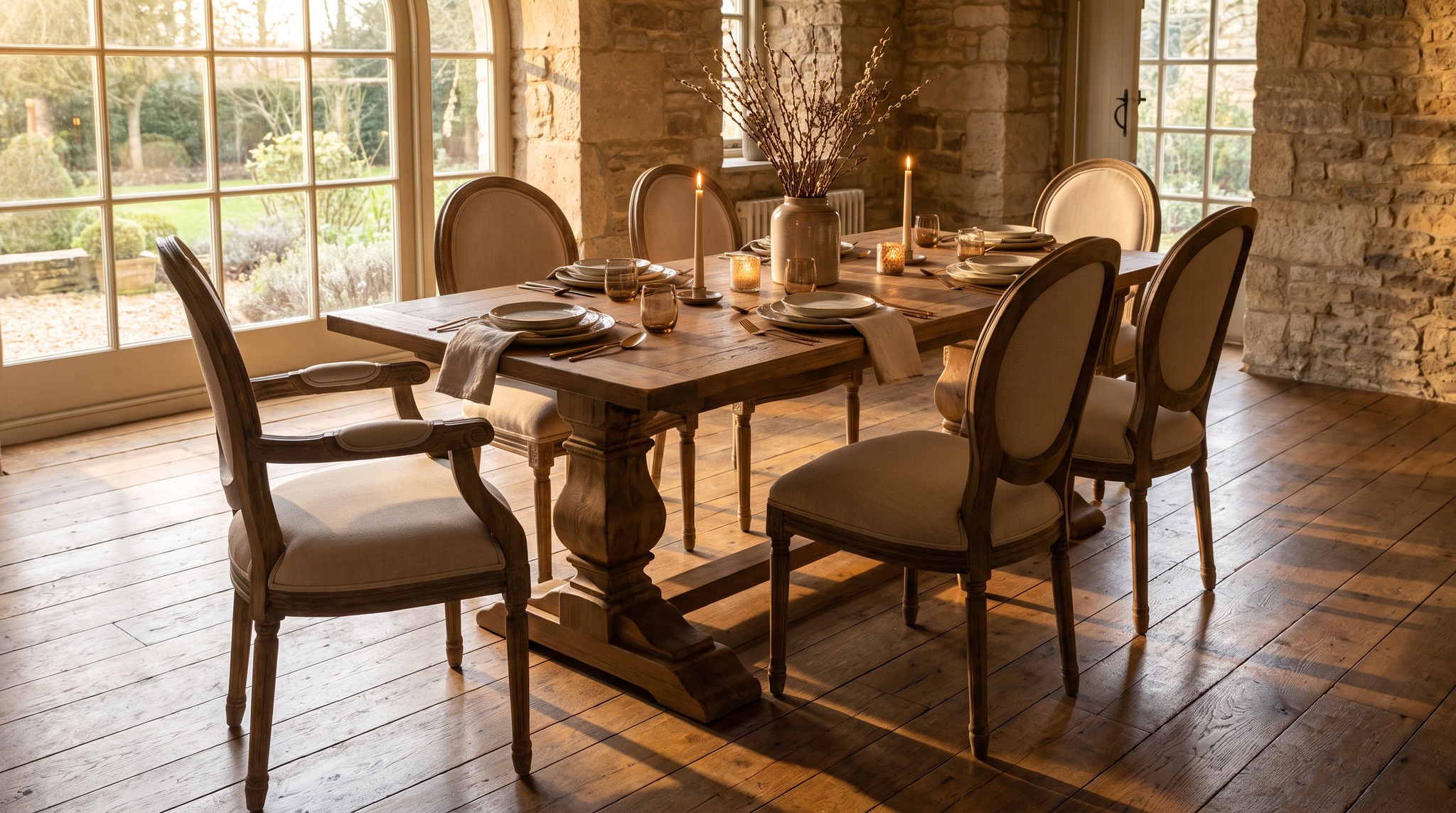
Furniture on Old Floorboards: What Wobbles and What Helps
Old floorboards have character, but they are rarely level. Anyone setting up a table or arranging chairs often experiences wobbling or tilting. This is due to the natural deformation of the wood over decades: floorboards settle unevenly, warp or run at an angle. The question is how to position furniture stably without damaging the floor or permanently stressing the furniture.
Why Furniture Wobbles Particularly Often on Floorboards
Floorboards made of solid wood react to temperature and humidity. Over the years, height differences of a few millimeters to one centimeter develop over short distances. Four table or chair legs rarely stand on exactly the same level. A difference of just two millimeters is enough for one leg to lose contact. With modern furniture featuring precisely manufactured legs, this is more noticeable than with handcrafted pieces that inherently have minimal tolerances.
Which Furniture Is Particularly Susceptible
Heavy Dining Tables with four legs show the problem clearly because their weight does not allow compensating movement. Light side tables tip more easily but are also easier to stabilize. Armchairs and sofas with a wide contact surface often compensate for unevenness themselves, while Chairs with slender legs may rock with every sitting. Cabinets and chests of drawers are less noticeable because they stand against the wall and find additional support there.
Felt Glides and Shims as a First Measure
Self-adhesive felt glides under all legs protect the floorboards from scratches and dampen movement. However, they do not compensate for height differences. For this purpose, shims made of felt, cork or rubber in graduated thicknesses are suitable: 1, 2, 3 and 5 millimeters. Place these under the shortest leg until the furniture stands level. Check with a spirit level or by pushing whether all legs have floor contact. If necessary, combine several shims until the difference is balanced.
Adjustable Furniture Feet for Permanent Solutions
Some tables and chairs offer factory-fitted adjustable feet, usually as threaded plugs under the leg. Screw these out until the furniture stands stable. Retrofit versions are available as screw feet with felt pads or as glides with integrated height adjustment. Pay attention to the load capacity: dining tables require feet that can withstand at least 100 kilograms per leg. The appearance should match the furniture; with Baroque or Art Nouveau styles, visible plastic feet often appear disruptive.
When Floor Correction Makes Sense
If many pieces of furniture in the room wobble and shims are insufficient, the problem lies with the floor. Individual floorboards can be screwed down or supported underneath; larger unevenness requires leveling compound or a new substructure. This is elaborate but worthwhile for listed floors or when refurnishing the room. An intermediate solution is a large rug that bridges minor unevenness while also improving acoustics.
Related items: Sofas, Mirrors, Garden Fountains. baroque mirrors. The complete range: Baroque furniture.
Related categories: Sofas, Mirrors, Garden Fountains. The full range: Baroque Furniture.
Read more: Planning a Dining Room for Twelve Guests, Dosing decoration: the rule of odd numbers, The Right Rug Under Dining Table and Sofa: Size and Placement, Buying Baroque Furniture: Which Measurements You Should Take Beforehand, Arranging a Display Cabinet: What Works Behind Glass and What Does Not