

Chest of Drawers in Front of the Radiator: What Distance Allows Air to Circulate
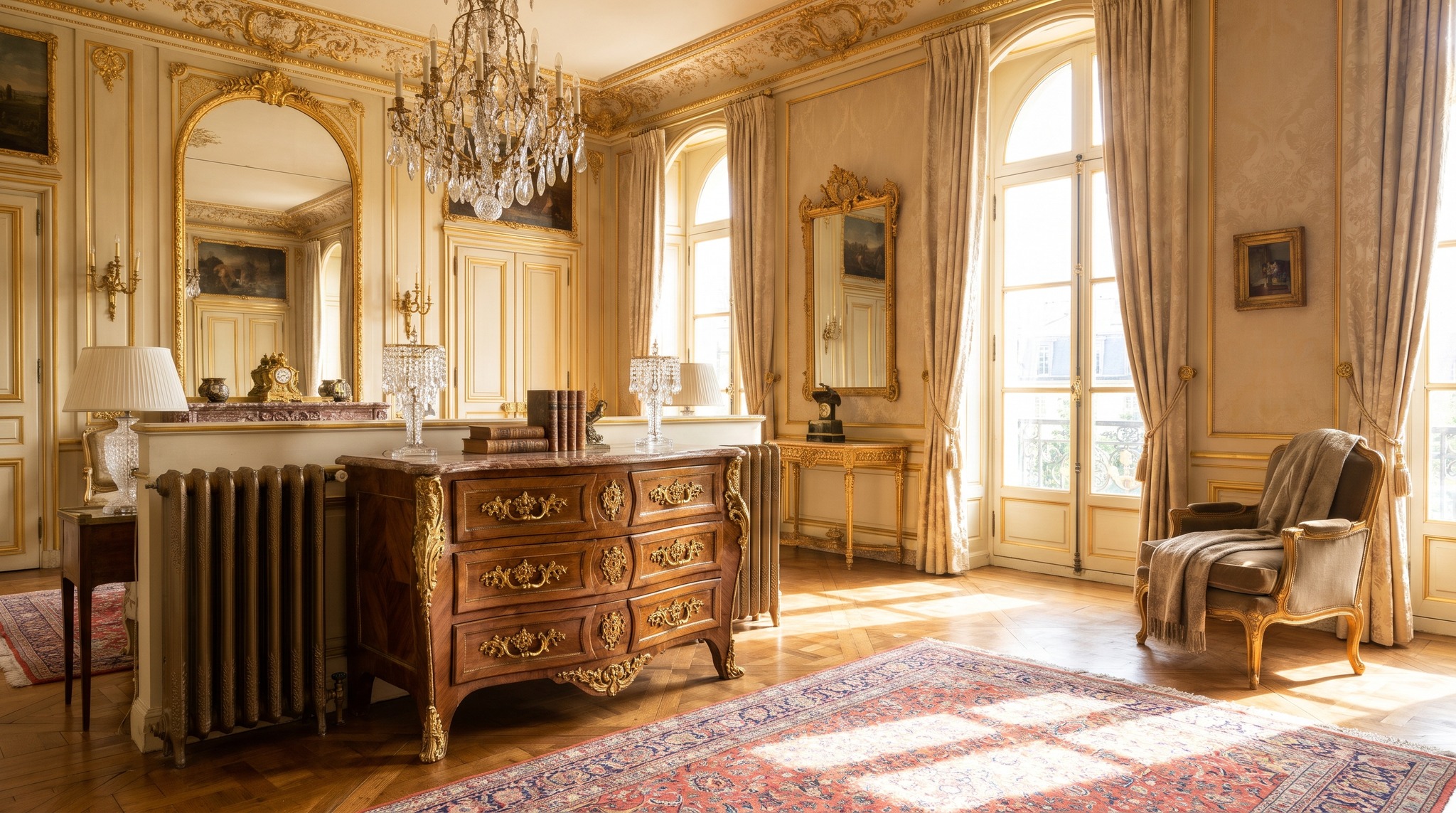
You would like to place a chest of drawers against a wall where a radiator is also located? This raises the question of how much space must remain between the furniture and the heating so that the warmth can distribute itself throughout the room and the wood does not suffer damage. Too little distance can reduce heating performance and, in the worst case, lead to cracks or deformations in the material. In this article, you will learn what distances make sense and what you should pay attention to when positioning.
Minimum Distance for Free Air Circulation
So that warm air can rise unhindered and distribute itself throughout the room, at least 30 centimeters of distance should remain between the back panel of a chest of drawers and the front of the radiator. This value applies to standard panel radiators and ensures that convection is not blocked. With older column radiators or particularly deep models, a distance of 40 centimeters may be more sensible. If the furniture stands too close, the heat accumulates behind the chest of drawers, the heating works inefficiently and energy consumption increases.
Protecting the Material from Heat
Wood reacts sensitively to continuous warmth. Solid woods, veneers and lacquered surfaces can dry out, warp or form cracks if the distance to the heating is too small. Particularly with high-quality furniture made of natural wood, a generous distance is important. If you are placing Commodes with sensitive surfaces or antique pieces, you should set the minimum distance at 40 to 50 centimeters. Room temperature also plays a role: in heavily heated rooms, more distance is advisable than in moderately heated rooms.
Practical Solutions When Space Is Limited
The size of the room does not always allow a distance of 30 centimeters or more. In this case, you can position the chest of drawers offset to the side of the heating, so that the warm air can flow past laterally. Another possibility is choosing a shallower piece of furniture that is less deep and therefore automatically leaves more distance to the wall. Make sure that the top of the chest of drawers does not extend beyond the upper edge of the radiator, otherwise the rising warm air will be additionally slowed down.
Reference Values for Different Radiator Types
Depending on the design of the radiator, slightly different recommendations apply:
- Panel radiators: at least 30 centimeters distance to the furniture back panel
- Column radiators: at least 40 centimeters, as these are deeper in construction
- Convectors or underfloor heating: here the chest of drawers can be closer to the wall, as no direct radiant heat is produced
- Designer radiators with shallow depth: 25 to 30 centimeters may be sufficient if air flow remains free
Monitoring and Adjustment in Daily Use
After positioning, you should check during the first few weeks whether the back of the chest of drawers heats up unusually or whether the heating runs longer than before. If the wood feels hot or condensation appears on the wall, the distance is too small. In this case, you should move the furniture further away from the heating or adjust the heating output. Good room humidity between 40 and 60 percent additionally protects the wood from drying out.
Related to this: Dining Tables, Garden Furniture, Stoves and Decoration, Garden Decoration. baroque mirrors. The complete range: Baroque Furniture.
Related categories: Dining Tables, Garden Furniture, Stoves and Decoration, Garden Decoration. The full range: Baroque Furniture.
Read more: Dining Table with Central Base: How Much Legroom Remains at the Sides, Chesterfield Sofa with Stud Trim: Which Wall Colour Suits It, Sofa in the centre of the room: when it works and what goes behind it, Column in the Entrance Area: Which Height Suits the Room, Coffee Table with Storage Shelf: When Two Levels Make Sense