

Display Cabinet with Lighting: Which Lamp Does Not Discolour Porcelain
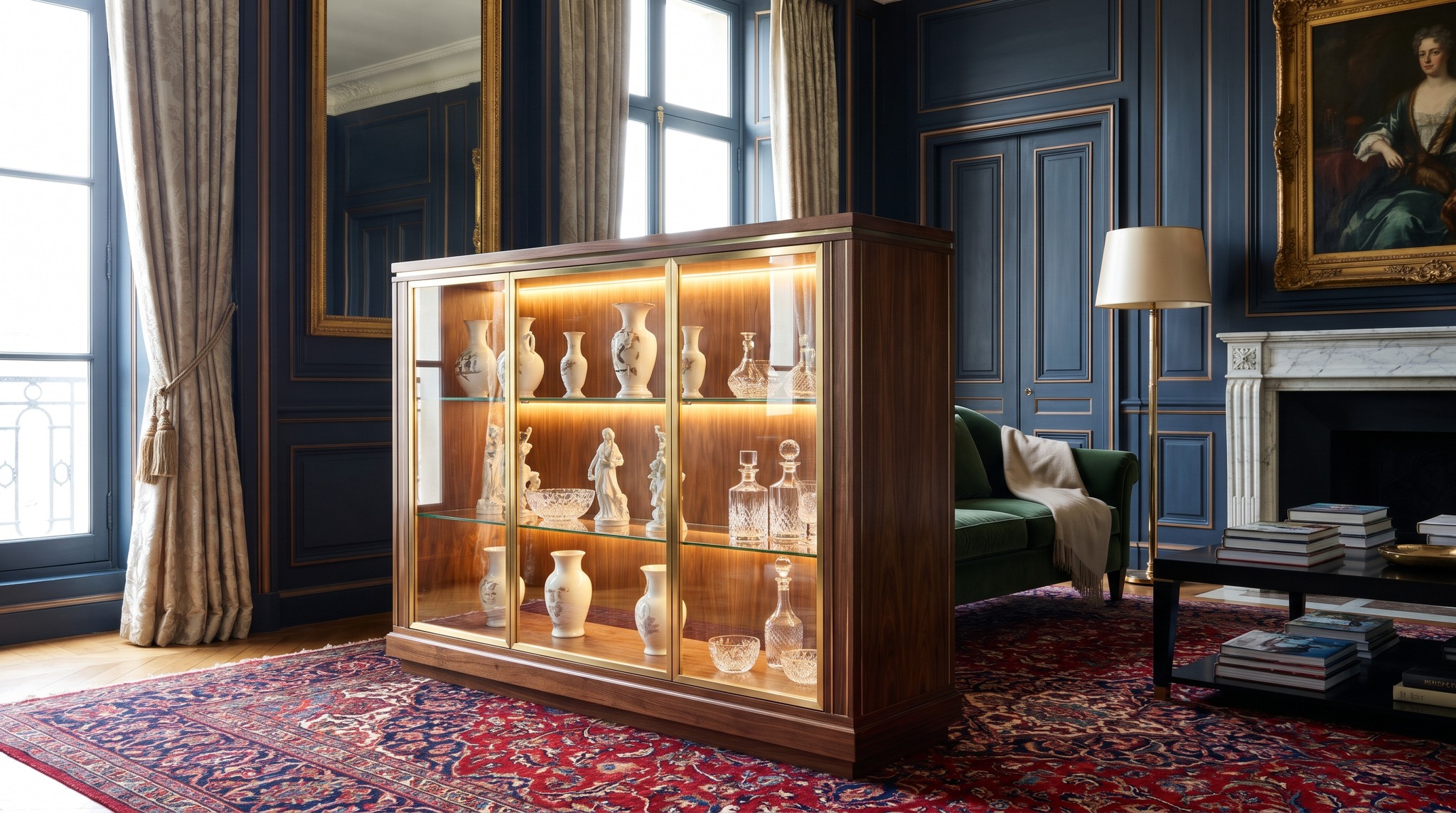
You want to display your valuable porcelain, your collection or fine decorative pieces in an illuminated display cabinet without the colours fading or the material yellowing. Choosing the right lighting is crucial, as not every light source is suitable for delicate objects. We will show you which lamps showcase your porcelain gently and what you should consider when making your selection.
Why Does Light Discolour Porcelain at All
Porcelain itself is light-resistant, but UV radiation and heat can attack glazes, colours and gilding. Older pieces with organic pigments are particularly sensitive to ultraviolet light. The heat generated by some light sources can also lead to material changes with prolonged exposure. It is therefore important to choose light sources that have as little UV content as possible and emit hardly any heat.
LED Lighting as the Best Choice for Display Cabinets
LED lamps are ideal for illuminating Display Cabinets, as they emit virtually no UV radiation and generate minimal heat. They can burn for years without damaging your exhibits. Look for a colour temperature between 2700 and 3000 Kelvin for warm white light that makes porcelain appear natural. Neutral white light at 4000 Kelvin is suitable if you want to emphasise modern pieces or clear forms.
Halogen Lamps Only Suitable with Restrictions
Halogen lamps produce brilliant, pinpoint light that shows porcelain to good advantage. However, they generate considerably more heat than LEDs and contain a small amount of UV. If you wish to use halogen, you should ensure sufficient distance: at least 30 centimetres between the light source and the object. It is also advisable to use UV protection filters or special halogen lamps with reduced UV content.
These Light Sources Should Be Avoided
Conventional incandescent bulbs and energy-saving lamps are less suitable for display cabinet lighting. Incandescent bulbs produce a lot of heat that accumulates in the enclosed cabinet space. Energy-saving lamps often contain a higher UV content and require a warm-up time before reaching their full brightness. Fluorescent tubes without UV filters can also damage sensitive Decorations over time and should be avoided.
Practical Tips for Display Cabinet Lighting
Install the lighting on the ceiling or sides of the display cabinet if possible, not directly above the objects. This avoids heat accumulation and harsh shadows. LED strips with an output of 4 to 6 watts per metre are usually sufficient for a standard display cabinet 100 centimetres wide. Dimmable systems offer additional flexibility to adjust the light intensity to different times of day. Check regularly whether the display cabinet is heating up and provide small ventilation openings if necessary.
Consider Light Colour and Colour Rendering
In addition to UV exposure, colour rendering plays an important role in presentation. Look for a CRI value of at least 90, preferably 95. This value indicates how true to life colours appear under the respective light source. A high CRI value is particularly noticeable with hand-painted porcelain or coloured glazes. This allows the fine nuances of your collection to be shown to their best advantage without the material suffering from unsuitable light.
Related items: Sideboards, Sculptures, Sofas. baroque mirrors. The complete range: Baroque furniture.
Related categories: Sideboards, Sculptures, Sofas. The full range: Baroque Furniture.
Read more: Dining Table by the Patio Door: How Much Space to Leave for Opening, Coffee Table with Two Opposite Sofas: The Right Position, Combining Art Nouveau Garden Furniture: Colour, Form and Upholstery, Mirror Above the Chest of Drawers: How Much Distance and What Width, XXL Formula 1 art piece in black and gold, 180 cm, limited edition