

Furniture in Period Buildings: Stucco, High Skirting Boards and Sloped Ceilings
Period apartments captivate with their charm, but present particular challenges when furnishing. Stucco mouldings on the ceiling, skirting boards 15 to 20 cm high and often sloped walls or alcoves require well-considered furniture solutions. Anyone who chooses the wrong dimensions or ignores the architectural features wastes space and prevents the historical details from having their effect. How do you position furniture so that it suits the structural conditions and makes optimal use of the space?
Distance from the Wall: Planning for Skirting Boards and Base Mouldings
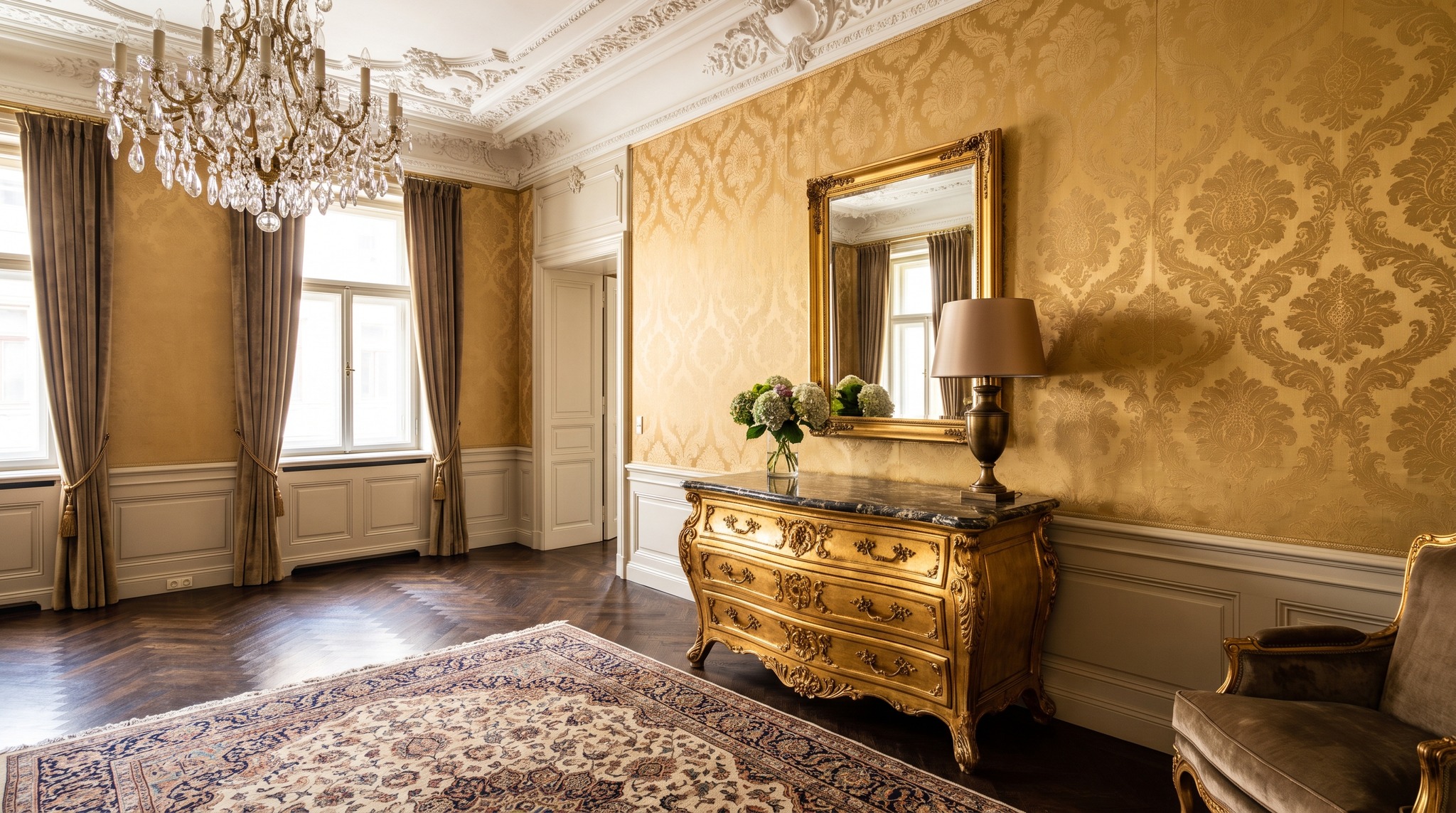
High skirting boards are typical of period buildings and often protrude 12 to 20 cm into the room. Wardrobes, sideboards and shelving units should therefore either have a plinth that covers the board, or stand at least 5 cm away from the wall. For Commodes without a plinth, a wall clearance is recommended so that the back panel does not rest on the board and cause the furniture to tip forward. Alternatively, you can use flat shims to distribute the weight evenly.
Ceiling Height and Proportions: Do Not Choose Furniture That Is Too Low
Period buildings often have ceiling heights of 3 to 3.50 metres. Low furniture appears lost in such rooms and makes the walls look bare. Wardrobes with a height of at least 200 cm, preferably 220 to 240 cm, fill the vertical space better. High backrests on armchairs or sofas also emphasise the room height positively. Stucco mouldings on the ceiling should remain clear, a distance of 20 to 30 cm upwards ensures harmonious proportions.
Sloped Ceilings and Alcoves: Custom Solutions or Flexible Formats
Sloped ceilings or built-in alcoves require flexible solutions. Open shelving units can often be adapted more easily than closed wardrobes. Measure the clear height at the lowest point and allow at least 10 cm of clearance upwards so that you can still move the furniture. Consoles are well suited for alcoves, as they are narrow and provide storage space even with limited depth. For slopes under 180 cm in height, low chests of drawers or storage benches are the better choice.
Floor Condition: Levelling Floorboards and Uneven Surfaces
Old wooden floorboards are rarely level, there are often undulations or gradients of 1 to 2 cm over two metres. Heavy furniture should stand on adjustable feet so that it does not wobble. For wardrobes without adjustable feet, thin shims made of felt or plastic help. Check with a spirit level whether the furniture stands straight, especially with display cabinets or open shelving units, so that doors do not swing open by themselves.
Colour Choice and Material: Do Not Overload Historical Details
Stucco, ceiling roses and decorative mouldings are defining elements in period buildings. Furniture should complement this architecture, not compete with it. Dark woods such as walnut or mahogany emphasise the classical character, light surfaces create contrast and make the room appear more airy. Avoid too many different styles in one room: Baroque furniture harmonises with stucco, modern designs create deliberate accents. Glossy surfaces or mirrors reflect the light and additionally emphasise the room height.
Related items: Sculptures, Sofas, Mirrors. baroque mirrors. The complete range: Baroque furniture.
Related categories: Sculptures, Sofas, Mirrors. The full range: Baroque Furniture.
Read more: Which chest of drawers fits in the hallway and how do you use it correctly?, Moving with Heavy Furniture: What Must Be Measured Beforehand, Royal Luxury, Exclusive Baroque Beds and Baroque Furniture by Casa Padrino, Luxury mailboxes by Casa Padrino, Elegance begins at the front door, Luxury Office Chairs in Baroque Style, Exclusive Designer Chairs for Stylish Workspaces