

Storage Space in the Living Room Without Making It Feel Cluttered
Many people are familiar with this problem: the living room needs to accommodate books, decorative items, electronics and everyday objects, while remaining airy and inviting at the same time. Too many open shelves quickly make the room appear overloaded, too few pieces of furniture do not offer enough space. The question is therefore how to create sufficient storage space without making your living room seem overcrowded or restless. With proper planning and targeted furniture selection, this balancing act can be achieved.
Closed Fronts Create Visual Calm
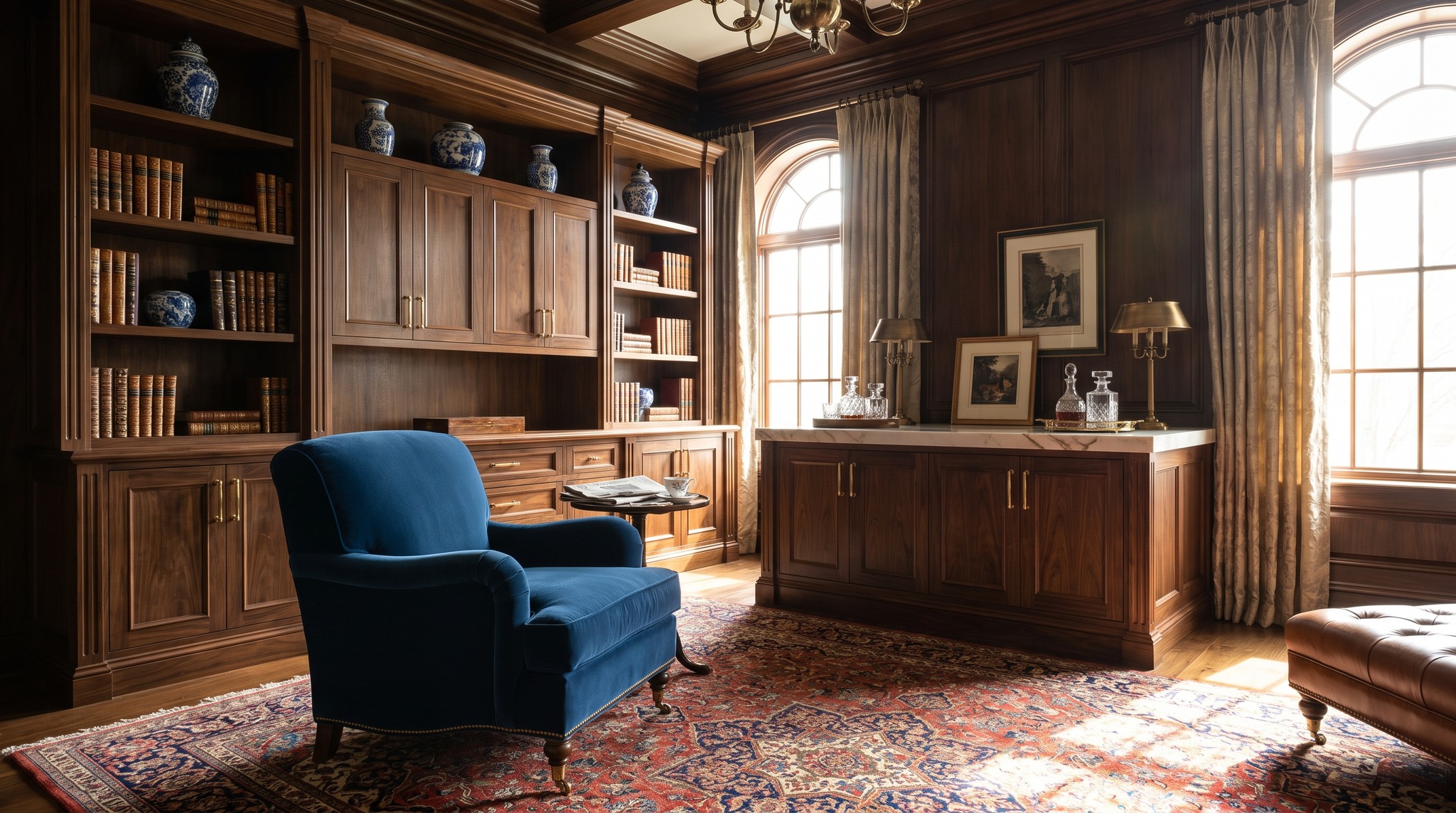
Open shelves display everything that is placed on them. This can be decorative, but quickly appears restless as soon as more than three to four different objects per shelf are visible. Closed cabinets or Sideboards conceal the contents behind doors and create visual calm. Choose models with smooth fronts in light colours or with subtle grain. A sideboard with a width of 150 to 200 cm provides space for crockery, electronics or paperwork without dominating the room.
Utilising Vertical Surfaces
Tall cabinets or shelves that reach up to the ceiling use space efficiently without requiring additional floor area. A wall unit with a height of 220 to 240 cm offers significantly more volume than a low shelf, but does not occupy more floor space. Ensure that the upper compartments remain reserved for rarely used items, whilst you store frequently needed things at arm's reach between 80 and 140 cm.
Display Cabinets for Targeted Presentation
If you wish to display selected pieces without overloading the room, Display Cabinets are a good choice. Behind glass, collections, porcelain or memorabilia appear organised and protected. Limit the number of displayed objects: five to seven pieces per display cabinet are sufficient to generate interest without creating restlessness. The remainder of the storage space remains closed.
Choosing Furniture with Dual Functions
Coffee tables with drawers, benches with hinged lids or side tables with storage compartments offer additional storage space without being perceived as cabinets. A coffee table with a base area of 120 by 70 cm and a drawer holds remote controls, magazines and small items that would otherwise lie on the surface. These pieces of furniture keep the room tidy without being visually obtrusive.
Colour Restraint and Uniform Design
Storage furniture appears less dominant when colour-coordinated with walls or flooring. White or cream-coloured cabinets recede in bright rooms, dark wood tones harmonise with parquet floors. Avoid colourful fronts or strong contrasts if you are aiming for lightness. Uniform handles, equal heights and consistent materials create calm. A room with three identical cabinet elements appears more orderly than one with five different pieces of furniture, even if the total area is identical.
Deliberately Planning Open Spaces
Not every wall needs to be furnished. Leave at least one wall side free or place only a single, flat piece of furniture there. This open space gives the eye room to rest and prevents the feeling of confinement. As a rule of thumb: at least 30 per cent of the wall area should remain unfurnished so that the living room appears spacious.
Related to this: Resin and Fiberglass Sculptures, baroque mirrors, Side Tables. baroque mirrors. The complete range: Baroque Furniture.
Related categories: Resin and Fiberglass Sculptures, baroque mirrors, Side Tables. The full range: Baroque Furniture.
Read more: Seat Height, Seat Depth, Armrest: Why a Chair Is Comfortable, Mirror opposite the window: how much light this really provides, Furniture for Hotels & Restaurants, Contract Furnishing with Style, Casa Padrino News, All Articles at a Glance, Casa Padrino Baroque Consoles, Magnificent Console Tables for Stylish Hallways and Living Spaces