
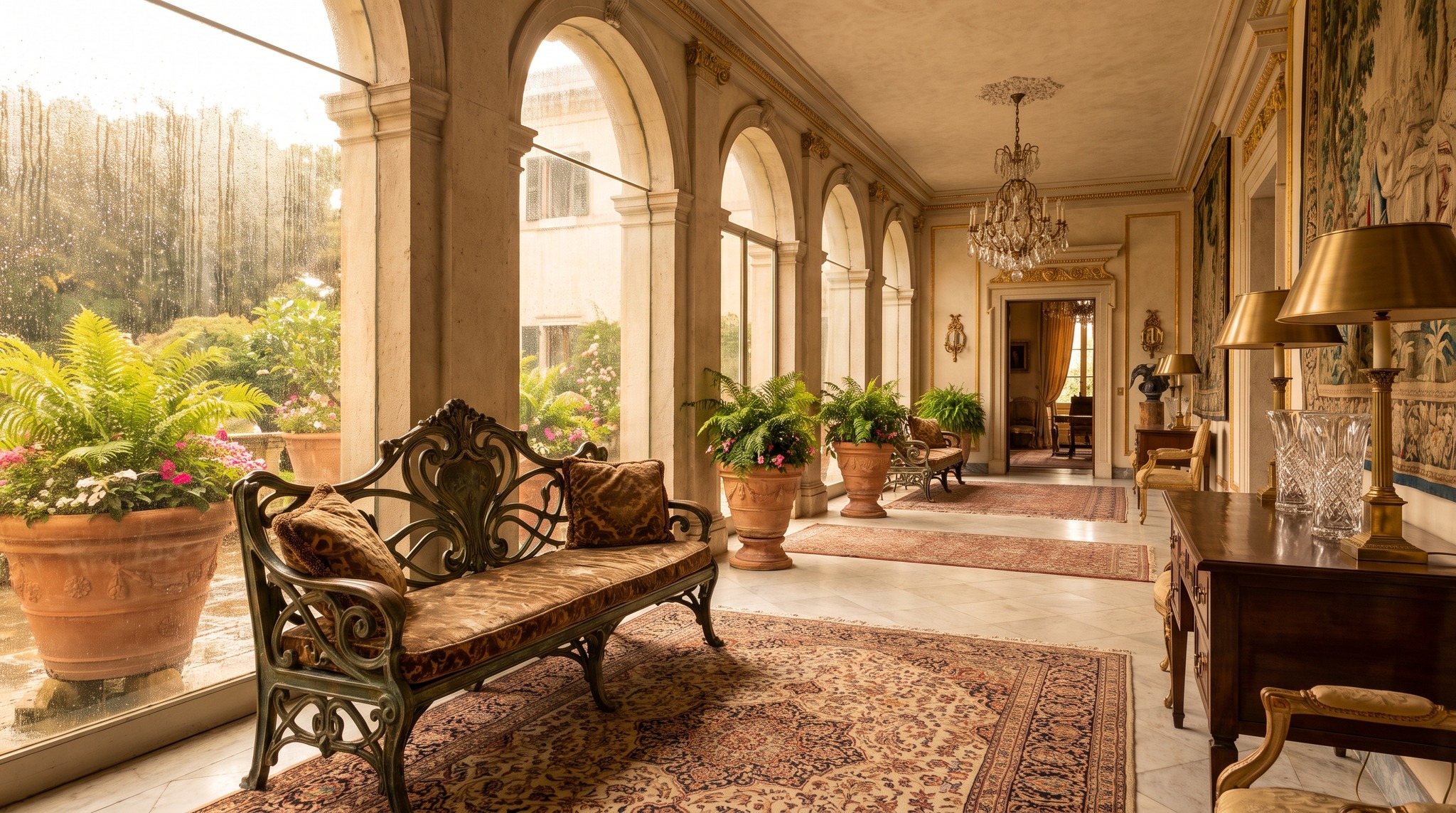
Art Nouveau Garden Bench: Which Location Protects Against Weather
You have purchased an Art Nouveau garden bench or are planning to acquire one and are wondering where it is best placed. Cast iron, wood or bronze do not tolerate every type of weather equally well. The right location determines how long the bench retains its appearance and how much maintenance you will need to undertake. In this article you will learn which places are suitable and what you should pay attention to.
Why Location Is Crucial for Art Nouveau Garden Furniture
Art Nouveau benches are frequently made of cast iron with delicate ornaments, less commonly of wood with metal fittings. Cast iron rusts when exposed to permanent moisture, wood swells and cracks when constantly exposed to rain and sun. A powder coating or paint finish provides protection, but is not indefinitely durable. If the bench stands under a canopy or close to a house wall, it remains drier and the surface stays intact longer. Anyone using Baroque and Art Nouveau Garden Furniture outdoors should avoid locations on the direct weather side.
Covered Locations: Terrace, Pergola, Pavilion
The bench is best protected under a solid roof or a pergola with dense vegetation. A terrace with at least 1.5 metres of roof overhang keeps rain and morning dew away. A pavilion or an open veranda are also well suited. Ensure that splash water from the ground does not reach the feet of the bench: a distance of 20 to 30 centimetres from the gutter or downpipe is advisable. This keeps the metal dry and the paint finish lasts considerably longer.
Partial Shade at the House Wall or Under Trees
If no roofing is available, a location on the southeast or southwest side of the house is a good choice. The wall shields wind and driving rain, whilst the bench dries more quickly after a rain shower. Caution is advised under deciduous trees: falling leaves retain moisture on the seat surface, bird droppings attack the surface. Coniferous trees with dense crowns offer better protection, but should be at least 3 metres away from the bench to prevent resin from dripping.
Which Locations You Should Avoid
Avoid places in hollows or directly next to ponds and streams. Moisture collects there and the humidity remains permanently high. Equally unfavourable are locations in full midday sun without shade: metal heats up considerably, paint can become brittle and flake off. The north side of the house is also problematic because it dries slowly and encourages moss formation. Feel free to combine the bench with matching Garden Decoration, but ensure that plant containers or lanterns do not obstruct water drainage.
Additional Protection Through Covers and Ground Surface
Even in a good location, a breathable protective cover is recommended for the winter months or longer rainy periods. Polyester tarpaulins with ventilation slits prevent waterlogging. The ground surface should be level and water-permeable: gravel, chippings or terrace slabs with joints are ideal. Avoid grass or soil directly under the feet, because moisture remains there longer. Small base plates made of natural stone or plastic with 10 to 15 centimetres diameter distribute the weight and keep the metal feet dry.
Adapt Maintenance According to Location
The more exposed the bench stands, the more frequently you should clean and treat it. In protected places an inspection in spring and autumn is sufficient: remove dirt with a soft brush, allow to dry, repair minor paint damage with metal protective paint. If the bench stands more exposed, check every four to six weeks for rust spots and treat these immediately. A thin layer of hard wax on metal surfaces can provide additional protection without altering the appearance.
Related items: Side Tables, Beds, Flower Pots. baroque mirrors. The complete range: Baroque Furniture.
Related categories: Side Tables, Beds, Flower Pots. The full range: Baroque Furniture.
Read more: Water Column on the Terrace: Distance to Seating Area and House Wall, Sculpture in Living Spaces: The Right Height on Chest of Drawers or Floor, Creating Storage Space in the Living Room: Practical Solutions for More Order, Wall Colours for Dark Furniture: Which Colours Harmonise Best, Sideboard or chest of drawers: what belongs where


