


Sculpture in Living Spaces: Which Height on Chest of Drawers or Floor
You would like to place a sculpture in your living room, hallway or dining room and are wondering which size is suitable. Should the figure stand on a chest of drawers or directly on the floor? Which height appears harmonious without dominating the room or disappearing? The correct proportion between furniture, sculpture and ceiling height determines whether the object comes into its own or appears out of place.
Sculptures on Chests of Drawers and Sideboards
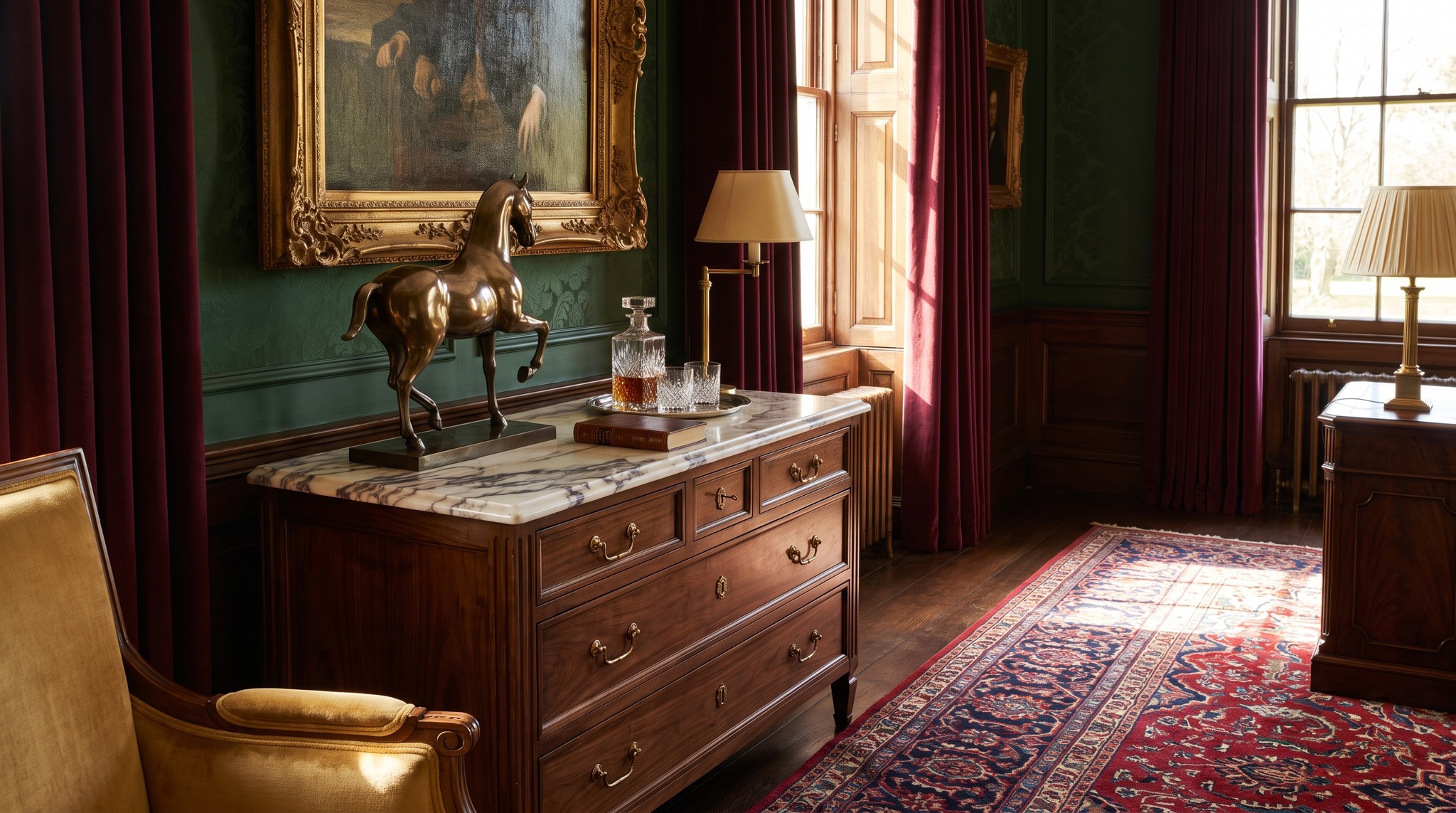
For a chest of drawers, a sideboard or a dresser, the rule of thumb is: the sculpture should be between 30 and 60 cm high, depending on the width and depth of the surface. A 40 cm high figure appears balanced on a 120 cm wide sideboard, while a 20 cm small sculpture gets lost on the same surface. Ensure that the height of the sculpture is approximately one third to half the width of the furniture. This creates a calm overall appearance that seems neither overloaded nor empty.
Floor Sculptures in Living Areas
If the sculpture stands directly on the floor, it may be considerably larger. For living spaces with a ceiling height of 240 to 260 cm, figures between 80 and 140 cm in height are recommended. A 100 cm high sculpture next to an armchair or in a corner of the room creates a clear accent without blocking the view. In rooms with higher ceilings, such as in period buildings, objects 150 to 180 cm high can also stand. It is important that the sculpture does not extend above eye level when seated if it is placed in immediate proximity to the seating area.
Consider Material and Weight
The material influences the perception of size. A 50 cm high bronze figure appears more massive due to its weight and density than an equally large sculpture made of wood or synthetic resin. Marble and stone require a stable base, while lighter materials can also find space on narrower console tables. Check the load-bearing capacity of your chest of drawers before placing a heavy figure on it. When Decorations with sculptures, you should also consider the style of the room: baroque figures with ornate details often tolerate a somewhat lower height, as they already show presence through their ornamentation.
Test Proportions in the Room
Before you purchase a sculpture, it is worthwhile to simulate the planned height with a cardboard box or another object. Place the object in the intended location and view it from different angles: from the sofa, when entering the room and from the kitchen or hallway. A sculpture should be clearly visible from the main perspective without covering other furnishings. In open living areas, a larger floor figure can serve as a room divider, while on chests of drawers smaller formats structure the surface.
Combination with Other Objects
If you would like to group several Sculptures, the heights should be staggered. A main figure of 50 cm can be well combined with two smaller objects of 25 and 35 cm. Avoid placing all figures at the same height, this appears static. The distance between the objects also plays a role: leave at least 10 to 15 cm of free space so that each sculpture is perceived individually. With very delicate figures, the distance may be smaller, with massive bronzes or stone sculptures it should be more generous.
Related to this: Commodes, Consoles, Columns and Pedestals. baroque mirrors. The complete range: Baroque Furniture.
Related categories: Commodes, Consoles, Columns and Pedestals. The full range: Baroque Furniture.
Read more: Baroque Chair at a Modern Table: Which Details Connect, Sideboard as TV Stand: What Depth for Cables and Devices, Bed with Storage Drawer: Which Height Remains Comfortable for Getting Up, Row of chairs against the wall: when it creates order and when it looks stiff, Garden Sculpture in Winter: Which Material Can Stay Outside