

Sideboard or chest of drawers: what belongs where
You are planning the furnishing of your living room or bedroom and wondering whether a sideboard or a chest of drawers is the right choice. Both pieces of furniture offer storage space, but differ in proportions, function and typical place of use. Those who know the differences will find the right piece of furniture for their room more quickly and avoid incorrect purchases. In this article you will learn which characteristics distinguish sideboards and chests of drawers from each other and where they come into their own best.
The most important differences at a glance
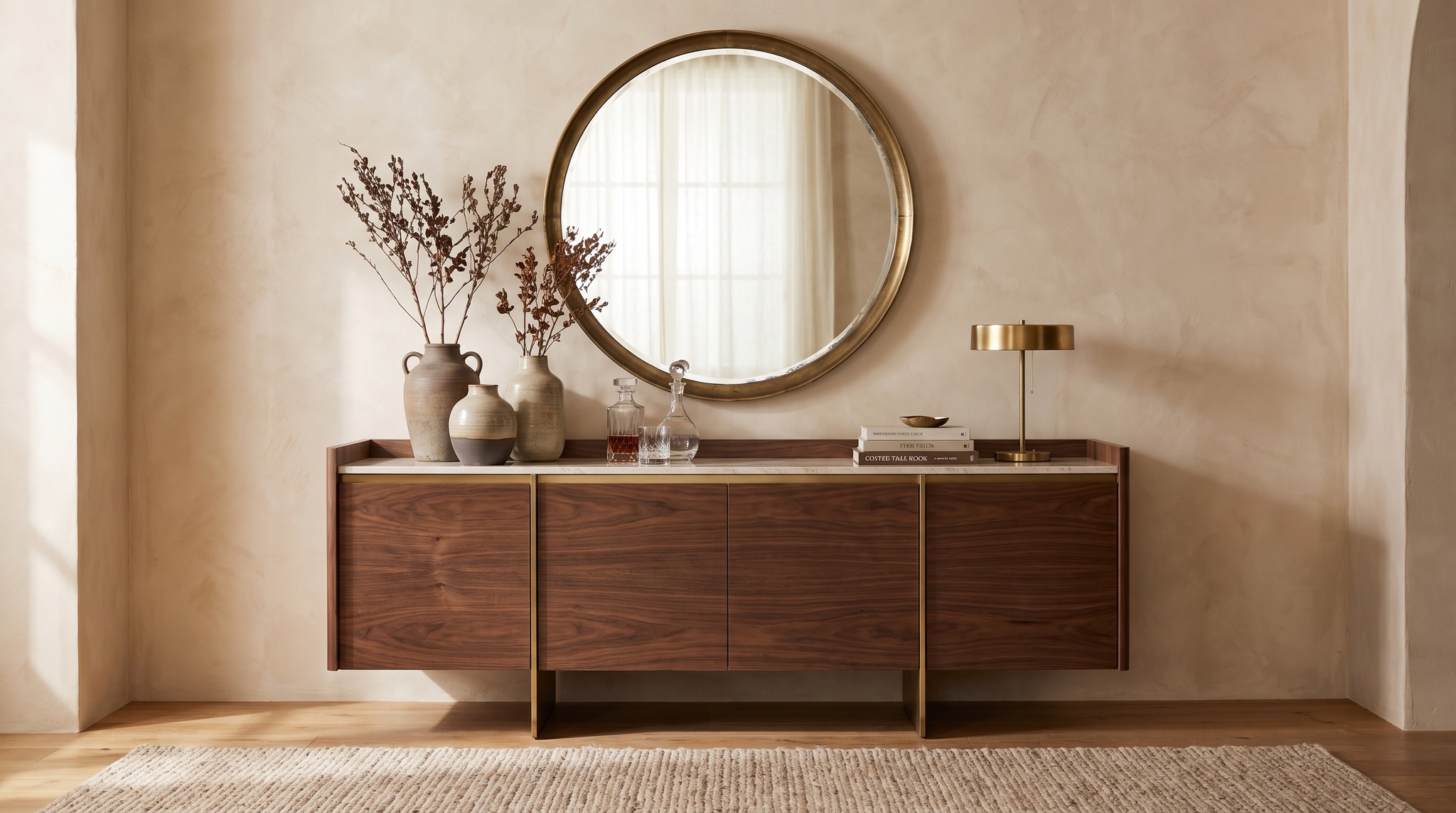
A sideboard is wider than it is tall, usually between 120 and 200 cm long and rarely higher than 90 cm. It typically stands against the wall and offers a continuous surface that is suitable for decoration, lamps or crockery. A chest of drawers, on the other hand, is narrower and taller, often between 80 and 120 cm wide and 100 to 130 cm high. It takes up less floor space and therefore fits into smaller rooms or alcoves. Both pieces of furniture have drawers or doors, but the chest of drawers relies more heavily on vertical storage space.
Where the sideboard finds its place
The sideboard traditionally belongs in the living room or dining room. There it serves as a sideboard for crockery, as a storage surface for tablecloths and napkins or as a media unit under the television. It also cuts a fine figure in the hallway if there is enough wall space available. The low height allows pictures or mirrors to be hung above it without visually dividing the room. Those looking for a large selection of Sideboards will find models in various styles, from Baroque to country house to modern designs.
When the chest of drawers is the better choice
The chest of drawers is the classic bedroom piece of furniture. It offers space for laundry, bed linen and accessories without taking up much floor space. It is also often the more practical solution in children's rooms, dressing rooms or narrow hallways. The height allows several drawer compartments to be arranged one above the other, which makes sorting easier. Those who have little floor space available choose the chest of drawers. The selection of Commodes ranges from classic wooden versions to models with inlays or curved fronts.
Dimensions and proportions as decision support
Concrete reference values help when choosing between a sideboard and a chest of drawers. A sideboard should be at least 40 cm deep so that crockery or technology can be safely accommodated. The height is usually between 75 and 90 cm, which corresponds to a comfortable working height. A chest of drawers is often 40 to 50 cm deep and 100 to 130 cm high. The following rules of thumb make planning easier:
- Wall length over 180 cm: sideboard possible
- Wall length under 120 cm: chest of drawers better suited
- Room height over 250 cm: tall chest of drawers appears harmonious
- Use as storage surface: choose sideboard up to 90 cm height
Combinations and exceptions
In large rooms, sideboards and chests of drawers can also be used together. A sideboard in the living area and a chest of drawers in the adjacent hallway create a harmonious overall picture if style and colour are coordinated. Some manufacturers also offer hybrid forms that are wider than a classic chest of drawers but taller than a typical sideboard. The function remains decisive: those who primarily need storage surface choose the sideboard. Those who are looking for storage space on little floor space choose the chest of drawers.
Related to this: baroque mirrors, Side Tables, Beds. baroque mirrors. The complete range: Baroque furniture.
Related categories: baroque mirrors, Side Tables, Beds. The full range: Baroque Furniture.
Read more: Wall Colours for Dark Furniture: Which Colours Harmonise Best, The Right Rug Under Dining Table and Sofa: Size and Placement, Luxury hotel furniture and project furniture from Casa Padrino, Magnificent massive baroque fountains by Casa Padrino, Caring for Solid Wood: Oil, Wax and What Heating Air Does