

Bed without headboard: what wall design is needed
You have chosen a bed without a headboard or are considering whether this minimalist option suits your bedroom? This quickly raises the question of how the wall behind the bed should be designed. Without the structuring element of a headboard, the wall surface often appears empty or unfinished. At the same time, this solution offers more design freedom and can be flexibly adapted to different interior styles. We show you which options work and what you should consider when designing the wall.
Why the wall requires special attention with Beds lacking a headboard
A headboard fulfils several functions: it protects the wall from abrasion caused by pillows and bedding, forms a visual frame for the bed and creates a comfortable backrest. Without this element, the wall itself takes on these tasks. An untreated, plain painted wall often appears bare behind a bed without a headboard. In addition, stains or signs of wear can develop over time if pillows lean directly against the wall. A well-considered wall design compensates for the missing headboard and sets design accents at the same time.
Wall panels and wood cladding as a structuring alternative
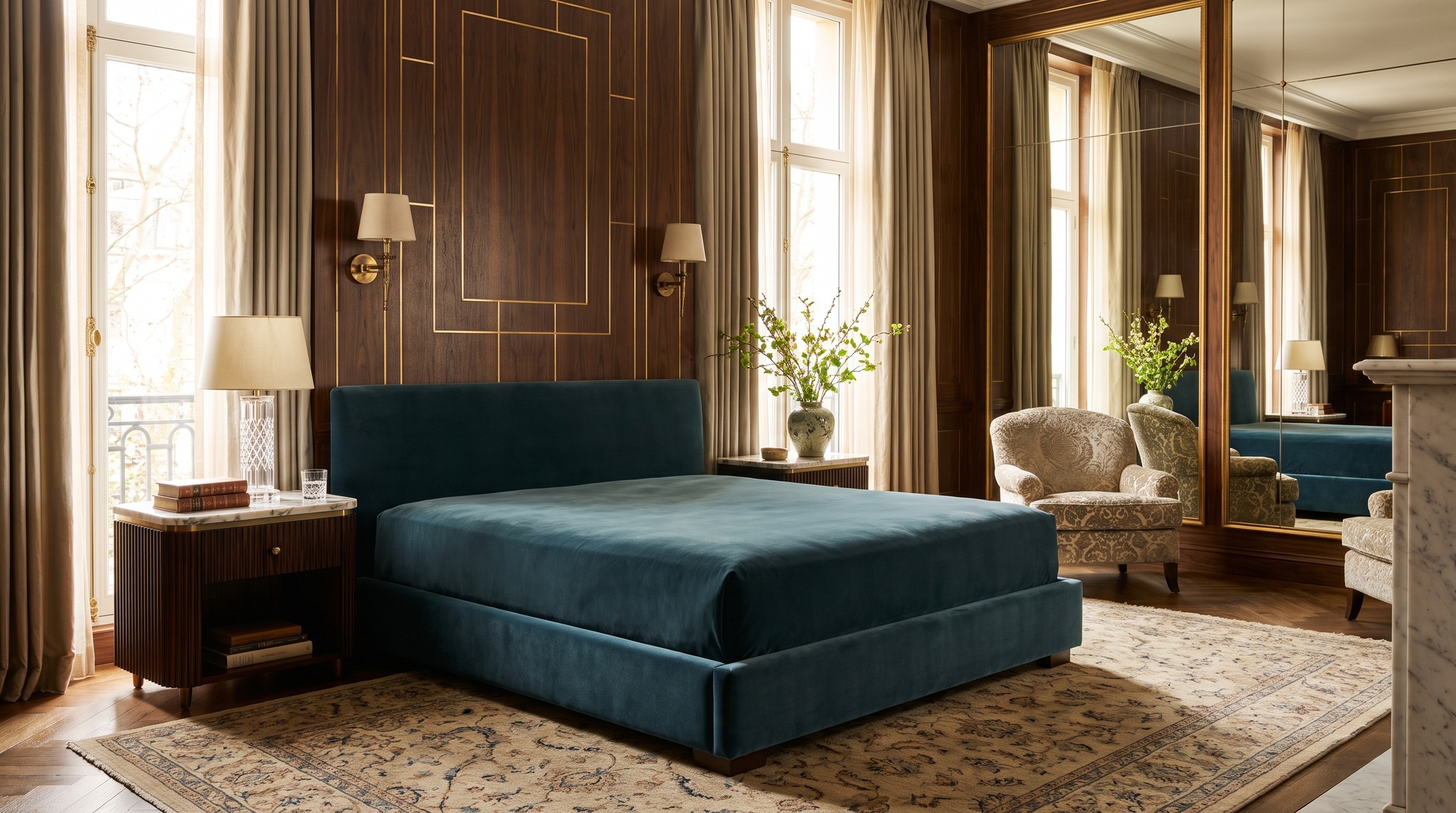
Wood panels or vertical slat cladding create structure and depth. They can cover the entire wall behind the bed or be installed as a horizontal band at a height of 100 to 140 centimetres. This height roughly corresponds to that of a classic headboard and forms a natural frame. Materials such as oiled oak, MDF panels with matt lacquer or grooved wall cladding suit modern as well as classic interiors. The advantage: the surface is washable and protects the underlying wall.
Coloured accent walls and wallpaper for visual depth
A wall behind the bed in a contrasting colour draws the eye and creates a room divider effect, even if the room remains open. Dark tones such as anthracite, midnight blue or fir green have a calming effect and make the bed stand out visually. Wallpapers with subtle patterns or textures complement this effect. It is important that the surface extends to the ceiling or at least to 200 centimetres in height, so that no uneven transition occurs. With patterned wallpaper, you should ensure symmetrical alignment with the centre of the bed.
Wall pictures, shelves and textile elements as a flexible solution
If you do not wish to make structural changes, large-format pictures, wall hangings or narrow shelves are suitable options. A single picture with a width of 120 to 160 centimetres or a gallery of several smaller frames fills the space and gives the bed a visual reference point. Textile wall hangings made of linen or cotton also dampen sound and create a homely atmosphere. Narrow shelves with a depth of 20 to 30 centimetres, mounted about 80 centimetres above the mattress, serve as storage and functionally replace a headboard.
Practical notes on distance, height and choice of materials
Ensure that there is at least 10 centimetres of space between the top of the mattress and the wall element, so that pillows do not constantly bump against it. Textile or upholstered elements should be removable and washable. For permanently mounted panels or shelves, a height of 100 to 140 centimetres is recommended to replicate the proportions of a classic headboard. Avoid glossy surfaces directly behind the bed, as these create light reflections and can appear restless. Matt lacquers, natural wood or fabrics are the better choice.
Which design suits which interior style
For modern bedrooms, clear lines are suitable: panels in shades of grey, large-format black and white photography or a continuous colour surface. In country house style, wood cladding in light tones, vintage picture frames or textile wall hangings with floral patterns harmonise well. Baroque or classic interiors benefit from stucco mouldings that run as a frame around the wall surface, or from velvet-covered wall panels in muted colours. What is crucial is that the wall design takes up the existing furnishings and does not appear as an isolated element.
Related products: Display Cabinets, Resin and Fiberglass Sculptures, baroque mirrors. baroque mirrors. The complete range: Baroque furniture.
Related categories: Display Cabinets, Resin and Fiberglass Sculptures, baroque mirrors. The full range: Baroque Furniture.
Read more: The Correct Seat Height: Chair or Armchair for Desk Height, Combining Art Nouveau Garden Furniture: Colour, Form and Upholstery, Dining Table in the Kitchen: When Round, When Rectangular, Furniture in Period Buildings: Stucco, High Skirting Boards and Sloped Ceilings, Furniture on Old Floorboards: What Wobbles and What Helps