
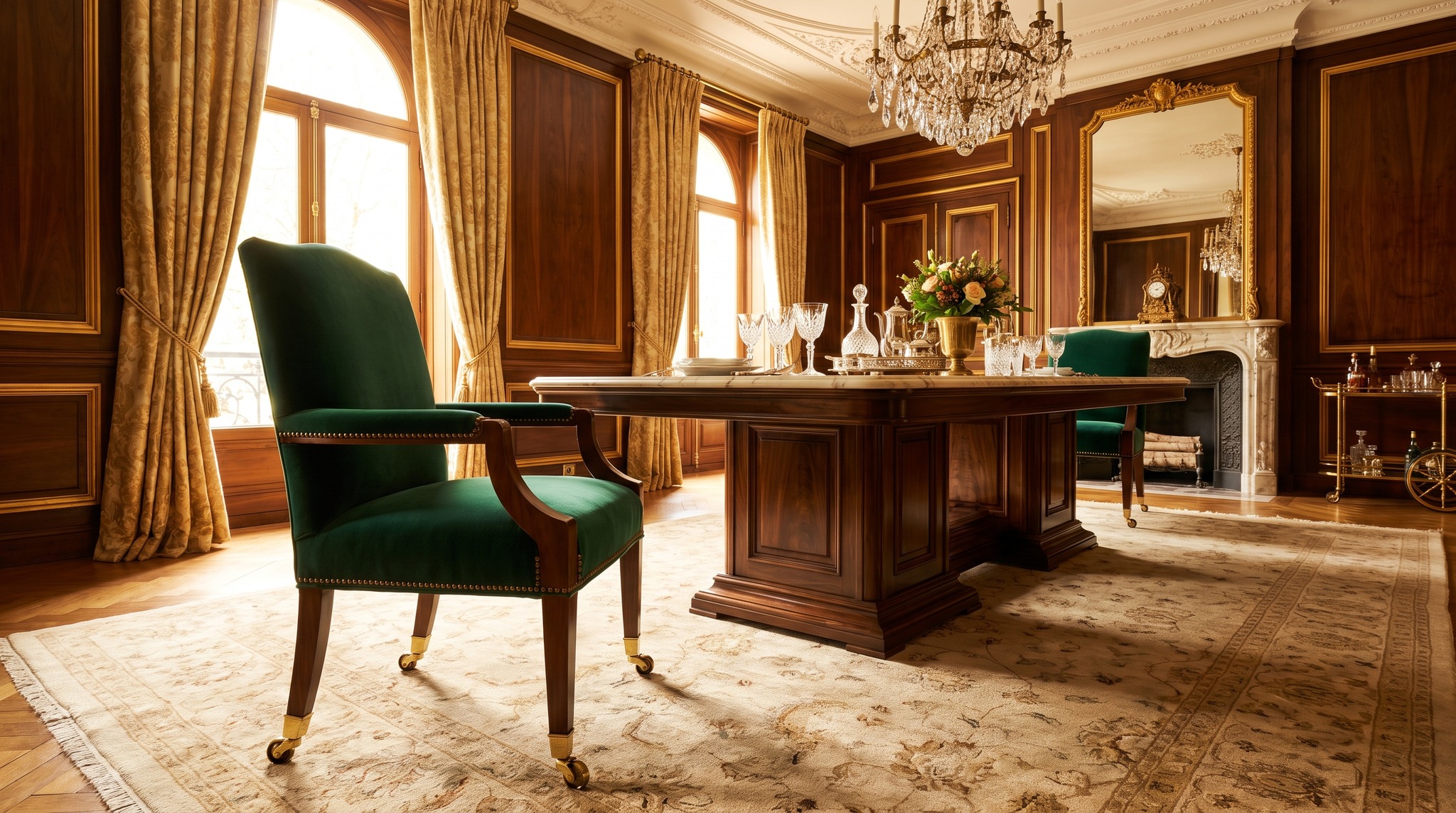
Chair with Castors at the Dining Table: When This Is Practical
Are you considering whether a chair with castors at the dining table is a good choice? This question arises particularly when you frequently switch between eating and working at the same table, or when older family members wish to make standing up easier. Chairs with castors offer mobility, but can also bring disadvantages. This article shows in which situations castors on dining chairs make sense and what you should pay attention to.
Mobility with Multifunctional Tables
A dining table that also serves as a workspace benefits from chairs with castors. You can move quickly from the screen to the centre of the table without standing up. This is particularly practical in smaller flats where a separate desk is lacking. Ensure that the castors are braked: they should only move under load, so that the chair does not roll away when sitting down. Unbraked castors are more suitable for pure office chairs.
Relief for Persons with Limited Mobility
For older people or persons with joint problems, a chair with castors can make approaching and leaving the table easier. Instead of lifting the chair, it can be pushed. The seat height should be between 45 and 50 cm, so that the feet rest securely on the floor. An armrest provides additional support when standing up. Check whether your flooring is suitable for castors: on carpet, soft castors brake, whilst on parquet, castors with rubber coating are recommended.
Flooring and Castor Material
The choice of castors depends on the surface. Hard plastic castors run easily on carpet, but quickly leave marks on parquet or tiles. Soft rubber castors protect hard floors, but require more force on carpet. With high-quality Chairs, the castors can often be replaced. For the dining area, braked twin castors with a diameter of at least 50 mm are recommended, as they distribute the weight better and protect the floor.
Avoiding Visual Appearance and Style Clash
Castors often appear technical and do not suit every interior style. At a classic wooden table or in a baroque setting, they can seem out of place. If you still do not wish to forgo mobility, choose models with concealed or colour-matched castors. Alternatively, combine: use chairs with castors only on the long sides, where people stand up more frequently, and fixed chairs at the head ends. This keeps the appearance calmer.
When Fixed Feet Are the Better Choice
In households with small children or on uneven floors, fixed chair legs are safer. Children tend to rock on chairs, which can lead to falls with castors. Also, with heavy, solid Dining Tables made of marble or solid wood, classic chairs with glides appear more harmonious and stable. Glide pads made of Teflon or felt can be fitted retrospectively and make moving easier without disturbing the appearance.
Practical Guidelines for Selection
If you decide on castors, observe the following points:
- Castor diameter of at least 50 mm for sufficient smooth running
- Braked castors for dining areas, so that the chair remains stable when sitting down
- Maximum load capacity per castor of at least 40 kg with a total weight of 120 kg
- Rubberised running surface for parquet, laminate or tiles
- Replaceable castors for flexibility when moving or changing flooring
Related to this: Sofas, Mirrors, Garden Fountains. baroque mirrors. The complete range: Baroque furniture.
Related categories: Sofas, Mirrors, Garden Fountains. The full range: Baroque Furniture.
Read more: Sofa with Side Table: Which Distances Are Optimal?, Fountain in Front of the Terrace: What Distance to Seating Furniture, Mirror Above the Chest of Drawers: How Much Distance and What Width, XXL Formula 1 art piece in black and gold, 180 cm, limited edition, Two Sofas Facing Each Other: When This Arrangement Works in the Living Room


