

XXL Sculpture in the Entrance Area: What Ceiling Height Is Required
You wish to enhance your entrance area with a large sculpture and are wondering how much vertical space is actually required? An XXL sculpture can create an impressive effect, but only when the proportions suit the room. Anyone who misjudges the ceiling height risks an overwhelming effect or wastes potential. In this article, you will learn what minimum heights make sense and what you should consider when planning.
Minimum Distance Between Sculpture and Ceiling
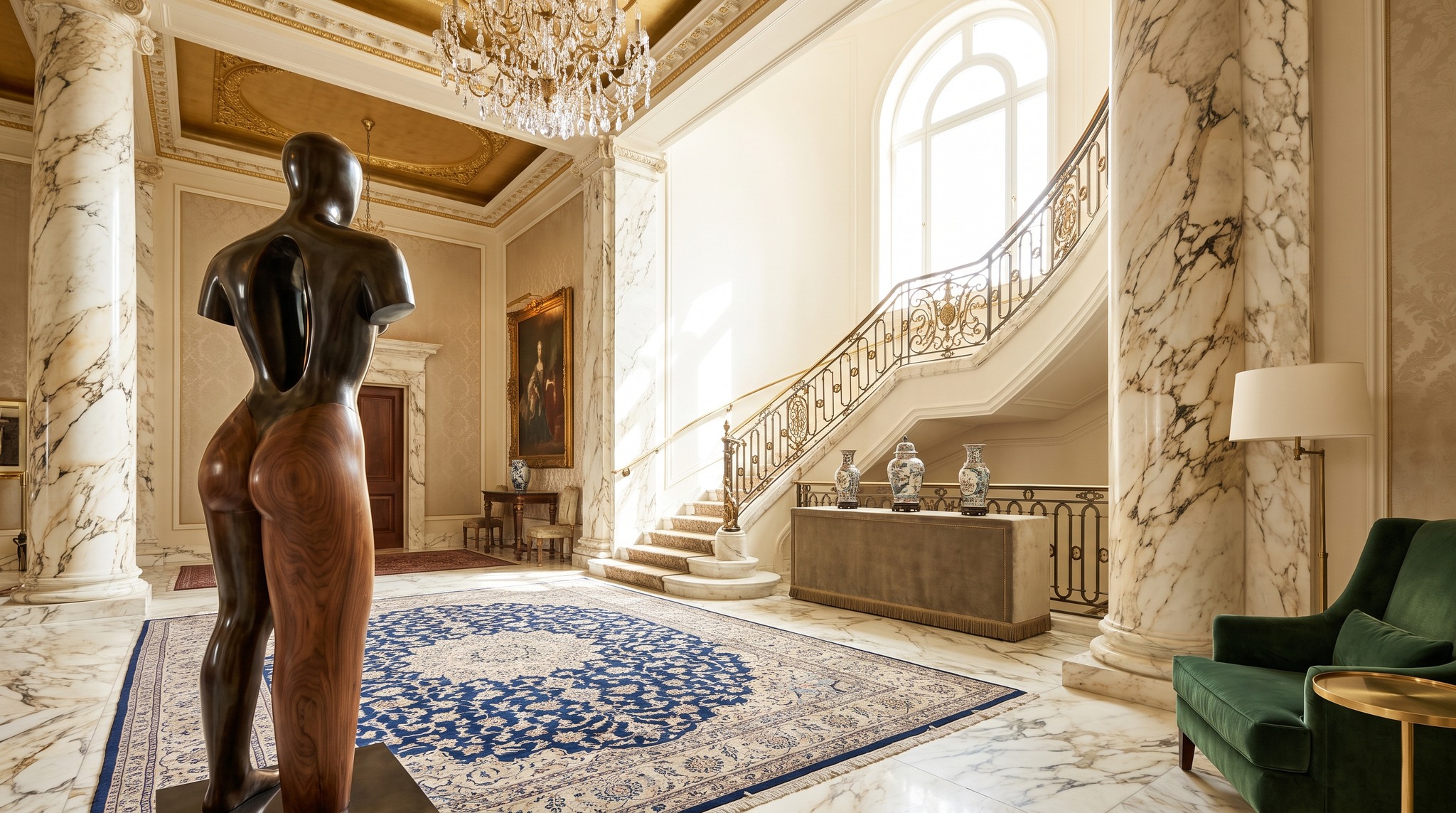
As a rule of thumb: at least 40 to 60 centimetres of clearance should remain between the highest point of the sculpture and the ceiling. This distance ensures that the figure can breathe visually and does not appear cramped. For very delicate or upward-reaching forms, the distance may be somewhat smaller, while massive sculptures require more clearance. When in doubt, plan more generously so that the effect is not lost.
Room Height and Sculpture Size in Proportion
A sculpture between 180 and 220 centimetres in height requires a room height of at least 260 centimetres, preferably 280 centimetres or more. For figures from 250 centimetres upwards, you should reckon with ceiling heights of 320 centimetres and above. In period buildings with rooms 300 to 350 centimetres high, large sculptures develop their full effect, while standard ceilings of around 240 centimetres are more suitable for objects up to 180 centimetres.
Factor in Bases and Plinths
Many sculptures gain presence through a base, but this reduces the available vertical space. A plinth of 20 to 40 centimetres is common and should be added to the total height. If, for example, you place a 200-centimetre-high figure on a 30-centimetre-high base, you require at least 280 centimetres of room height. When in doubt, forgo the base or choose a flatter version to maintain the proportions.
Material and Visual Weight
Heavy materials such as bronze or stone appear more massive and require more space above to avoid seeming too bulky. Lighter materials such as Resin and Fiberglass Sculptures allow somewhat tighter planning, as they appear more delicate and airy. Colour also plays a role: dark surfaces appear heavier, light tones make the figure seem lighter and tolerate a smaller distance to the ceiling.
Consider Lighting and Shadow Cast
Good lighting highlights the sculpture but also requires space. Uplighters or spotlights should be positioned so that they illuminate the figure from above or from the side without casting harsh shadows. Allow an additional 20 to 30 centimetres for lights and their beam angle. With too little distance to the ceiling, an unsettled shadow cast develops that disturbs the effect of the sculpture.
Check Sight Lines and Spatial Impression
Stand in front of the planned position and check whether the sculpture appears harmonious from various viewing angles. In the entrance area, the figure is usually perceived frontally or slightly from the side. A sculpture that is too tall in a low room forces the gaze upwards and makes the space appear squat. Conversely, a figure that is too small loses presence in a very high foyer. Test beforehand with a tape measure or a provisional setup whether the proportions are balanced.
Related items: Armchairs, Sideboards, Sculptures. baroque mirrors. The complete range: Baroque Furniture.
Related categories: Armchairs, Sideboards, Sculptures. The full range: Baroque Furniture.
Read more: Dining Table on Rug: Which Size Belongs Under Table and Chairs, Coffee Table with Drawer: When Enclosed Storage Makes Sense, Buying Baroque Furniture: Which Measurements You Should Take Beforehand, Arranging a Display Cabinet: What Works Behind Glass and What Does Not, Making Small Rooms Look Bigger, Luxury in Little Space