

Luxury Furniture on the Cote d'Azur: From Saint-Tropez to Menton
Two hundred kilometres of coast, a dozen towns that each furnish differently, and a climate that treats furniture more harshly than any other part of Europe. The Cote d'Azur is one market on a map and several in practice, and the difference between a room in a Nice old town alley and a penthouse above Monaco is larger than most catalogues allow for. Casa Padrino, one of the leading international specialists for luxury furniture and high-end interior decoration, delivers across the entire region.
This page is the overview: how the coast came to look the way it does, what its climate demands of furniture, and which of our town pages covers the place you are furnishing.
A coast invented twice
Before 1830 this was a poor stretch of fishing villages and terraced olive groves. The change began with the British: Lord Brougham was stopped at the Var by a cholera quarantine, stayed in Cannes and built a villa, and within two generations the bay had filled with winter residences. English money laid the Promenade des Anglais in Nice, Russian aristocracy built the villas of Cimiez, and Queen Victoria wintered at the Excelsior Regina.
Note the word winter. For its first hundred years this was a cold-season destination: the grand hotels closed in May, and nobody of standing sat in the Mediterranean sun. The coast was invented a second time in the 1920s, when a group of Americans persuaded a hotel near Antibes to stay open through the summer. Frank Jay Gould built a casino at Juan-les-Pins and marketed it as a summer resort, and the season flipped.
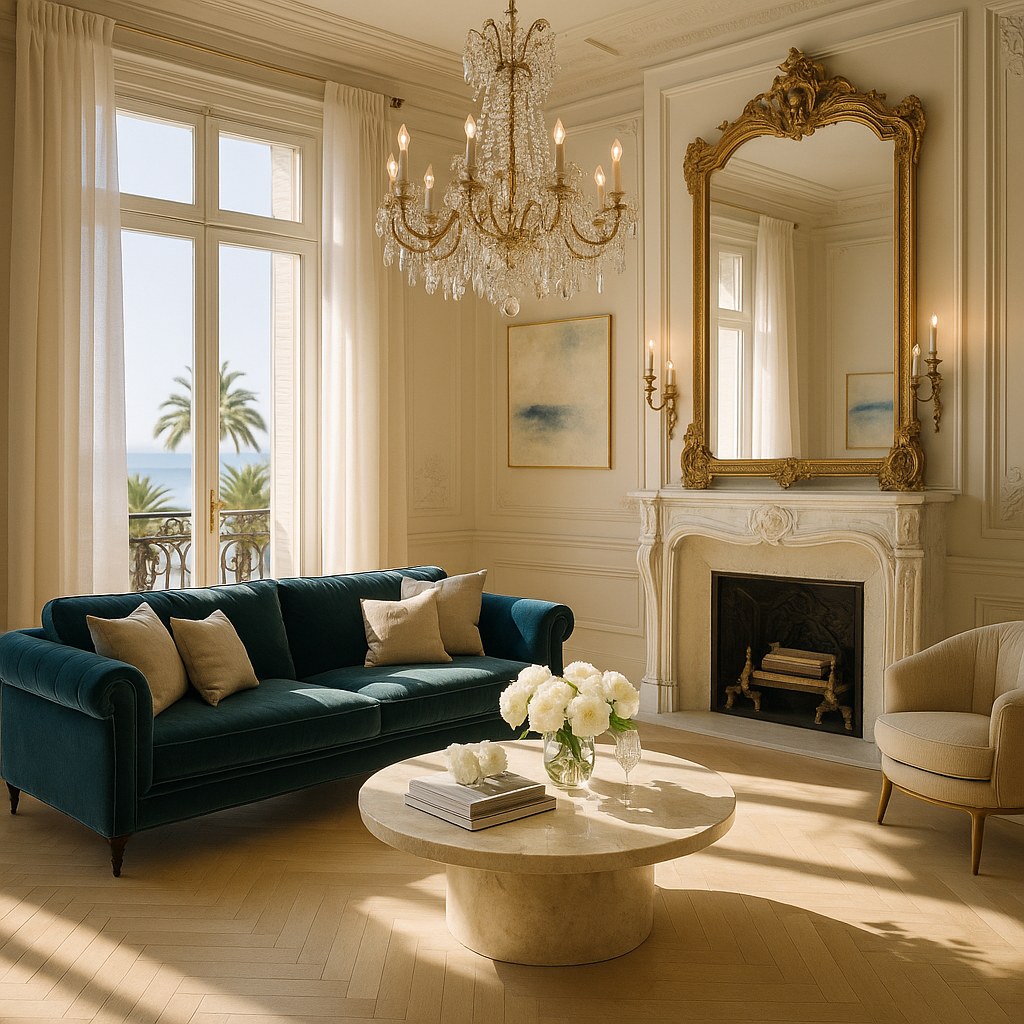
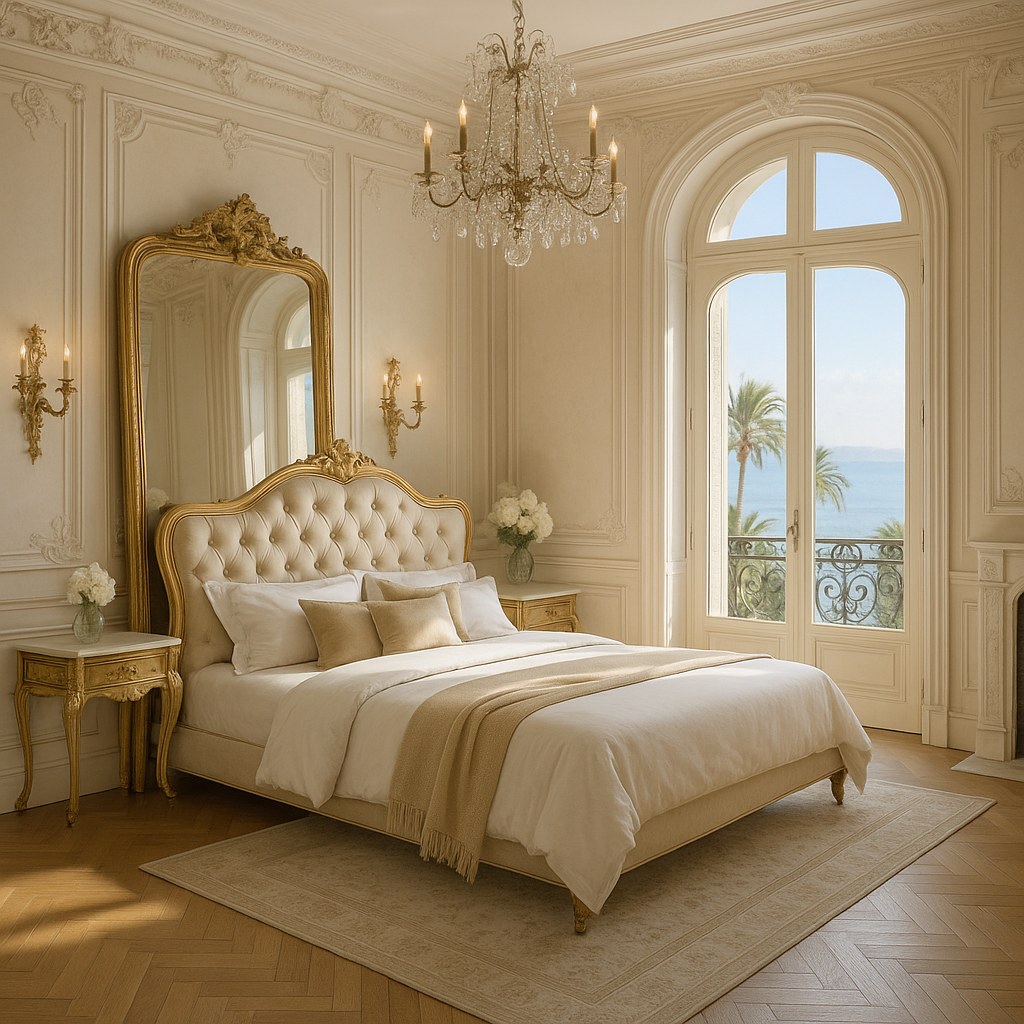
Those two inventions left two different building stocks side by side, and they need opposite furniture. The winter era produced Belle Epoque interiors: high ceilings, mouldings, parquet, rooms designed to be lived in indoors and to display. The summer era produced Art Deco: horizontal lines, rounded balconies, terraces, rooms that open outwards. Both sit within a few kilometres of each other, and treating them the same is the most common mistake made here.
The geography that decides the delivery
The coast runs from the Gulf of Saint-Tropez in the west to Menton and the Italian border in the east. Between them, three corniche roads climb the slope at different heights, and a series of peninsulas push into the sea: Cap d'Antibes, Cap Ferrat, Cap Martin, Cap d'Ail. Behind the shore the land rises quickly into hill villages, Mougins, Valbonne, Saint-Paul-de-Vence, Vence, and further up to Grasse.
For furnishing, three practical facts follow from that shape.
Access is the recurring problem, not price. Medieval old towns in Antibes, Nice and Saint-Tropez have lanes closed to lorries and staircases that turn tightly in a stone shaft. Hill villages have private drives too steep for a large vehicle. Monaco delivers through underground car parks with limited headroom. On this coast, the question of whether a piece fits the route matters more often than whether it fits the room.
One road in, at Saint-Tropez. The peninsula has a single access road that is congested for hours at a time from July to September. Deliveries there are best planned outside the season.
Seasonal emptiness. A large share of the housing stock stands unoccupied and unheated for months, then is used intensively for a few weeks. That cycle is hard on furniture and it is the reason we build on properly dried solid timber with joints that allow movement rather than on veneered board.
What this climate does to furniture
The Riviera has around three hundred days of sun a year, and the light arrives twice: directly and reflected off the water. In a south-facing room it is on the walls from morning to evening. Textiles fade, untreated timber lightens within a season, and thin printed finishes lift at the edges. Choose upholstery tones that age gracefully rather than fight the sun, and keep fine fabrics out of the direct afternoon path.
Salt travels inland on the sea breeze, several streets deep, so metal fittings need a real finish rather than a thin coating. Humidity swings hard between a dry summer and damp shoulder seasons. Umbrella pines, which shade most terraces from Antibes to Saint-Tropez, drop resin and needles for months, which is why terrace furniture wants surfaces that can be wiped and cushion covers that come off and wash.
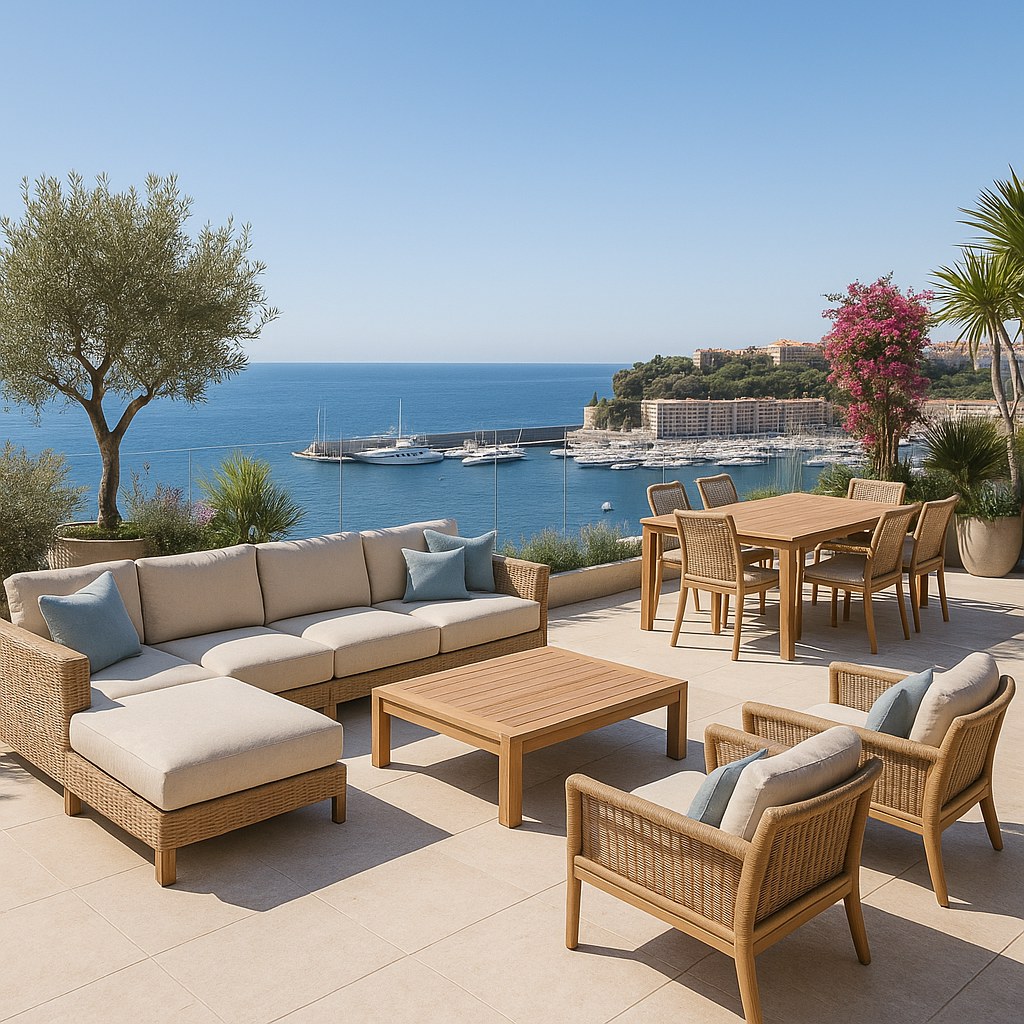
Marble, wrought iron, brass, teak, rattan and solid timber are the materials that survive all of this, and they are the materials our collection is built from. That is not a coincidence: this coast has always been furnished with them.
Four kinds of interior, four different answers
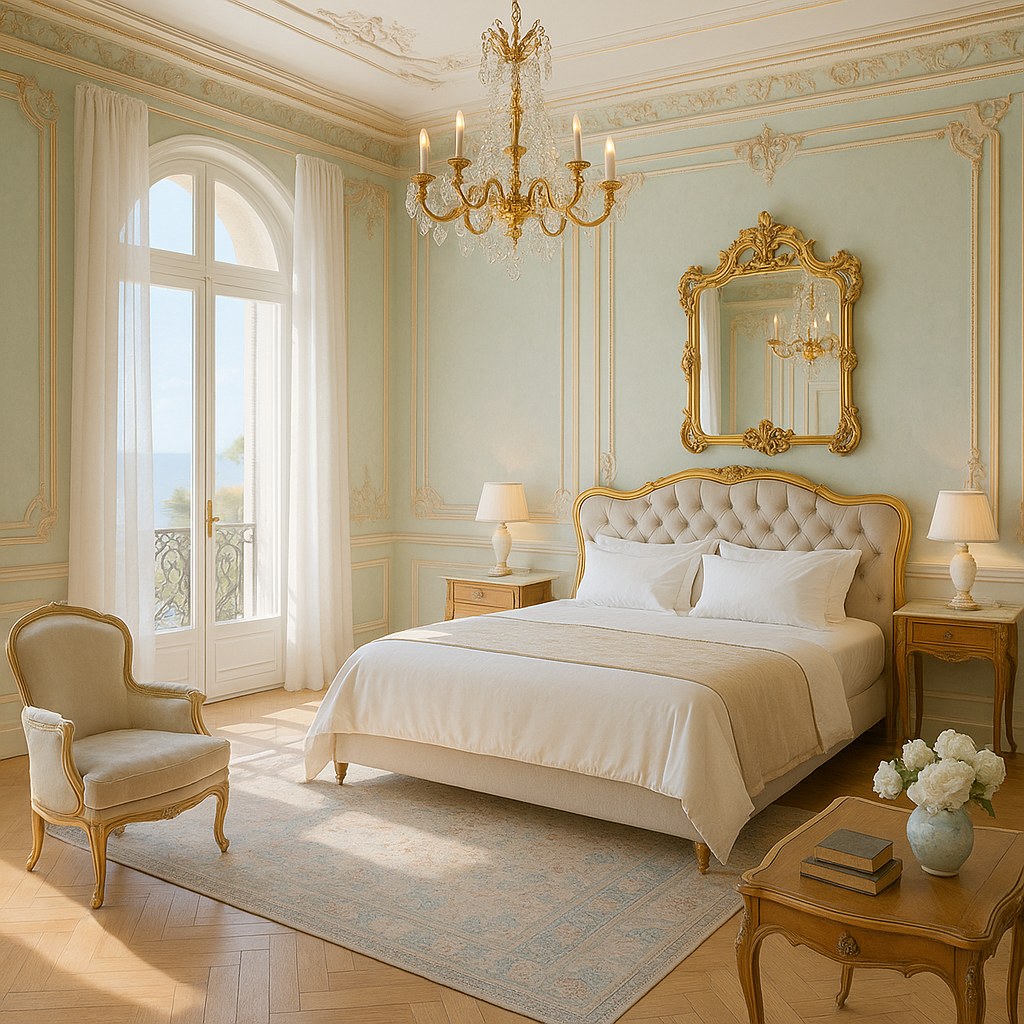
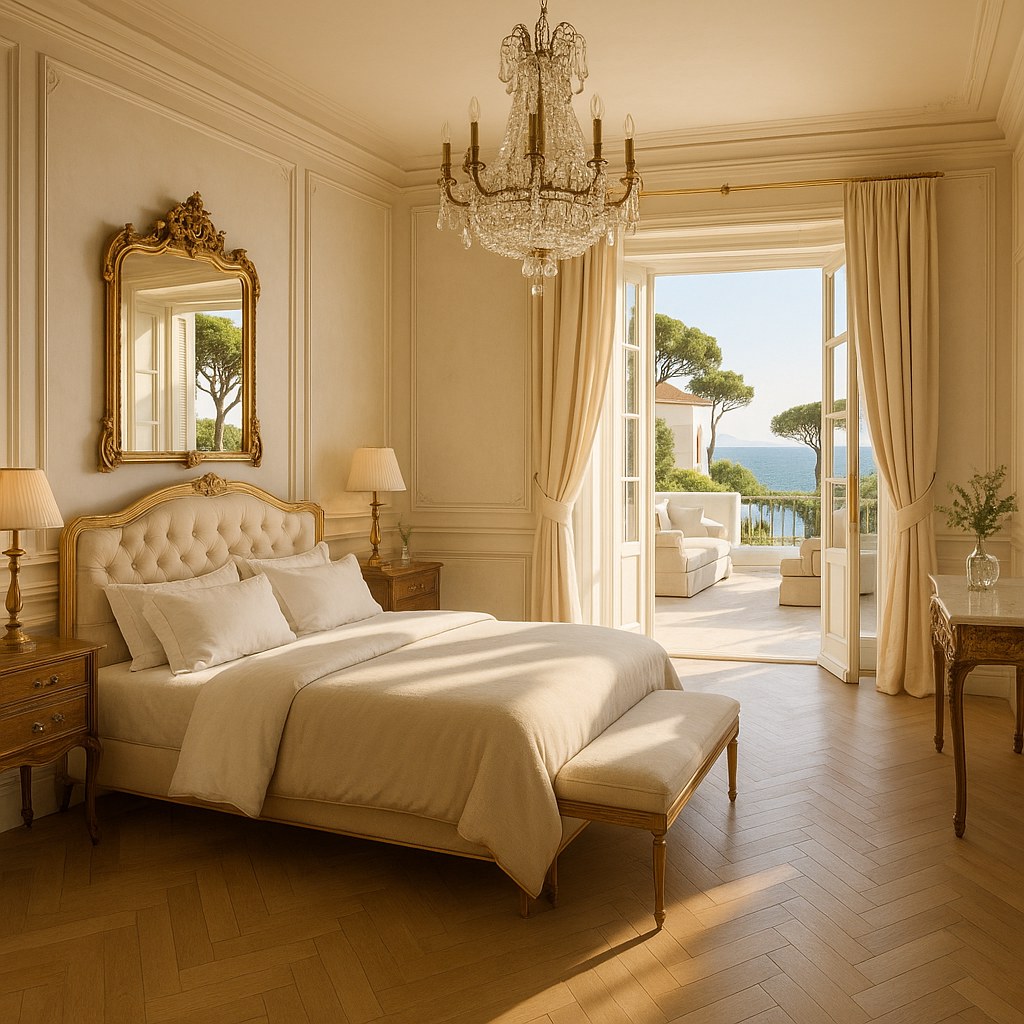
The Belle Epoque apartment or villa carries scale and expects it. Carved consoles, gilded mirrors of real height, crystal chandeliers, upholstered seating with visible woodwork. Underscaled furniture leaves such a room looking abandoned rather than restrained.
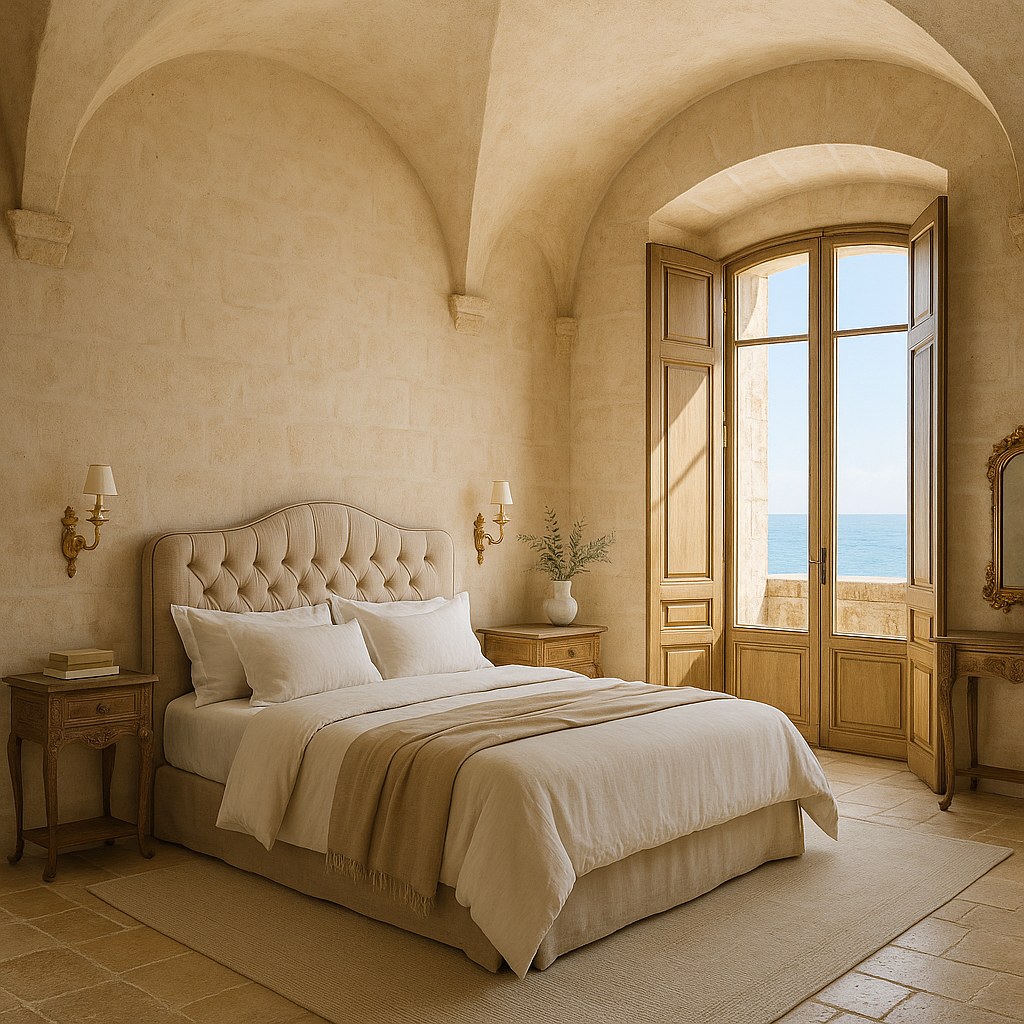
The old town or village house is the opposite: thick walls, vaults, small windows, rooms cooler and darker than the street. Light-toned woods, a well placed mirror to move daylight around, considered lighting, and few but substantial pieces.
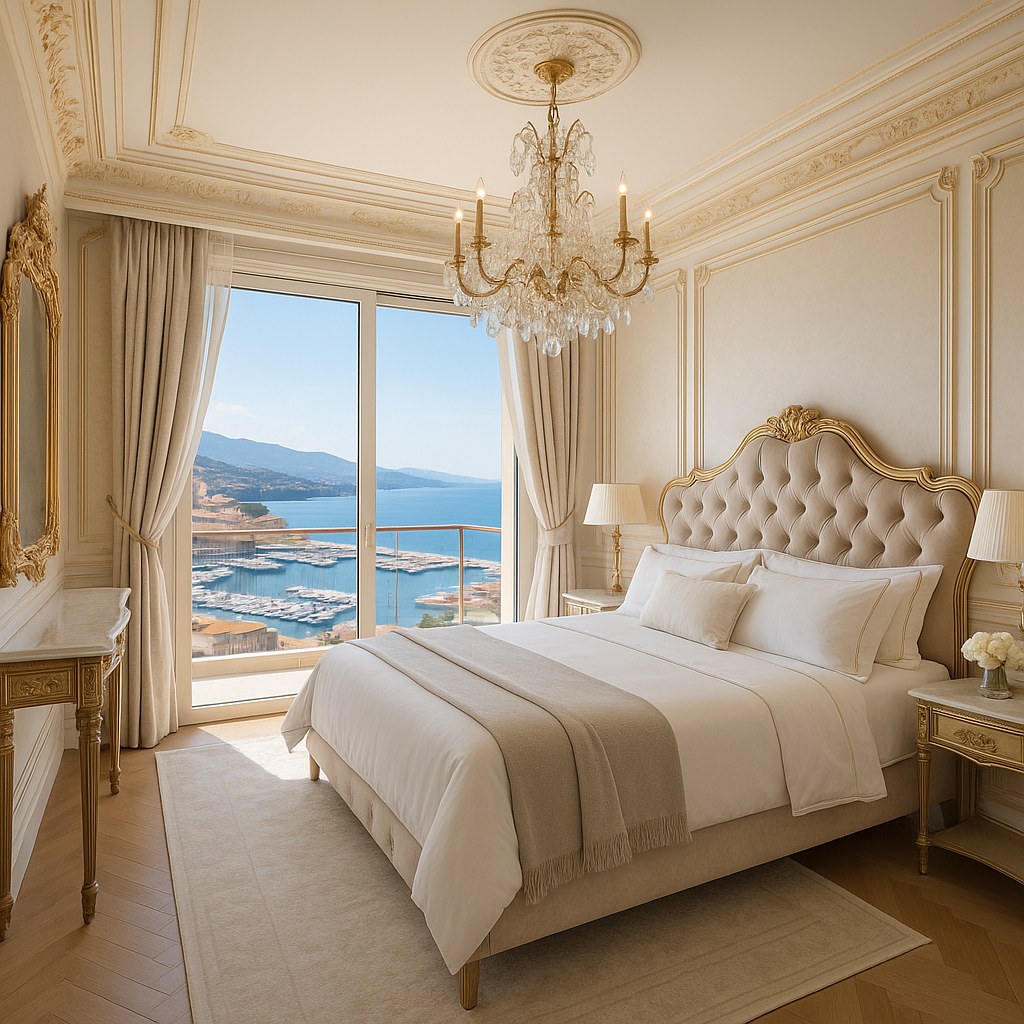
The contemporary villa or penthouse makes the view the subject. One or two pieces with real presence do the work: a deep Chesterfield in genuine leather, a marble dining table, a single sculptural armchair.
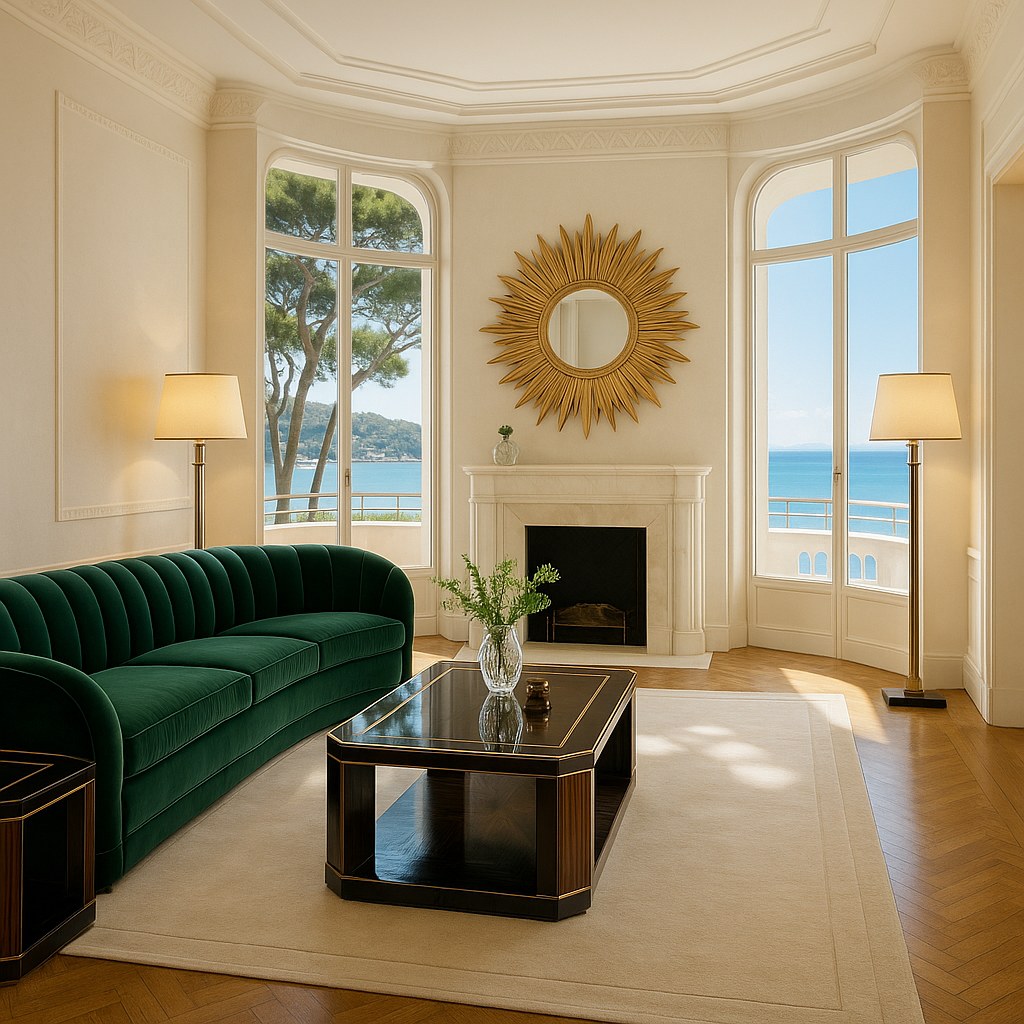
The Art Deco apartment, mostly around Juan-les-Pins, wants clean silhouettes and strong materials rather than carving: velvet sofas in a single colour, geometric tables, mirrored fronts, brass and glass lighting.
And across all four, the terrace is a real room on this coast, often the largest one. Our garden and terrace range in wrought iron, teak and rattan comes from the same house, so that inside and outside actually match.
Hotels, villas and projects
The Riviera is a hospitality economy, and its calendar is unforgiving: the film festival in Cannes in May, the Grand Prix in Monaco at the end of the same month, the yacht shows in September, the jazz festival at Juan-les-Pins in July. A refurbishment either lands before the date or it has failed.
Casa Padrino equips hotels, boutique hotels, restaurants, beach clubs, private clubs, showrooms and event spaces across Europe, and works regularly with architects, interior design studios and project developers. We plan such work room by room and quote it as a project rather than as a list of items. See luxury hotel furniture, luxury restaurant furniture and luxury villa furniture, and for the events themselves film set and gala furniture.
Delivery across the region
Casa Padrino ships worldwide, and France is one of our established markets. Deliveries along the whole coast are routine. Larger and heavier pieces travel by freight forwarder with a delivery appointment, smaller items by parcel service.
Delivery is made kerbside to the given address. Carrying items into the building, up stairs or into the room of use is not part of the standard service, so please arrange help on site in advance and check the access route before ordering anything large. Given the old towns, the hill villages and the Monaco car parks, we would rather raise this before the order than after it.
We do not operate a showroom on the Cote d'Azur. What we offer instead is detailed photography, dimensions, material information and direct advice by telephone and email, in English, French and German.
Bespoke production
Very little on this coast is standard. Walls in old towns are rarely straight, Art Deco buildings have curved bays, Belle Epoque rooms have heights no catalogue plans for, and Monaco has lifts that decide everything. We adjust dimensions, change woods and finishes, work to a specified fabric, and build individual pieces from a drawing, including pieces made in sections so they can be carried in and assembled on site.
Why Casa Padrino
Casa Padrino has grown into one of the internationally known names for baroque, Art Nouveau, Art Deco and contemporary luxury furniture, with customers in more than fifty countries and a catalogue running into thousands of pieces. In May 2025 the company's designer Marvin Schertl received the International Design Award for Excellence in Luxury Furniture in Cannes, presented at the Beach Ball gala dinner during the festival days.
For this coast specifically: a range wide enough to furnish a whole villa from one source, terrace furniture from the same house, workshops that build what the catalogue does not contain, and enough experience here to say honestly when a piece will not make it up a medieval staircase. The full collection is at casa-padrino.de.
Frequently asked questions
Which towns do you deliver to?
The whole region, from the Gulf of Saint-Tropez to Menton and the Italian border, including Monaco and the hill villages behind the coast. The town pages below cover the places we are asked about most often.
Do you have a showroom on the Riviera?
No. Casa Padrino sells online and delivers directly, which is what keeps the range this wide. Advice before purchase is given by telephone and email, with detailed photography, dimensions and material information for every piece.
What is the most common problem with a delivery here?
Access, not price. Old town lanes closed to lorries, tight stone staircases, steep private drives and underground car parks with low headroom. Measure the narrowest point of the route before ordering, and tell us the dimensions with the enquiry.
Which materials last on this coast?
Properly dried solid timber, marble, wrought iron, brass, teak and rattan. What fails is veneer over composite board, thin printed finishes and metal with a thin coating, all of which show sun, salt and humidity within a season or two.
Can you work to a festival or season deadline?
Yes, and we plan backwards from the date. Tell us the deadline at the first enquiry, because it decides what is realistic from stock and what needs production time.
Do you furnish hotels and beach clubs as well as private homes?
Yes. Hospitality is a core part of our business, planned as projects with volume pricing and coordinated delivery dates.
Is baroque furniture appropriate here?
On much of this coast it is local history rather than an imported taste. Nice has its own Baroque tradition from its Savoyard period, and the Belle Epoque villas were built in an age that borrowed freely from it. In an Art Deco apartment, by contrast, a baroque piece works as a single accent rather than as a scheme.
How does advice for a project work?
Send us the rooms, the plans or photographs, which way they face, the access route and the intended use. You receive a selection with alternatives, material information and a delivery estimate, and for larger projects a written offer covering the whole scheme.
Our towns on the Cote d'Azur
You may also be interested in
Back to the overview: Luxury Furniture for Hotels, Villas & Projects Worldwide